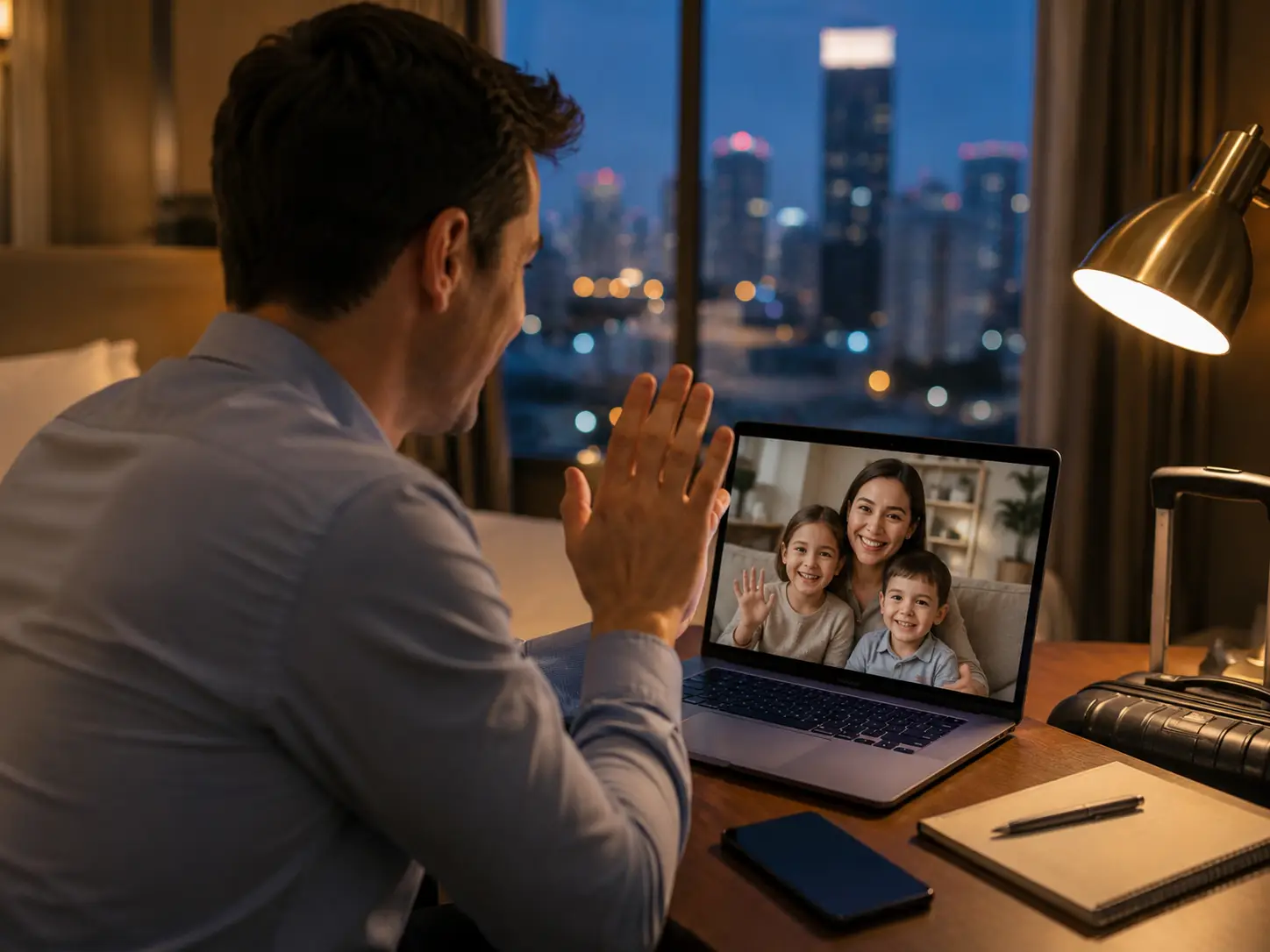
Long work trips can support career growth, strengthen client relationships, and open the door to new places. They can also make a home feel far away. Missed dinners, time zone gaps, and late meetings can create distance between travelers and the people who matter most.
This guide was created by reviewing common business travel routines, family communication habits, and practical ways travelers stay emotionally present while away from home.
Make a Family Connection Plan Before You Go
Staying close during a long trip starts before departure. A simple plan helps everyone know what to expect and lowers stress when the schedule gets busy.
Start with a shared calendar. Add flight times, hotel details, meeting-heavy days, and return plans. For international travel, include the local time zone. This makes it easier for family members to know when a call will work and when a message may need to wait.
Agree on a realistic contact rhythm. A daily video call may sound ideal, but long workdays can make it hard to keep up. A better plan may include a short text after landing, a morning voice note, and a video call every other night. The best routine is one that can actually happen.
Small gestures can also help the family feel remembered. A handwritten note left at home, a meal delivery after a hard day, or a get-well care package for someone recovering while the traveler is away can show care from any distance.
Parents can create simple rituals for children. Read the same bedtime story over video. Send a morning photo from the hotel window. Record a short goodnight message before crossing into a difficult time zone. Children often feel more secure when they know what to expect.
Partners may need a different kind of connection. A shared playlist, private photo album, or quick evening check-in can keep the relationship from becoming a list of chores and updates. The goal is to keep everyday life moving together, even from different places.
Use Technology in a More Personal Way
Business travelers spend much of the day using screens for email, meetings, maps, and boarding passes. By the time family calls begin, another screen can feel like another work task. The key is to make technology feel personal.
Video calls work best when they focus on real moments. Join dinner for ten minutes. Watch a child show a school project. Help choose an outfit for an event. Say goodnight from the hotel room. These small moments feel warmer than a formal call that starts with, “How was your day?”
Voice messages are useful across time zones. They carry tone and emotion, but they do not require everyone to be free at once. A quick message before a flight, after a meeting, or during a walk back to the hotel can feel more thoughtful than a plain text.
Photos also help family feel included. Send the airport breakfast, the rainy street outside the meeting venue, the local snack from a corner store, or the train platform on the way to a client visit. Small details give family members something to react to and remember.
Shared tools can reduce stress at home. A family calendar, grocery list, school note, or travel folder keeps everyone on the same page. This is especially helpful when one partner is managing home routines alone during the trip.
During family calls, give the conversation full attention. Close the laptop when possible. Turn away from work alerts. Treat the call with the same respect as an important client meeting. A focused fifteen-minute conversation can mean more than a distracted hour.
International travelers should also prepare for tech issues. Some apps may not work well in every country. Hotel Wi-Fi may be weak. Roaming can be costly without the right plan. Before leaving, check phone settings, messaging access, and at least one backup way to communicate.
Keep Home Part of the Journey
Long trips can create two separate worlds. The traveler has new places, meals, and meetings. The family at home keeps up with school, work, pets, errands, and normal routines. Connection gets stronger when both worlds are shared.
Before leaving, ask each family member to choose one small travel mission. A child might ask for a postcard with an animal. A partner might suggest one local dish to try. A parent might request a photo of a market, train station, or historic street. These small requests make the trip easier to follow from home.
During the trip, the tailor updates each person. Send a photo of a building to someone who loves design. Share a food photo with the family cook. Send a funny airport sign to a child who likes jokes. Personal updates show more care than a generic “made it here” message.
For trips longer than a week, try a simple family travel report. Share three things seen, one thing learned, one thing missed from home, and one thing planned for the next day. This gives children and partners an easy way to ask questions. It also helps the traveler slow down and notice the trip beyond meetings and transit.
Family members at home should share normal updates, too. A photo of the dog sleeping, a quick school story, or a message about a small win at work can be comforting. Travelers often miss ordinary details more than expected.
Make the Return Feel Meaningful
The trip is not over when the plane lands. Coming home needs care, too. Travelers may feel tired and full of unread email, while family members may be ready to reconnect right away.
Plan a soft return when possible. Leave space for a family meal, a walk, or a quiet evening together. Bring back stories, not just souvenirs. Ask what happened at home and listen without rushing.
Long work trips and international travel will always bring some distance. Still, families can stay close when communication is steady, gestures are thoughtful, and home life remains part of the journey. Strong bonds are often built through small acts repeated with care, one message, one call, and one return home at a time.