Modern travel has become faster, more efficient, and more automated than ever. Boarding passes live on phones, hotel rooms open with digital keys, meetings move between cities with little pause, and the airport has become a second office for many professionals. Yet beneath all this speed, a quieter shift is taking place. Those who travel most often are no longer impressed by accessories that merely look new, glossy, or technologically clever. They are looking for objects that feel reliable, discreet, personal, and made to last.
This is where handcrafted leather has found new relevance. Not as nostalgia, and not as decoration, but as a response to the fatigue of sameness. In executive lounges, boutique hotels, private transfers, and conference venues, the most experienced travelers often choose pieces that do not shout. A full-grain leather laptop bag, a finely stitched phone case, or a watch strap with a soft patina can say more about taste than a visible logo ever could.
The rise of quiet luxury in constant motion
The idea of quiet luxury has become especially meaningful for people who live between destinations. Frequent flyers and hospitality professionals understand that travel reveals the difference between what is fashionable and what is dependable. A bag must survive overhead compartments, security checks, packed schedules, and changing climates. A phone case must look appropriate at a hotel reception desk, in a boardroom, and during a late dinner with partners. A watch strap must be comfortable through a long-haul flight and polished enough for a formal meeting on arrival.
For this audience, luxury is no longer measured by excess. It is measured by restraint. The best accessories are those that improve with use, carry marks with dignity, and support the rhythm of a demanding professional life. In that sense, handcrafted leather travel accessories fit the current mood perfectly: refined, practical, tactile, and quietly individual.
Business travelers have also become more sensitive to the emotional weight of the objects they carry. A mass-market item may perform one function well, but it rarely creates attachment. A handcrafted leather piece does more. It becomes familiar to the hand, changes tone over time, and gains character through movement. This slow transformation feels almost rare in a culture built around rapid replacement.
Why mass-produced travel gear feels less convincing
The modern professional can buy a tech case, laptop sleeve, or travel pouch almost anywhere. Many are cheap, lightweight, and visually polished at first glance. Yet the problem is not availability. It is sameness.
Mass-produced accessories often follow the same formula: synthetic finishes, standard colors, rigid shapes, and minimal sense of origin. They may protect a device, but they rarely complement the professional identity of the person carrying it. For those who work in hospitality, aviation, consulting, finance, luxury retail, international relations, or high-end service, details matter. A poorly aging phone case or flimsy laptop bag can weaken the careful impression built through clothing, posture, speech, and conduct.
There is also a sustainability argument, though not always expressed loudly. Professionals who travel often see the waste created by constant upgrades and disposable design. They know the irritation of replacing a cracked plastic shell, a peeling synthetic strap, or a bag that loses structure after a few months. Handcrafted leather offers a different pace. It favors repair, endurance, and emotional ownership over quick consumption.
The return to leather is not about rejecting technology. It is about giving technology a more human frame. A smartphone may be the most used professional tool of the day, yet the object around it can still carry warmth, craft, and personality. An Apple Watch may track time, health, and schedules, while a carefully made leather strap gives it the presence of a traditional accessory. A laptop may hold contracts, presentations, guest lists, or market strategies, while a leather bag turns it into part of a composed professional image.
European craft and the value of the hand
Part of the renewed attraction lies in European craftsmanship. Full-grain leather, hand-finishing, careful edge work, and precise stitching have a language of their own. They suggest patience in an impatient age. French savoir-faire, in particular, carries a reputation built on proportion, touch, and a respect for materials. The appeal is not only visual. It is structural. A well-made leather item is felt before it is admired.
Generational know-how also matters. In traditional ateliers, leather is not treated as a flat surface to be shaped quickly. It is selected, cut, worked, polished, and assembled with attention to how it will age. The grain, thickness, tension, and finish all influence the life of the product. These choices are invisible to many buyers at first, but seasoned travelers notice them after months of use.
That is why the language of craftsmanship resonates so strongly with hospitality professionals. Their own work often depends on invisible standards. A guest may not always see the planning behind a flawless arrival, the training behind a calm reception, or the discipline behind a perfectly timed service. In the same way, a leather accessory may look simple, while its quality rests in dozens of decisions made before it reaches the owner.
Signature pieces for global professionals
Accessories now play a subtle role in professional self-presentation. The classic business wardrobe has become more flexible, and many workplaces have moved away from rigid formality. Yet travelers still need signals of seriousness, taste, and readiness. Leather accessories help fill that space.
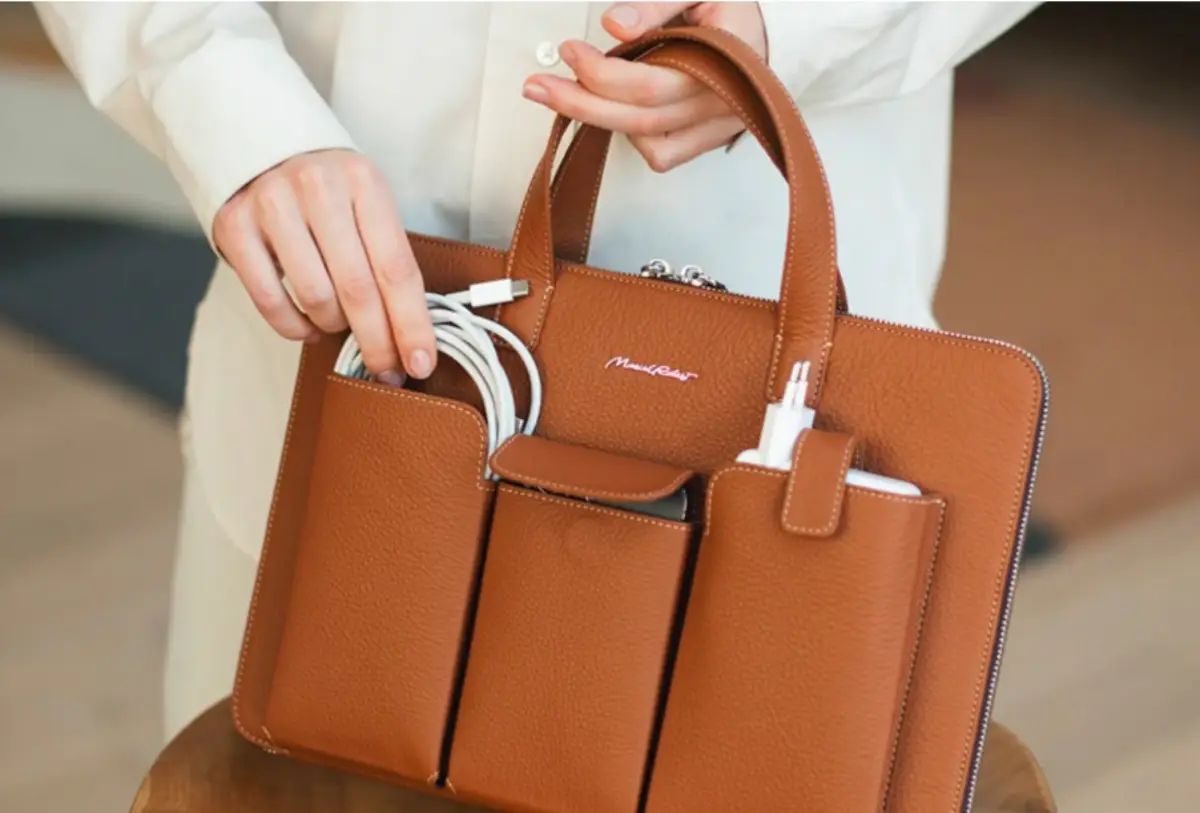
A premium phone case can turn a daily tool into a polished object. It is visible during check-ins, calls, payments, meetings, and travel coordination. A leather Apple Watch strap softens the technical look of a wearable device, making it suitable for both business and leisure settings. A structured laptop bag can anchor an entire travel look, especially when moving from airport to hotel to meeting room without time to change.
The appeal of handcrafted leather travel accessories also lies in their ability to cross categories. They are not only practical tools, nor only style statements. They sit between utility and identity. They support the life of people who must remain organized, mobile, and presentable across different cities and professional cultures.
Hospitality executives, in particular, understand the power of materials. They spend their careers thinking about touchpoints: the weight of a key card, the texture of a menu, the polish of a reception desk, the comfort of a chair, the scent of a lobby. It is natural that they would value personal accessories with the same attention to sensory quality.
Marcel Robert and the French atelier approach
Among the brands that reflect this return to craft, Marcel Robert offers a relevant example. As a French atelier specializing in handcrafted leather goods, it belongs to a broader movement that values refined materials, careful construction, and understated elegance over seasonal noise. Its leather phone cases, watch straps, and laptop bags speak to professionals who want accessories that feel considered rather than generic.
The brand can be mentioned in this context without turning the article into a product catalogue. Marcel Robert represents the kind of maker that appeals to travelers seeking discipline, polish, and longevity in everyday objects. For visual support, product photos may be selected from the Marcel Robert website, especially the homepage and product pages, where the materials and forms can help illustrate the theme of crafted mobility.
What matters most is the cultural signal behind such brands. They remind us that mobility does not have to mean disposability. Movement can still include ritual, touch, and continuity. A professional may change cities three times in a week, yet still carry a bag or case that feels steady and familiar.
The new luxury of mobility
The luxury of mobility is no longer only about access: priority boarding, better lounges, faster transfers, or premium rooms. Those things still matter, but they are external. The newer form of luxury is more intimate. It is the ability to move through busy environments with objects that reduce friction, express taste, and hold up under pressure.
For the seasoned traveler, the best accessory is not the one that attracts the loudest attention. It is the one that performs quietly every day. It protects, organizes, and accompanies. It looks appropriate without trying too hard. It ages without becoming tired. It becomes part of a professional rhythm.
Handcrafted leather has returned because it offers something rare in modern travel: a sense of permanence inside constant movement. It gives digital tools a warmer presence and turns routine objects into personal signatures. In a culture where many things are designed to be replaced quickly, a well-made leather accessory suggests confidence in slower values.
The business traveler of today may still depend on cloud platforms, digital calendars, wireless devices, and instant communication. Yet the objects closest to the hand can still carry craft, memory, and restraint. That balance may be the clearest expression of modern luxury: not standing still, but moving well.