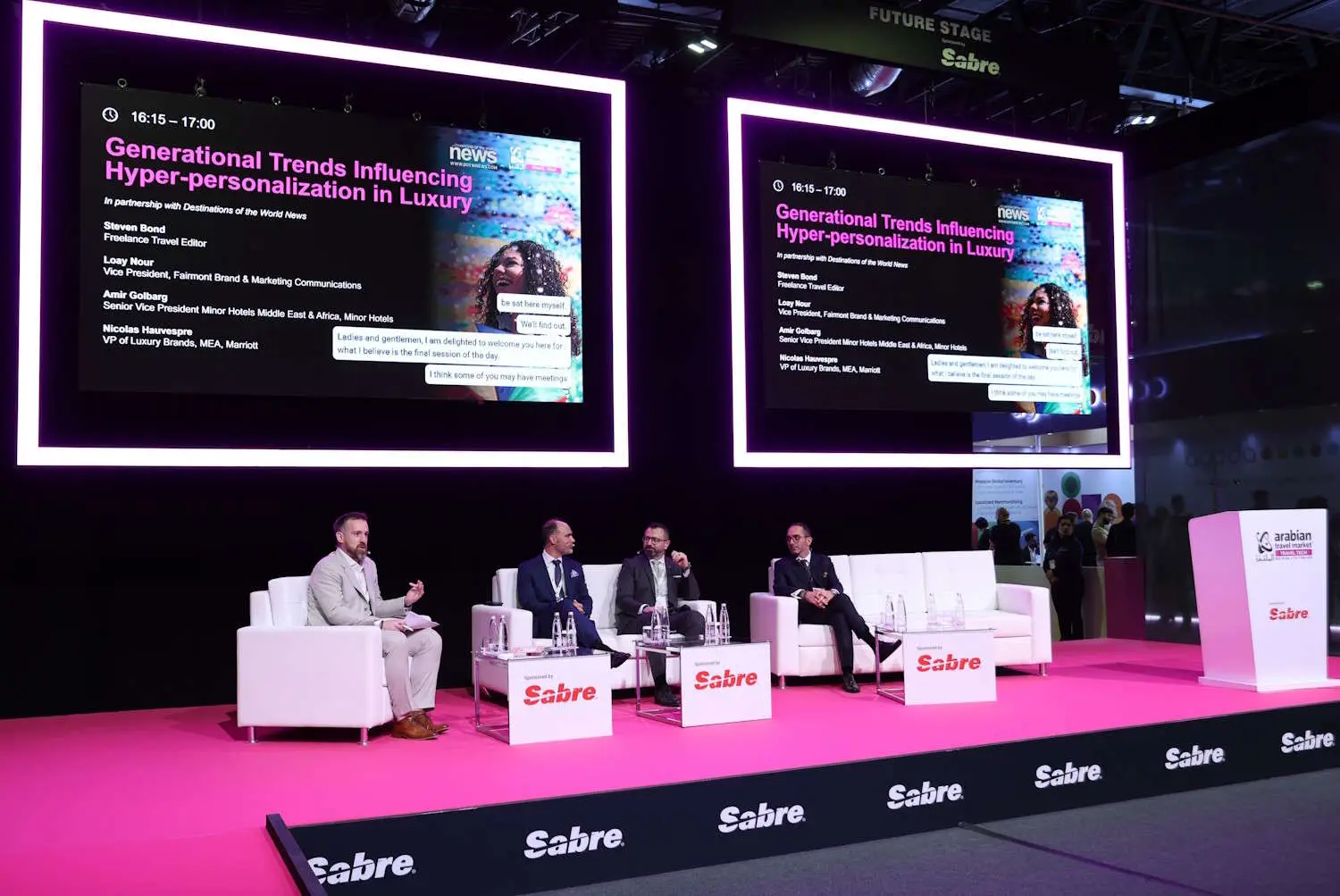
Luxury hotels embrace hyper-personalised travel experiences to meet rising demand from affluent travelers seeking curated, emotionally resonant journeys. At Arabian Travel Market (ATM) 2025, top executives from global brands like Marriott, Fairmont, and Minor Hotels underscored the commercial and cultural significance of offering bespoke guest experiences.
Gone are the days of one-size-fits-all luxury. Today’s discerning traveler wants more than amenities—they want meaning, memory, and emotional connection. The evolution from personalization to hyper-personalisation is reshaping how luxury hospitality defines value, with AI and human intuition playing equally vital roles.
From Recognition to Anticipation: What Hyper-Personalisation Means
During the ATM 2025 conference in Dubai, industry leaders emphasized that true hyper-personalisation moves beyond remembering a guest’s name or room preferences. It involves anticipating unspoken needs, leveraging data-driven technology to create tailored experiences that reflect guests’ identities, moods, and expectations.
Nicolas Hauvespre, VP of Luxury Brands at MEA Marriott, explained that for many luxury brands, hyper-personalisation “goes far beyond traditional service.” He emphasized the importance of “developing that anticipatory service” to deliver something highly curated through a blend of technology and cultural understanding.
This fusion of AI, chatbots, and emotional intelligence is creating a new paradigm in hospitality—where services are intuitive, seamless, and profoundly personal. From custom dining menus and personalized wellness programs to digital concierges that remember your last favorite cocktail, the future of luxury is intimate and intelligent.
Why Personalisation Pays: A Look at the Numbers
According to the ATM Travel Trends Report 2025, produced in collaboration with Tourism Economics, 85% of hoteliers now recognize personalisation as a vital commercial strategy. These tailored experiences can increase revenue by up to 5%, offering a tangible return on investment in both technology and staff training.
Moreover, Future Market Insight Inc projects the global market for travel customisation and personalisation to reach USD 620.71 million by 2032, reflecting growing consumer expectations and a willingness to pay for unique, high-touch services.
| Metric | Value |
|---|---|
| Hoteliers prioritising personalisation | 85% |
| Revenue boost from personalisation | Up to 5% |
| Projected market value by 2032 | USD 620.71 million |
Regional Examples of Personalised Luxury in Action
In the Middle East and Africa, Marriott is doubling down on hyper-personalisation with properties that balance brand identity and local immersion. One standout is the Ritz-Carlton Reserve at Nujuma in Saudi Arabia’s Red Sea, offering curated cultural experiences and immersive hospitality. Another initiative includes upcoming safari lodges in East Africa, designed to deliver hyper-authentic, nature-rich stays that go beyond the ordinary.
Minor Hotels, known for its lean operational structure, is leveraging flexibility to pilot bespoke experiences. A recent example is the Anantara Santorini Abu Dhabi, a 22-room property in Ghantoot that has exceeded expectations by focusing on ultra-personalized service in a serene, one-of-a-kind setting. This demonstrates how operational agility can be an asset in testing and scaling new luxury concepts.
The Human Element Behind the Algorithms
While AI tools are crucial for scaling personalisation, human connection remains at the heart of luxury hospitality. The panel at ATM stressed that emotional intelligence and authentic engagement cannot be replaced by technology alone. Understanding cultural cues, remembering nuanced guest behaviors, and expressing genuine hospitality are key to making every stay unforgettable.
Loay Nour, Vice President of Fairmont Brand and Marketing Communications, noted that luxury today is not just about knowing someone’s preferences but recognizing their elevated expectations shaped by experiences in other industries. He stated, “Luxury is not one size fits all… They are exposed into the ultra level of personalisation from other brands.”
It’s a sentiment echoed throughout the industry: the future of luxury isn’t more—it’s better, smarter, and more emotionally resonant. As new generations of travelers demand experiences over excess, hospitality brands are being challenged to design journeys that are as unique as their guests.
Looking Ahead: What’s Next in Luxury Hospitality
The Arabian Travel Market 2026, scheduled for May 4–7 at Dubai World Trade Centre, will spotlight luxury travel and its transformation. Expect further emphasis on AI, digital concierge services, and immersive destination experiences—driven by the demand for relevance, not just recognition.
Danielle Curtis, Exhibition Director ME for ATM, summed it up: “Today’s travellers are looking for more than exceptional service; they expect tailored journeys that reflect who they are and what they value.” That’s the essence of hyper-personalisation—a journey crafted not just to impress, but to connect.
As the global hospitality sector prepares for its next chapter, one thing is clear: hyper-personalisation is no longer a niche concept—it’s the new language of luxury.