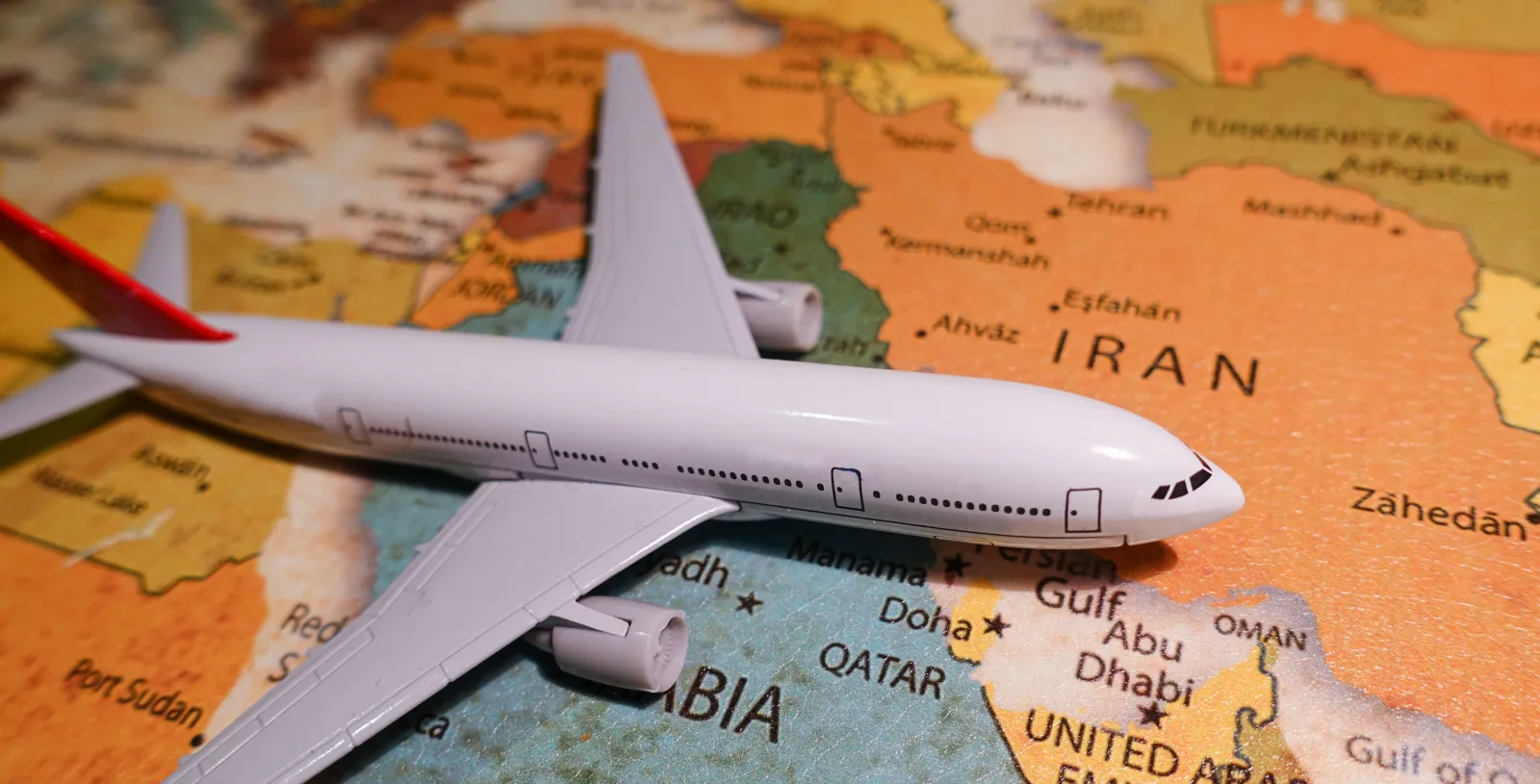
Commercial airlines around the world are weighing how long to suspend Middle East flights as the conflict, which has already cut off major flight routes, entered a new phase after the US attacked key Iranian nuclear sites and Tehran vowed to defend itself.
The usually busy airspace stretching from Iran and Iraq to the Mediterranean has been largely empty of commercial air traffic for 10 days since Israel began strikes on Iran on 13 June, as airlines divert, cancel and delay flights through the region due to airspace closures and safety concerns.
Middle Eastern routes affected
Singapore Airlines (SIA) has announced that it has cancelled all flights between Singapore and Dubai until Wednesday (25 June). The airline had earlier cancelled all flights between Singapore and Dubai on Sunday 23 June.
SIA said that the cancellations followed “a security assessment of the geopolitical situation in the Middle East” as the conflict between Israel and Iran continues. All SIA and Scoot flights have stopped flying over Iranian airspace and have used alternative flight paths since 2 August, 2024.
In the days before the US strikes, American Airlines suspended flights to Qatar. United Airlines and Air Canada did the same with flights to Dubai. They have yet to resume.
British Airways also suspended flights to Doha and Dubai. It said it was reviewing the situation for future flights. Air France cancelled flights to and from Dubai and Riyadh.
Emirates has suspended all flights to Tehran, Iran and Baghdad and Basra, Iraq until 30 June. Qatar Airways has cancelled flights to Iran, Iraq and Syria. Etihad Airways warned its customers the situation remained “highly dynamic”. “Further changes or disruption, including sudden airspace closures or operational impact, may occur at short notice.”
Virgin Australia’s newly launched flights to Doha, in partnership with Qatar Airlines, have not been affected. It only launched its Sydney to Doha and Brisbane to Doha services last week. Qantas does not fly to Doha or Dubai. Those flights are operated by Emirates or Qatar.
Air Space Risks
These flight cancellations to international aviation hubs like Dubai, the world’s busiest international airport, and Qatar’s Doha, show how aviation industry concerns about the region have escalated.
Safe Airspace said it was possible airspace risks could now extend to countries including Bahrain, Kuwait, Oman, Qatar, Saudi Arabia and the UAE. “We continue to advise a high degree of caution at this time,” it said.
With Russian and Ukrainian airspace also closed to most airlines due to years of war, the Middle East had become a more important route for flights between Europe and Asia. Amid missile and air strikes during the past 10 days, airlines have routed north via the Caspian Sea or south via Egypt and Saudi Arabia.
Added to increased fuel and crew costs from these long detours and cancellations, carriers also face a potential hike in jet fuel costs as oil prices rise following the US attacks.
Missile and drone barrages in an expanding number of conflict zones globally represent a high risk to airline traffic as aerial attacks raise worries about accidental or deliberate shoot-downs of commercial air traffic.
Location spoofing and GPS interference around political hotspots, where ground-based GPS systems broadcast incorrect positions which can send commercial airliners off course, are also a growing issue for commercial aviation.
Israeli flights cancelled, tourists rush to leave country
Israel’s carriers, El Al Israel Airlines, Arkia, Israir and Air Haifa, said on Sunday they had suspended rescue flights that allowed people to return to Israel until further notice. El Al said it would also extend its cancellation of scheduled flights through Friday and Israir said it had halted the sale of tickets for all flights through Jul 7.
Tens of thousands of Israelis and others who had booked tickets to Israel are stuck abroad. At the same time, nearly 40,000 tourists in Israel are looking to leave the country, some of whom are going via Jordan’s borders to Amman and Aqaba and others via Egypt and by boat to Cyprus.
The Israeli Airports Authority confirmed that ‘rescue flights’ to and from the country would increase from Monday with up to 24 flights per day planned. However, each will be limited to 50 passengers for security and logistical reasons. El Al reported a surge in demand, receiving applications from around 25,000 people wishing to leave Israel within a single day on Sunday.
As the situation remains volatile, aviation authorities and airlines continue to monitor developments closely.
Travel advisories
The UK government has issued updated travel advice affecting six holiday destinations – Oman, UAE, Bahrain, Kuwait, Qatar, and Saudi Arabia.
The warning comes amid “ongoing hostilities in the region and between Israel and Iran could escalate quickly and pose security risks for the wider region.” Travellers are being urged to “monitor local and international media for the latest information. Be vigilant and follow the instructions of local authorities.”
Photo Credit: futuristman/shutterstock.com