It was supposed to be a routine overnight flight across the Atlantic — one of thousands connecting San Francisco and London each year. But somewhere over the ocean, a United Airlines flight attendant’s actions turned the journey into a cautionary tale for the aviation industry.
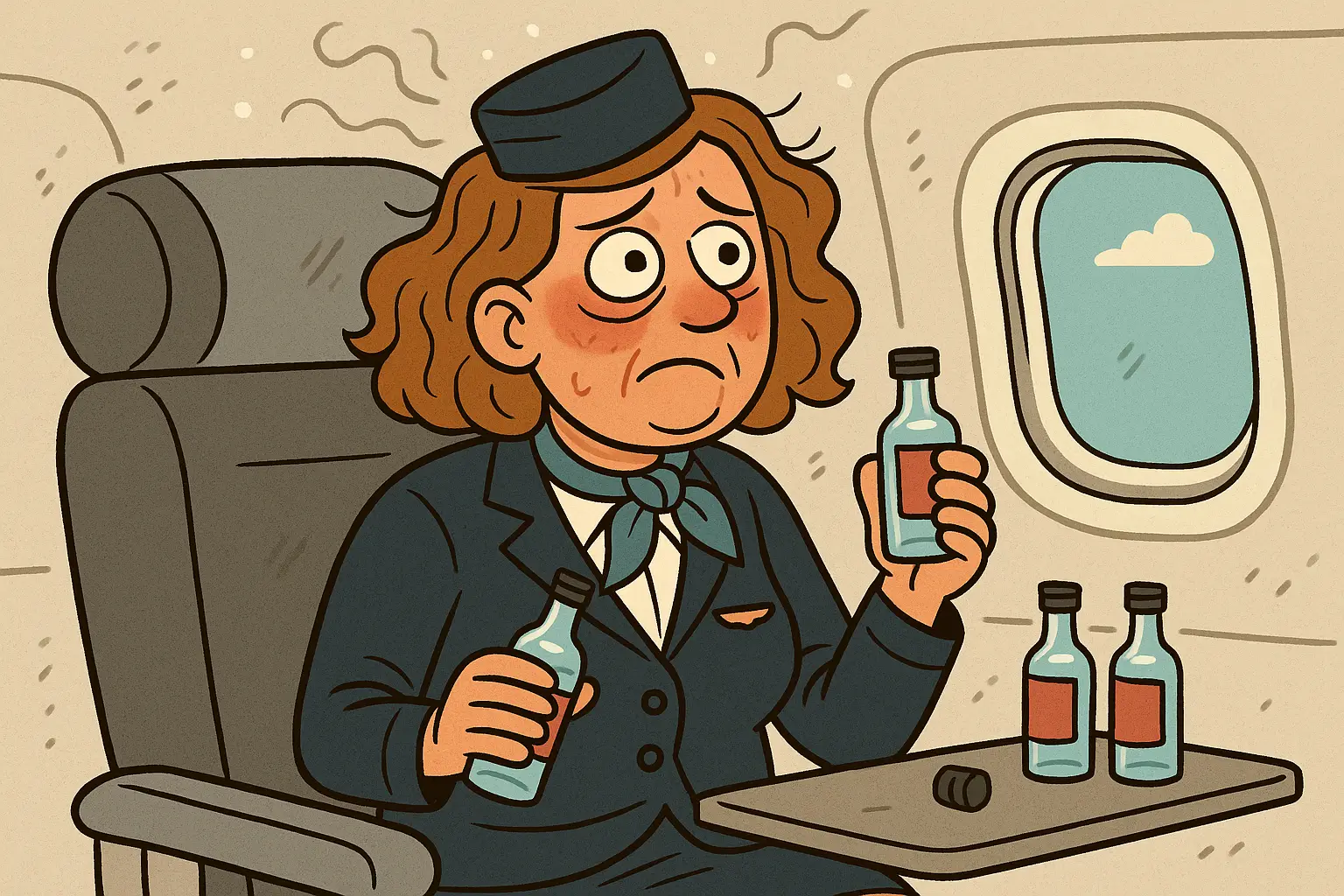
According to court documents released in the U.K., 56-year-old flight attendant Margit Lake consumed 12 miniature bottles of vodka while on duty during a 10-hour flight from San Francisco to London. The October 17 incident endangered onboard safety and brought her 26-year airline career to an abrupt end.
The case came before Uxbridge Magistrates’ Court in London, where prosecutors described Lake’s intoxication as “an open risk to herself and passengers.” Tests later showed her blood alcohol level was 216 milligrams per 100 milliliters of blood — more than ten times the legal limit for aviation personnel, which is capped at 20 milligrams.
Disbelief at 35,000 feet
Fellow crew members reportedly noticed erratic behavior and the smell of alcohol during the overnight flight. When the aircraft landed safely at Heathrow, paramedics boarded and found Lake visibly disoriented and suffering from low blood pressure. The court heard that the veteran attendant had secretly brought the miniature bottles on board and consumed them gradually during the flight.
“Her alcohol consumption represented a clear risk to flight safety,” said Beena Makwana, the prosecutor in the case. Though the flight concluded without incident, the presence of an intoxicated crew member onboard was enough to trigger a criminal investigation and disciplinary action from the airline.
Lake’s defense lawyer, Ben Lansbury, told the court that she had been struggling with loneliness and grief before the incident. “She drank to calm herself,” he said, adding that his client was “deeply remorseful” and did not recall the full extent of her actions. The court noted her long, previously unblemished record with United Airlines and the absence of any passenger distress or safety breach during the flight.
A career lost overnight
While the court stopped short of issuing a prison sentence, Lake was fined £1,461, along with £584 in victim surcharges and £85 in court costs. She pleaded guilty to “performing an aviation function while over the prescribed alcohol limit.” Judge Tony Delliston said the ruling balanced accountability with leniency, noting that “no disruption occurred and no passengers were harmed.”
“You will not go to prison,” the judge said in his closing remarks. “This will be resolved through a financial penalty.” The decision effectively ended Lake’s aviation career; she resigned shortly after the case concluded. United Airlines confirmed her departure but declined further comment on individual employment matters, emphasizing that “safety is always the airline’s top priority.”
The incident underscores the strict regulations that govern alcohol consumption for flight crews — limits that are far lower than those for motorists. In the U.K. and many jurisdictions, airline staff must not exceed 20 milligrams of alcohol per 100 milliliters of blood when on duty, a level designed to ensure full alertness and coordination during emergencies.
Industry observers note that cases like this are rare but highlight the human pressures behind the polished professionalism of flight crews. Long-haul attendants often endure disrupted sleep, time-zone fatigue, and emotional strain — factors that can intensify personal struggles. Aviation safety experts emphasize the importance of regular wellness checks and peer support networks to prevent similar incidents.
For travelers, the story serves as a reminder of the professionalism required to make modern air travel safe and seamless. Every long-haul journey relies on a complex choreography of trust, discipline, and teamwork — one that can unravel quickly when a single element falters. Though Lake’s actions shocked many in the industry, her story also reflects a deeper truth: that behind every uniform is a person navigating pressures few passengers ever see.
Lake’s case closed with a fine and no jail time, but the consequences extended far beyond the courtroom. A 26-year career ended in remorse, and one of aviation’s golden rules — sobriety in the skies — was reaffirmed for all. As airlines continue to navigate post-pandemic stresses and staffing challenges, the story has already become an unspoken lesson within the industry: even in the sky, no one is immune to turbulence.