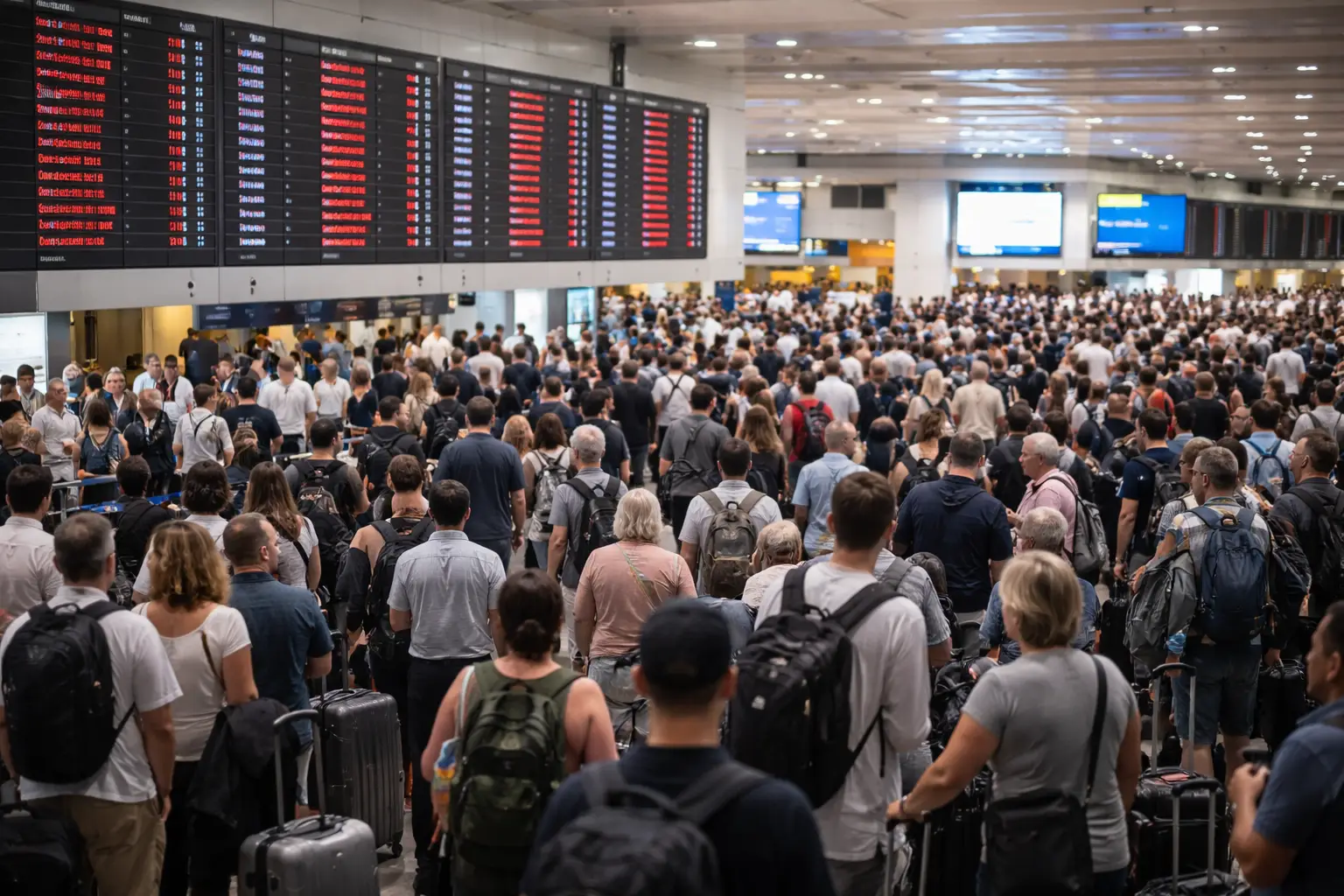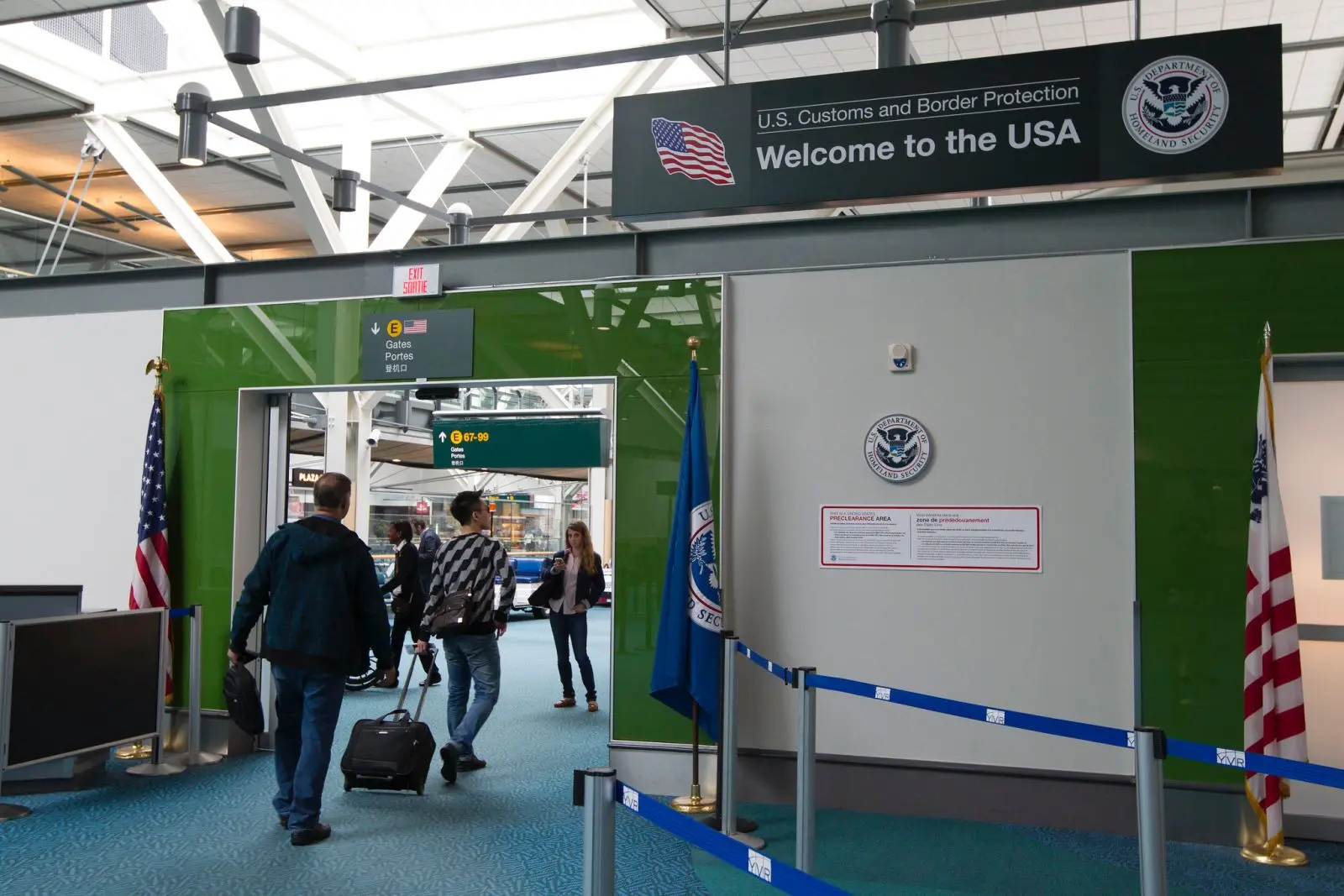
July 2025 brought a mixed performance for international air travel to and from the United States, according to the latest figures from the National Travel and Tourism Office (NTTO). The month saw overall growth in total international air passenger traffic, yet some segments experienced a decline, reflecting shifting travel dynamics in a post-pandemic world.
While outbound travel by U.S. citizens surged to new heights, inbound arrivals, particularly from overseas markets, showed signs of cooling. The data underscores an evolving landscape where Americans are eager to explore abroad, while international visitation to the United States remains uneven across regions.
Overall Passenger Trends
Total U.S.-international air traffic passenger enplanements reached 27.1 million in July 2025. This marks a 1.2 percent increase compared to the same month in 2024 and represents 107 percent of the pre-pandemic July 2019 volume. The figure reflects ongoing recovery in the sector, albeit with variations between inbound and outbound segments.
Breaking down the numbers, non-U.S. citizen air passenger arrivals from foreign countries totaled 5.3 million, down 4.9 percent compared to July 2024. This arrival volume equates to 86.6 percent of what was recorded in July 2019. Overseas visitor arrivals reached 3.3 million, a 3.1 percent decline year over year, though the figure did improve from 80.4 percent of pre-pandemic levels in June to 82.9 percent in July.
In contrast, U.S. citizen departures to foreign countries recorded strong growth. July 2025 saw 8.1 million Americans flying abroad, up 5.5 percent from July 2024 and exceeding July 2019 levels by an impressive 24.9 percent.
Regional Performance Highlights
The NTTO data revealed notable differences in performance across regions. Travel between the United States and Mexico led all country pairings with 3.9 million passengers, a 2.2 percent year-over-year increase. Canada followed with 3.0 million passengers, though this represented a 7.4 percent drop compared to the previous year.
The United Kingdom remained the top European market, recording 2.2 million passengers, only slightly down by 0.9 percent year over year. The Dominican Republic and Germany both registered 1.2 million passengers, with the former growing 4.4 percent and the latter dipping 0.9 percent.
| Region | Passengers (Millions) | YOY Change | Change vs 2019 |
|---|---|---|---|
| Europe | 8.7 | +2.7% | +5.6% |
| South/Central America & Caribbean | 6.6 | +2.8% | +18.2% |
| Asia | 2.8 | +4.5% | -18.2% |
Top Airports for International Travel
U.S. airports serving the highest number of international passengers in July 2025 were:
- New York (JFK): 3.7 million
- Los Angeles (LAX): 2.4 million
- Miami (MIA): 2.3 million
- Newark (EWR): 1.6 million
- San Francisco (SFO): 1.6 million
On the foreign side, the busiest airports serving U.S. destinations included:
- London Heathrow (LHR): 1.8 million
- Cancun (CUN): 1.2 million
- Toronto (YYZ): 1.1 million
- Paris Charles de Gaulle (CDG): 942,000
- Mexico City (MEX): 841,000
Shifts in Travel Patterns
The stronger performance of outbound U.S. travel compared to inbound overseas visitation is noteworthy. Several factors could be contributing to this divergence, including currency fluctuations, visa processing times, and the lingering effects of pandemic-related travel policies in some countries.
Europe and the South/Central America-Caribbean regions both posted growth compared to 2024 and pre-pandemic levels, suggesting robust connections in these markets. Asia, despite year-over-year growth, remains the only major region still significantly below its 2019 passenger numbers, down 18.2 percent. This gap hints at a longer recovery timeline for transpacific travel.
The July 2025 data offers valuable insights for airlines, tourism boards, and travel service providers. For outbound U.S. travel, the demand surge may encourage airlines to expand routes and capacity, particularly to destinations that have shown strong recovery or growth. Conversely, for inbound travel, targeted marketing campaigns and improved entry processes could help stimulate visitation.
Key markets like Canada and Germany, which saw slight declines, may require renewed engagement strategies. Meanwhile, the sustained strength of Mexico and Caribbean destinations reflects their enduring appeal for American travelers, bolstered by proximity and well-established air connections.
For the broader tourism economy, these patterns affect hotel occupancy rates, tour operator demand, and spending in destination countries. With outbound travel from the U.S. far surpassing pre-pandemic levels, international tourism boards may find fertile ground in promoting their countries to eager American travelers.
Looking Toward the end of 2025
As the global travel sector moves toward the end of 2025, stakeholders will watch closely to see whether inbound U.S. travel can regain lost momentum. Seasonal travel peaks, economic conditions, and potential shifts in airfare prices will all play roles in shaping these trends.
The NTTO’s ongoing reporting will provide critical updates for understanding how international passenger flows evolve. For now, July’s data paints a picture of resilience and opportunity—where certain segments are thriving, others are still on the path to full recovery.