Passengers departing from five of Italy’s busiest airports can now travel with liquids over 100ml in their hand luggage, thanks to the introduction of advanced security screening technology.
The move, announced by Italy’s civil aviation authority ENAC, marks a significant change for travellers, aligning with new European Civil Aviation Conference (ECAC) guidelines.
The airports benefitting from this rule change are Rome Fiumicino, Milan Linate, Milan Malpensa, Bologna Guglielmo Marconi, and Turin Caselle. Each has installed next-generation EDSCB (Explosive Detection Systems for Cabin Baggage) scanners, capable of analysing the contents of cabin baggage — including liquids — without the need to remove them during security checks.
What the New Rules Mean for Travellers
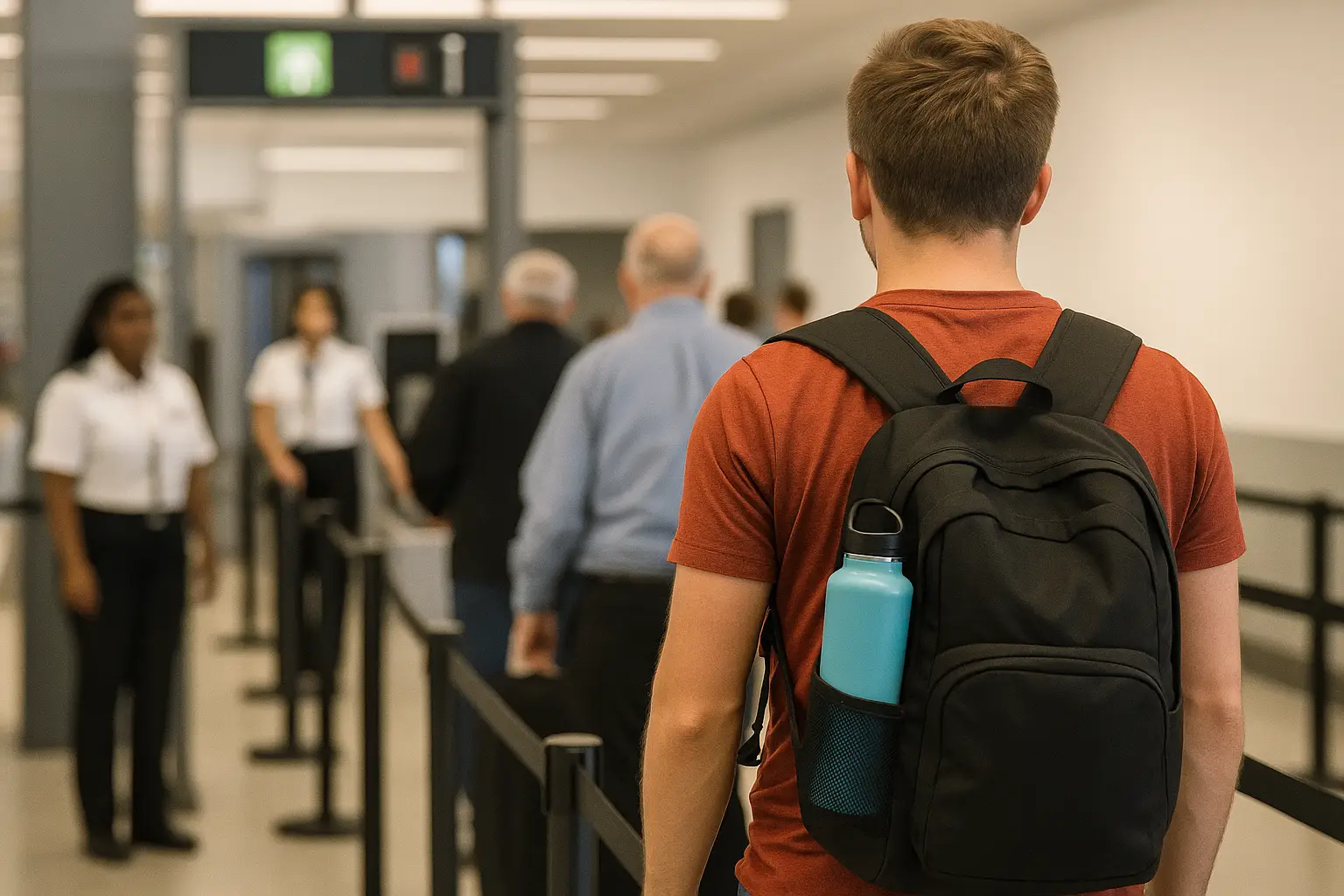
Under the updated rules, passengers can carry liquids such as water, wine, olive oil, perfumes, and creams in containers of up to two litres, as long as they comply with customs regulations. This is a major change from the long-standing restriction limiting liquids to containers of 100ml or less, all placed inside a one-litre transparent resealable bag.
In addition to liquids, electronic devices like laptops, tablets, and cameras can also remain in hand luggage during screening. This development is expected to speed up the security process and improve the passenger experience at these airports.
Airports Covered by the New System
- Rome Fiumicino (FCO)
- Milan Linate (LIN)
- Milan Malpensa (MXP)
- Bologna Guglielmo Marconi (BLQ)
- Turin Caselle (TRN)
Why the Change Is Happening Now
The change follows the ECAC’s approval of EDSCB scanner technology, which detects explosive particles with high precision, even through dense materials like canvas. According to ENAC, these scanners significantly enhance security without compromising passenger convenience.
While Milan Linate, Milan Malpensa, and Rome Fiumicino had initially rolled out the technology in 2024, the European Commission temporarily reinstated the 100ml rule last September due to a technical issue affecting the scanners. The problem has since been resolved, allowing full implementation this summer.
Exceptions and Remaining Restrictions
Although the new scanners are in place at the five major airports, not all flights from these hubs will benefit from the relaxed liquid rules. Flights to the United States and Israel departing from Rome Fiumicino will continue using traditional X-ray systems. For these routes, passengers must still adhere to the 100ml limit and remove electronics during security checks.
At all other Italian airports that have not yet installed the EDSCB scanners, the existing restrictions remain in place. Liquids must still be carried in containers no larger than 100ml, stored in a one-litre transparent resealable bag, and removed from luggage for inspection.
Impact on Passenger Experience
The introduction of these scanners is expected to streamline the airport experience, particularly during peak travel seasons. Fewer delays at security checkpoints, reduced need for bag unpacking, and the ability to carry local products like olive oil and wine onboard are likely to be welcomed by both domestic and international travellers.
ENAC has stated that it aims to expand the installation of EDSCB scanners to more airports in the coming years, potentially bringing an end to liquid restrictions across Italy’s aviation network.
With Italy joining other European countries in adopting this new technology, the move represents a broader shift in airport security protocols — prioritising both safety and convenience for passengers.