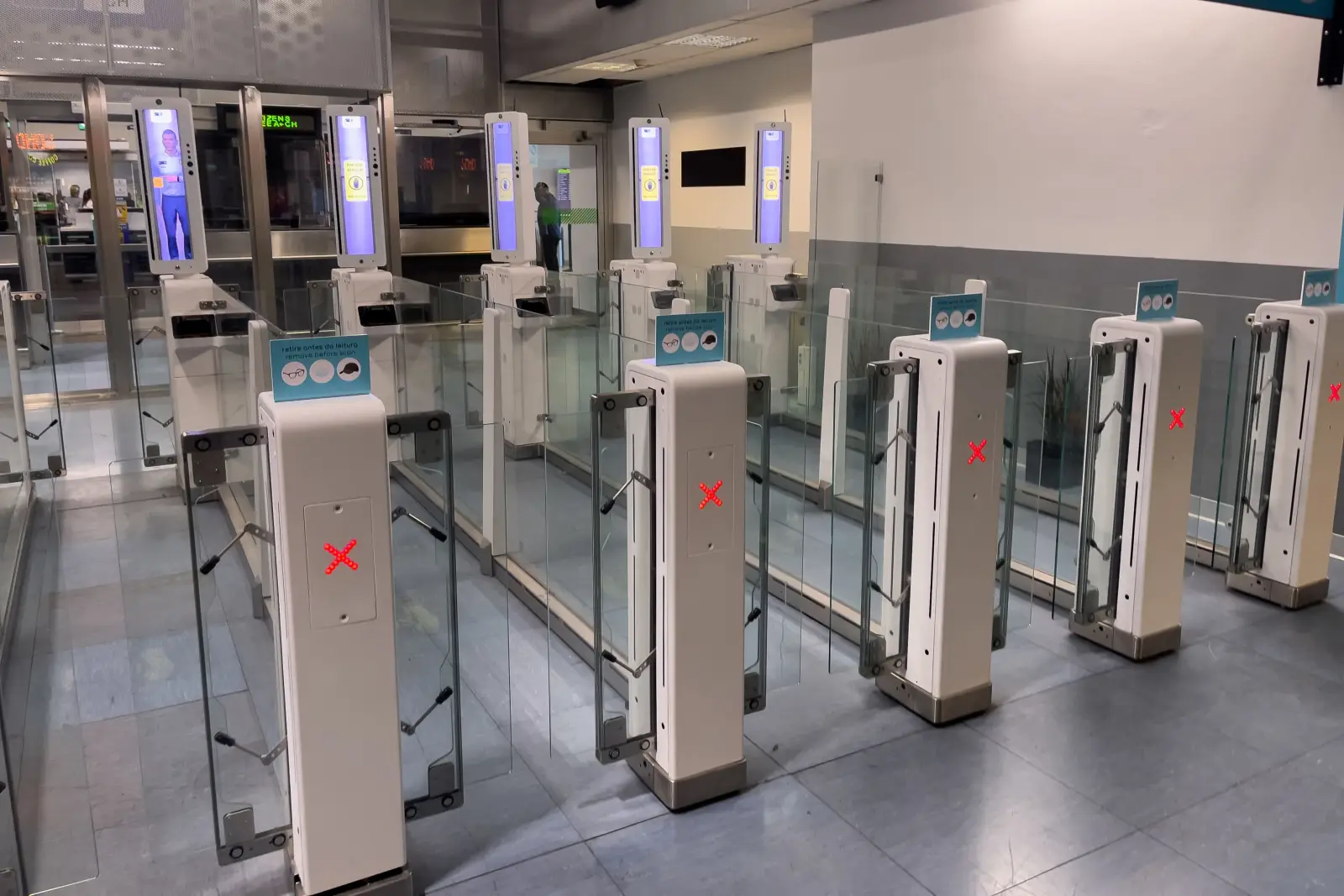
Portuguese authorities have suspended the European Union’s new Entry/Exit System (EES) border controls at Lisbon’s Humberto Delgado Airport for a period of three months after the rollout triggered severe congestion and extended waiting times for arriving passengers.
The suspension, which took effect immediately in late December, applies to non-Schengen border checks at Portugal’s busiest airport and is intended to restore passenger flow while operational shortcomings are addressed. The decision follows days of widespread disruption marked by queues lasting several hours at passport control.
The Entry/Exit System, designed to digitally register non-EU travelers entering and leaving the Schengen Area, had recently begun limited implementation at Lisbon Airport. Authorities determined that existing infrastructure and staffing levels were insufficient to handle the increased processing time required by the new system. The three-month pause allows Portugal to reinforce border control capacity, adjust procedures, and respond to concerns raised at both national and European levels.
Border control suspension and immediate measures
The suspension of the EES at Lisbon Airport was ordered by the Portuguese government in coordination with border security agencies after congestion escalated during peak travel periods. Under the temporary arrangement, border checks have reverted to pre-EES procedures while authorities work to stabilize operations. The measure applies only to Lisbon Airport and does not alter Portugal’s broader commitment to implementing the EU-wide system.
In parallel with the suspension, the government deployed additional personnel to border control areas. Members of the Guarda Nacional Republicana (GNR) were assigned to support the Public Security Police (PSP), which is responsible for immigration control at airports. Authorities also initiated steps to expand physical and electronic border control capacity, with officials indicating that processing capability is expected to increase by approximately 30% once upgrades are completed.
Airport operators adjusted passenger flow within terminals to manage congestion while the suspension remains in effect. These measures include reallocating staff to arrival halls, modifying queue layouts, and prioritizing flights arriving from high-volume non-Schengen markets. Despite these steps, officials cautioned that operational pressure is likely to persist during peak travel times until infrastructure improvements are finalized.
Impact of the Entry/Exit System rollout
The EU Entry/Exit System is intended to replace manual passport stamping with a digital record of travelers’ biometric and travel data, including fingerprints and facial images. The system aims to improve border security, reduce identity fraud, and ensure more accurate monitoring of overstays within the Schengen Area. However, the initial enrollment process requires additional time per passenger, particularly at airports with high volumes of long-haul arrivals.
At Lisbon Airport, the introduction of EES coincided with the busy year-end travel period, amplifying its impact. Passengers reported waiting several hours to clear border control, with queues extending beyond designated areas and affecting connecting travelers. Airlines and ground handlers warned that prolonged processing times risked missed connections and disrupted aircraft schedules.
The challenges experienced in Lisbon highlighted broader concerns across Europe about readiness for the system’s full implementation. While some airports have conducted limited trials, others face constraints related to terminal layout, staffing, and the integration of new technology into existing border control processes.
European scrutiny and regulatory context
The situation at Lisbon Airport drew scrutiny from European institutions after reports of procedural irregularities and delays. A European Commission assessment conducted in December identified serious deficiencies in border control operations at the airport, including simplified procedures introduced without prior notification. Portuguese authorities acknowledged the findings and stated that corrective measures were underway.
The temporary suspension of the EES forms part of a broader contingency plan submitted to European authorities. Officials emphasized that the pause does not represent a withdrawal from the system but rather a necessary step to ensure compliance with EU standards once the system is fully reinstated. The government reiterated its obligation to implement the EES in line with EU timelines once operational issues are resolved.
Industry representatives have broadly welcomed the decision, arguing that stabilizing passenger flow is essential to maintaining schedule reliability and traveler confidence. Airlines operating long-haul routes into Lisbon have faced disproportionate disruption, as non-Schengen arrivals account for a significant share of traffic at the airport.
Operational and passenger implications
Lisbon Airport handles more than 30 million passengers annually and serves as Portugal’s primary international gateway. Its constrained footprint and aging infrastructure have long been cited as challenges, particularly during peak periods. The EES-related congestion has intensified calls for structural reforms and renewed debate over airport capacity in the Lisbon metropolitan area.
During the three-month suspension, passengers arriving from outside the Schengen Area will continue to undergo manual passport checks. Authorities advised travelers to expect variable waiting times depending on arrival volumes and staffing levels. Airlines have been encouraged to inform passengers of potential delays and to coordinate closely with airport and border control officials.
The government indicated that progress on staffing reinforcements, equipment installation, and procedural changes will be reviewed regularly during the suspension period. A phased reintroduction of the EES at Lisbon Airport is expected once authorities are satisfied that processing times can be kept within acceptable limits.
The Lisbon experience underscores the operational complexity of deploying the EU Entry/Exit System at major hubs with high volumes of intercontinental traffic. As the EU moves toward broader implementation, airports across the bloc are closely watching developments in Portugal as a test case for balancing enhanced border security with efficient passenger processing.
Photo Credit: Wirestock Creators / Shutterstock.com