Airspace across large parts of the Middle East shut down on 28 February 2026 after the United States and Israel launched coordinated military strikes on Iran, prompting retaliatory missile attacks and widespread disruption to commercial aviation.
Civil aviation authorities in Iran and Iraq closed their skies to civilian traffic, while Gulf states, including Kuwait, Qatar, and Bahrain, imposed airspace restrictions or halted flights as the conflict escalated. Airlines rapidly rerouted or cancelled services across the region as governments moved to clear civilian aircraft from potentially dangerous airspace.
The closures followed a large-scale military operation carried out by the United States and Israel against Iranian military targets early on 28 February. Iran responded with missile and drone attacks targeting Israel and military installations hosting U.S. forces across the Gulf, intensifying security risks for international aviation and forcing carriers to suspend or divert flights across one of the world’s busiest air corridors.
Airspace closures ripple across Middle East aviation network
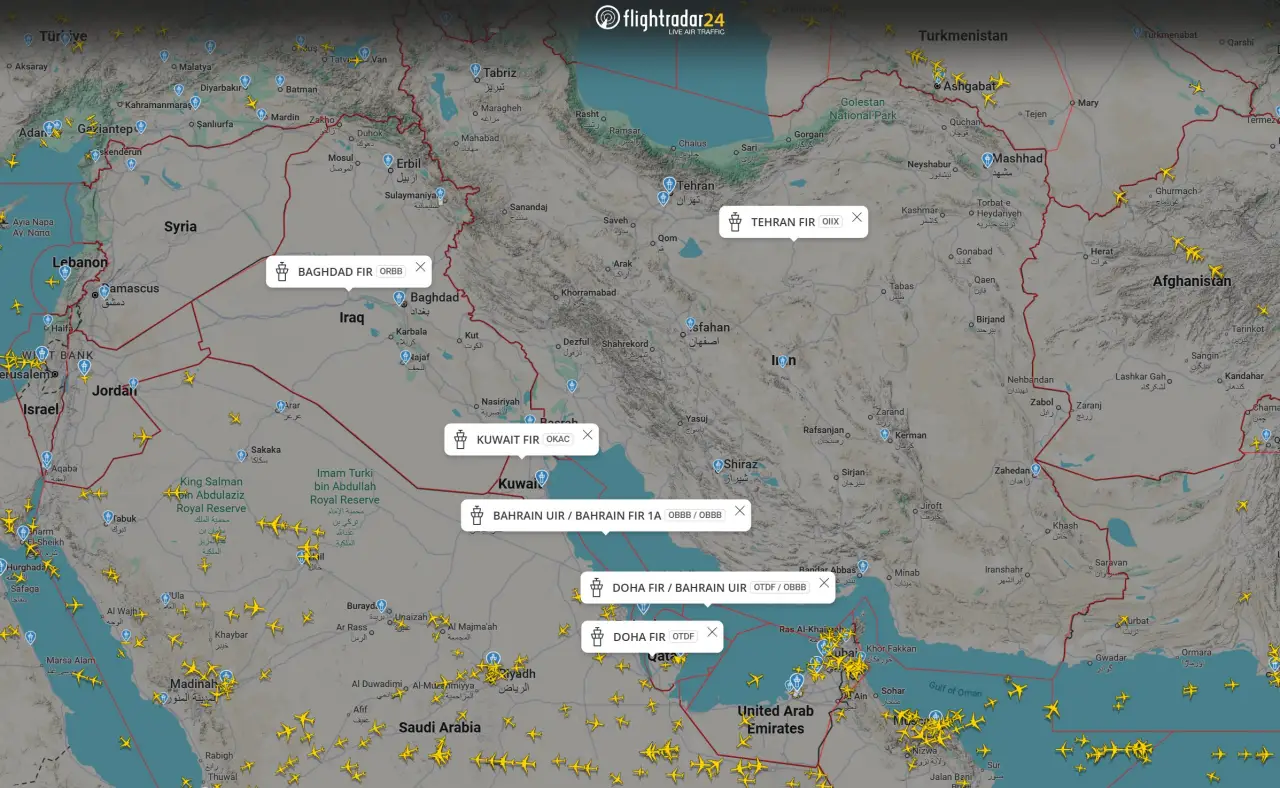
Iran closed its airspace to civilian aircraft shortly after the strikes began, issuing aviation notices that effectively halted commercial traffic over the country. Flight tracking services showed Iranian skies largely empty as airlines diverted aircraft away from the region.
Iraq also shut its national airspace and evacuated aircraft from its skies as a precaution. According to the country’s transport ministry, the decision was taken following the strikes on neighboring Iran and amid fears of further military escalation.
Several Gulf states introduced additional restrictions as tensions spread across the region. Kuwait, Qatar and Bahrain suspended or restricted air traffic after reports of missile activity and security alerts linked to the widening conflict.
Airspaces currently closed (9:55 UTC)
* Iran
* Iraq
* Kuwait
* Bahrain
* Qatar pic.twitter.com/2wLYwgg8k7— Flightradar24 (@flightradar24) February 28, 2026
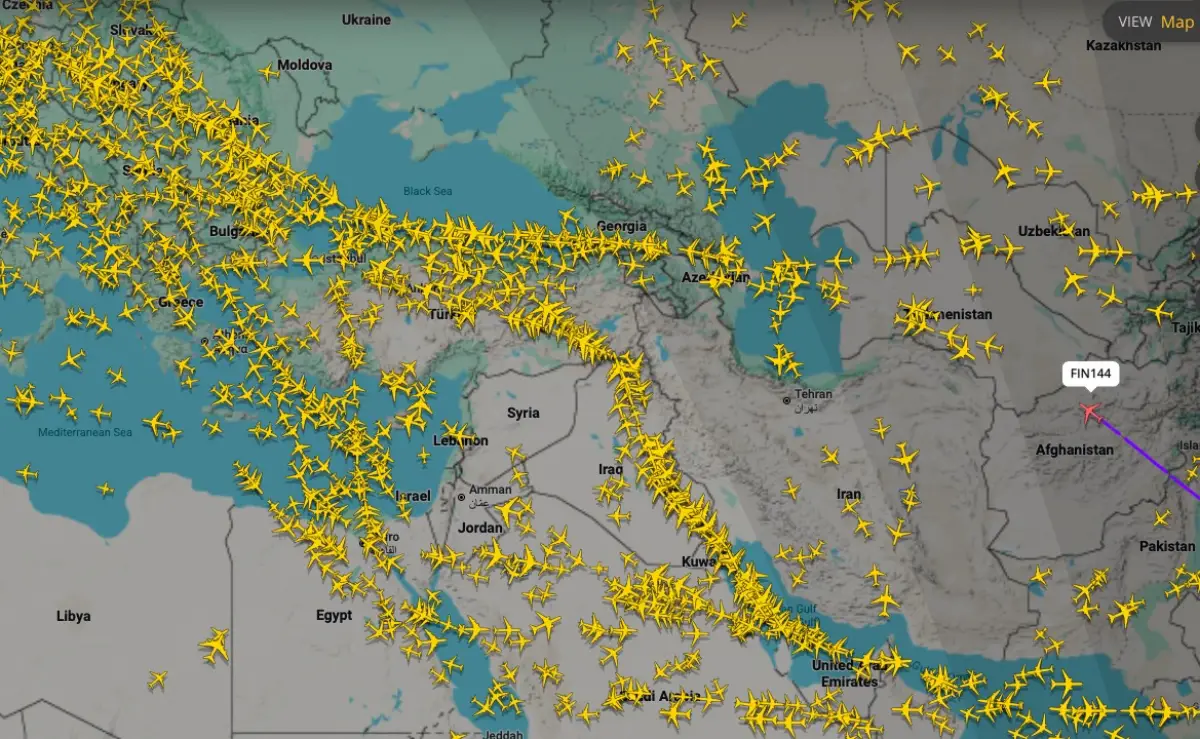
The shutdown affects one of the most important aviation corridors connecting Europe and Asia. Airlines have increasingly relied on Middle Eastern flight paths since Russian and Ukrainian airspace became unavailable for many carriers, making the new closures particularly disruptive to long-haul operations.
Airlines suspend flights and reroute long-haul services
International airlines began cancelling flights and rerouting aircraft within hours of the strikes. Carriers including Lufthansa, Air France, Wizz Air and Iberia halted flights to destinations such as Tel Aviv, Beirut, Dubai and Abu Dhabi as the security situation deteriorated.
Due to multiple regional airspace closures, Emirates has temporarily suspended operations to and from Dubai.
Due to multiple regional airspace closures, Emirates has temporarily suspended operations to and from Dubai.
Emirates urges customers to check https://t.co/Ucm3UswfVh and https://t.co/yehFUeWZQq for the latest updates before proceeding to the airport.
We are actively monitoring… pic.twitter.com/SLDC7iNaUN
— Emirates Support (@EmiratesSupport) February 28, 2026
Flight diversions also affected long-haul services between Europe and Asia, which normally cross airspace over Iran, Iraq or the Gulf. Airlines rerouted aircraft through alternative corridors over Central Asia, the eastern Mediterranean or the Arabian Sea to avoid the conflict zone.
The sudden closure of multiple airspaces created operational challenges for airlines already facing route limitations caused by earlier geopolitical conflicts. Aviation analysts note that longer diversions increase fuel costs and reduce aircraft availability due to extended flight times.
The conflict also triggered security alerts across the region. Missile sirens were reported in several Gulf states, and authorities issued public safety warnings as military activity expanded beyond Iran.
Missile strikes were reported near a U.S. Navy facility in Bahrain, highlighting the risk of escalation around locations that host American forces. Explosions and intercepts were also reported in parts of the Gulf as regional defenses responded to incoming missiles.
Governments and aviation authorities are continuing to monitor the situation as military operations unfold. Airlines have indicated that flight suspensions and diversions may remain in place until the security environment stabilizes and airspace authorities determine that civilian operations can resume safely.