In order to strengthen its position as a strategic air hub in the region, Changi Airport is investing billions of dollars to bolster connectivity, infrastructure, innovation and technology.
Changi Airport was the fourth busiest international airport in 2024 in terms of airline seat capacity. It had a total capacity of 41.5 million in 2024, up from 15 percent from 36.1 million in 2023 according to OAG Aviation.
As at 1 April, some 100 airlines operate over 7,200 weekly scheduled flights at Changi Airport, connecting Singapore to about 170 cities in 49 countries and territories worldwide. The aim is to have more than 200 city links by the mid-2030s.
So how will Changi Airport achieve this objective as well as maintain its competitiveness?
The Centre for Aviation said there are 170 known construction projects at existing Asia-Pacific airports, with a total investment value of US$217 billion (S$292 billion). There are also 90 new airport projects in the region, totalling US$121 billion in value. These facts make it crucial for Changi Airport to maintain its competitive edge.
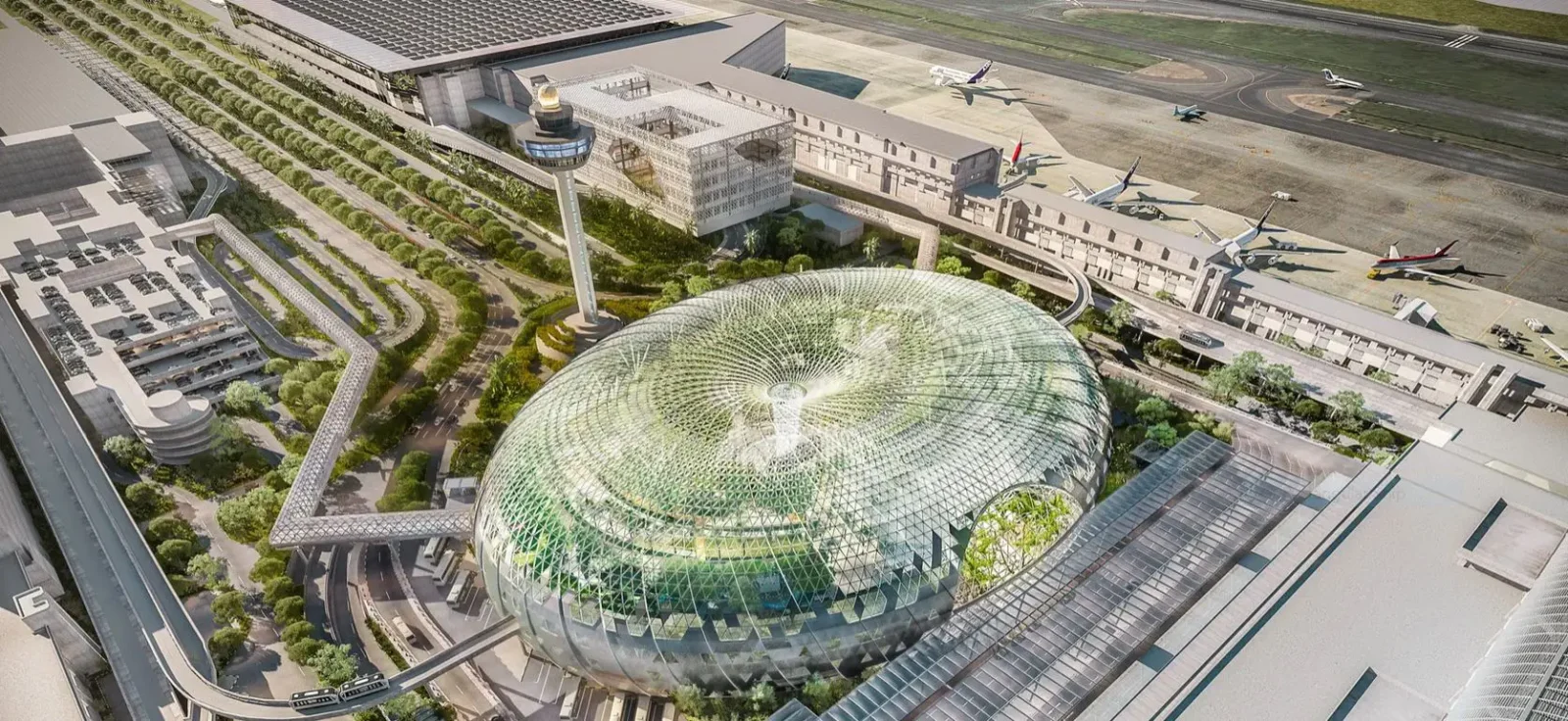
Construction of the massive Terminal 5 to start soon
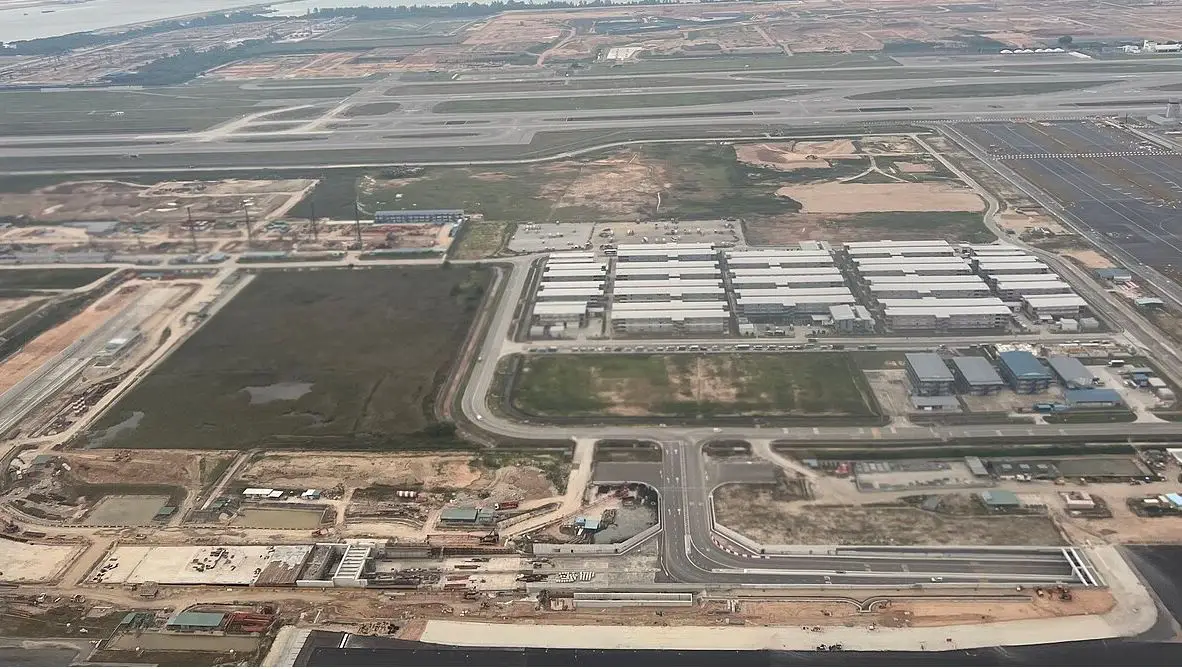
Changi Airport Group (CAG) has awarded contracts for substructure and airside infrastructure works at Changi Airport’s Terminal 5 (T5). These contracts are valued at about S$3.8 billion (US$3 billion) and S$950 million (US$732 million) respectively.
With a planned capacity of about 50 million passengers annually, T5 represents one of the most complex construction projects in Singapore. The construction of T5 will start in the first half of 2025 and is expected to be completed in the mid-2030s.
T5 is part of the larger Changi East development that includes Changi Airport’s third runway, as well as cargo complexes and other supporting aviation and ground transport infrastructure.
The airport’s third runway is estimated to be operational in Q4 of 2027. The third runway, previously used only for military flights, has been extended from 2.75km to 4km to larger handle passenger aircraft. Around 40km of new taxiways will be built to connect the third runway with the other two runways and the rest of the airport.
The substructure contract includes the construction of the foundation and basements of the T5 main passenger terminal and ground transportation centre. The substructure site covers about 140 hectares with a basement depth of up to 28 metres, equivalent to about 5,200 Olympic-sized swimming pools put together. Airside infrastructure works include the development of remote aircraft stands, connecting taxi lanes and ancillary support buildings.
Continued investment to strengthen position as air hub

Changi Airport Group had announced in November 2024 that it will invest S$3 billion (US$2.3 billion) over the next six years in Terminals 1 to 4 to improve services such as baggage handling, check-in, immigration and Skytrain connections between terminals.
The investments will help Changi Airport stay competitive and meet rising demand for air travel before Terminal 5 is operational in the mid-2030s.
Increased passenger movements
Changi Airport handled 67.7 million passenger movements in 2024, registering a 14.8% year-on-year increase. This was 99.1% of the passenger movements recorded in 2019, prior to the Covid-19 pandemic. Aircraft movements, totalled 366,000 in 2024, up 11.5% compared to 2023.
Changi Airport handled 17.2 million passenger movements from January to March 2025 (Q1), exceeding 2024 levels for the same period by 4.3%. Among the regions, North America registered the highest growth with a year-on-year increase of 15.8% for Q1. Changi Airport’s top five markets for the quarter were China, Indonesia, Malaysia, Australia, and Thailand.
World’s Best Airport for 13th time
Changi Airport has been named the World’s Best Airport 2025 in the World Airport Awards by Skytrax. This is the 13th time in the history of the awards that Singapore Changi Airport has received this top accolade. Changi Airport also received other major awards, for the World’s Best Airport Dining, the World’s Best Airport Washrooms and as the Best Airport in Asia.
While Changi Airport has consistently earned accolades and recognition as one of the world’s best airports, maintaining that position requires ongoing innovation, adaptability and a proactive approach to meeting evolving passenger needs and industry trends. Changi Airport cannot rest on laurels and it is demonstrating its commitment to continuous improvement and a recognition that success is not a static destination.