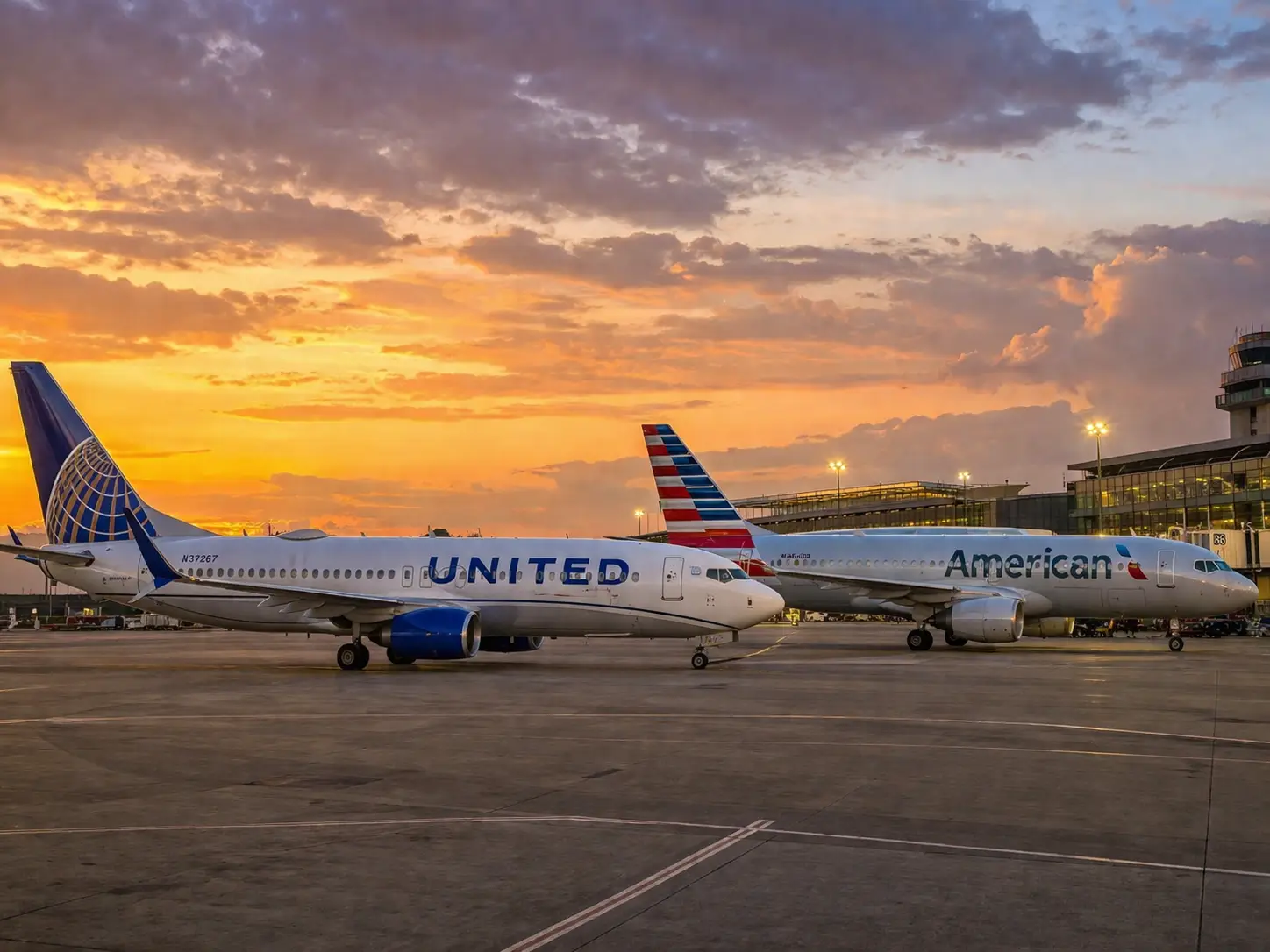
United Airlines chief executive Scott Kirby has confirmed he approached rival American Airlines about a merger that would have created the world’s largest airline, but the proposal has collapsed after American rejected it outright and President Donald Trump said he opposed the deal.
Kirby Breaks Silence on Merger Bid
Kirby confirmed on Monday that he had privately floated the idea to American Airlines earlier this year, describing it as a bold vision to build a globally competitive US carrier. “I approached American about exploring a combination because I thought we could do something incredible for customers together,” Kirby said in a statement. He added that without a willing partner, a deal of this scale could not move forward.
Bloomberg first reported in February 2026 that Kirby had pitched the concept to the Trump administration, sending shockwaves through the airline industry. The news briefly lifted the share prices of both carriers before analysts poured cold water on the prospects of regulatory approval.
The Case for Combining
Kirby framed the proposed merger as a response to what he called a trade deficit in long-haul aviation. Foreign carriers fly roughly 65% of long-haul seats into the United States, he argued, even though only around 40% of passengers on those routes are foreign nationals. A combined United and American, he said, would have the scale to challenge state-backed international carriers from the Gulf and Asia.
Kirby also argued the deal would have differed from past airline mergers, which were typically driven by rescuing struggling carriers. This combination, he said, would have been focused on growth, expanded routes, and investment in the customer experience rather than cost cuts and consolidation. He maintained that regulators could have approved it on those grounds, with divestitures on overlapping domestic routes as a concession.
American Says No
American Airlines CEO Robert Isom dismissed the proposal directly. “Merging the world’s two largest airlines together, that was a nonstarter from the get-go,” Isom told CNBC. He called the combination anticompetitive and said it would ultimately harm customers, employees, and the airline itself.
American formalized its position in an SEC filing, stating it was “not engaged with or interested in any discussions regarding a merger with United Airlines” and that such a deal would be inconsistent with the administration’s philosophy on antitrust law.
Trump and Analysts Line Up Against the Deal
President Trump also came out against the proposal. “I don’t like having them merge,” he told CNBC’s Squawk Box, adding that competition between airlines was important for consumers.
Aviation analysts were equally skeptical. Cornell University law professor George Hay said he could not see how a court would approve a deal of that scale. Seaport Research Partners analyst Daniel McKenzie described the merger as “dead on arrival.” TD Cowen analyst Tom Fitzgerald estimated that around 289 routes would require divestitures due to overlap between the two carriers.
Critics also questioned the logic behind Kirby’s trade deficit argument. Analysts noted that US airlines face higher labor costs and have voluntarily ceded international long-haul flying to joint venture partners for years, structural factors that a domestic merger would not address. Some also warned that combining the anchor carriers of two major global alliances, Star Alliance and Oneworld, could weaken both rather than strengthen US aviation’s global position.
A Vision Left on the Runway
The combined carrier would have controlled roughly 40% of US domestic capacity, with dominant positions in New York, Chicago, and Los Angeles. The four largest US airlines already account for around 80% of domestic capacity, a level of concentration that gave regulators and legal experts serious pause.
Kirby acknowledged on Monday that the idea is now off the table. “American’s public comments make it clear that a merger like this is off the table for the foreseeable future,” he said, while stopping short of ruling out future consolidation moves. United shares fell 1.4% on Monday to $91.72, while American dropped 2% to $11.84, with both carriers under pressure from rising fuel costs linked to ongoing geopolitical tensions.