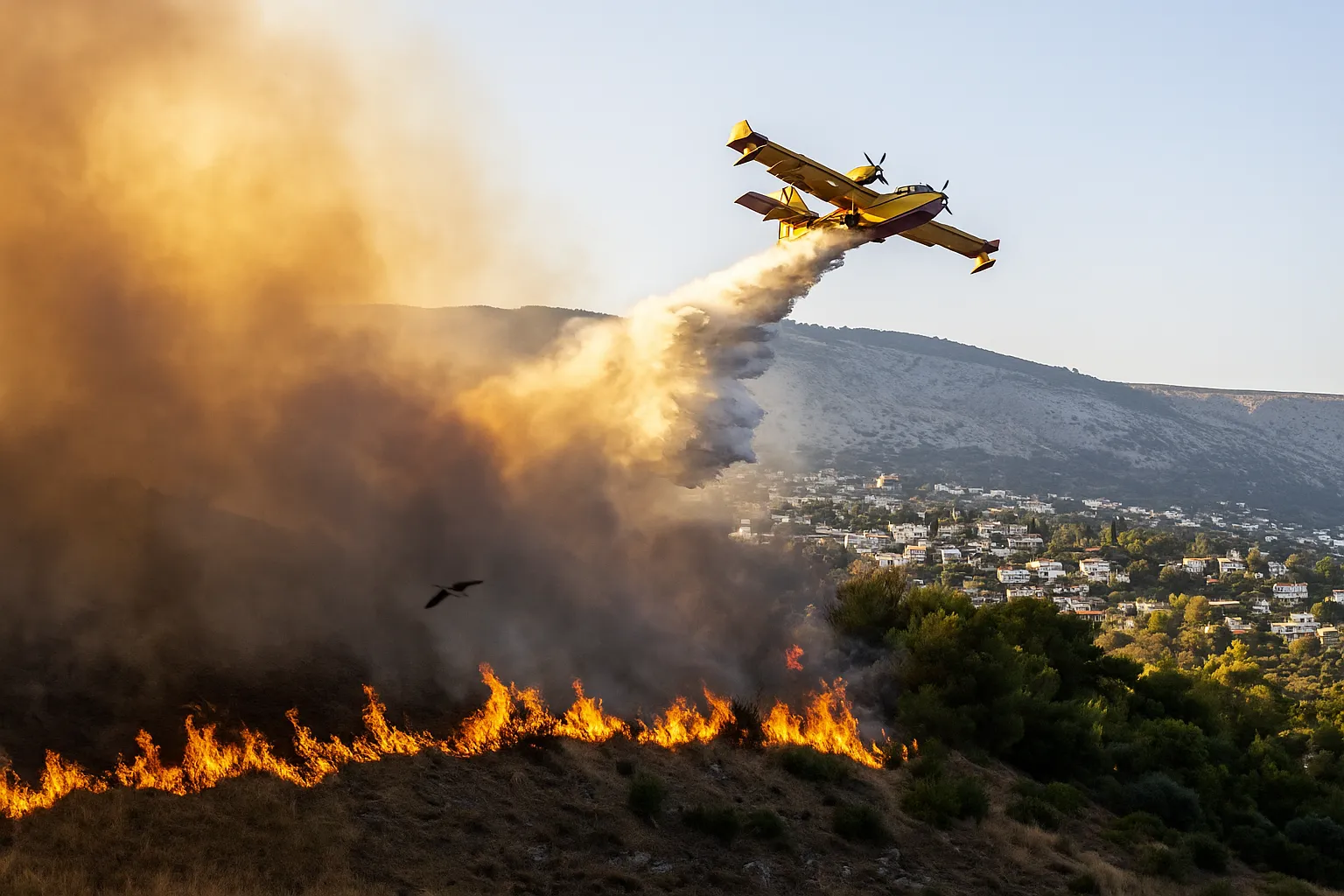
A wildfire near Marseille airport caused flight cancellations and significant travel disruption as flames forced France’s second-busiest airport to suspend operations on Tuesday. Travelers faced widespread delays, diversions, and uncertainty during the peak summer holiday season as authorities battled the fast-moving blaze driven by strong winds.
The closure came as southern France remains under a red alert for wildfire risk following weeks of intense heatwaves and dry conditions. Local authorities urged residents to stay indoors and off the roads near the affected areas, while firefighting teams worked urgently to contain the flames near the town of Les Pennes-Mirabeau, just north of Marseille.
Immediate Impact on Marseille Airport Operations
Marseille Provence Airport announced the runway closure around midday on Tuesday as the wildfire drew dangerously close. The airport’s website issued an urgent message stating: “Due to a fire at Pennes Mirabeau, landings and takeoffs are suspended until further notice. We advise you to contact your airline for more information.”
Due to the ongoing news and emergency situation, the airport’s official webpage is currently unavailable.
Flights were halted for several hours, and even as limited operations resumed, delays continued throughout the afternoon. According to FlightRadar24, departing flights faced average delays of 166 minutes, creating chaos for travelers during one of the busiest periods of the year for French airports.
Airlines worked to manage the crisis, with some flights successfully landing later in the day, but many others were canceled outright or diverted to alternative airports in the region. The uncertainty left passengers scrambling for new arrangements while airport staff and airlines worked under pressure to provide updates and assistance.
Flight Cancellations and Diversions Across Europe
Several major airlines were forced to cancel services in and out of Marseille during the shutdown. Among the affected flights were Ryanair services to Tangier, Naples, and Nantes, a British Airways flight to London Heathrow, a Transavia France service to Brest, Brussels Airlines to Brussels, Volotea to Oran, and Swiss to Zurich.
For flights that could not be safely accommodated at Marseille, diversions were arranged to nearby airports including Nice and Nimes, as well as other regional hubs better positioned to manage emergency landings. While this kept some passengers moving toward their destinations, it also created logistical challenges, including ground transport issues and extended travel times.
For many travelers, the experience underscored the importance of checking airline updates frequently, especially during high-risk weather events in southern Europe’s dry summer months.
Firefighting Efforts and Safety Measures
Authorities in the Bouches-du-Rhône department deployed significant resources to contain the fire near Les Pennes-Mirabeau. Some 168 firefighters, two helicopters, and 68 fire engines were involved in battling the blaze, which burned approximately 30 hectares of land before being brought under control. Strong winds, reaching speeds of up to 70 kilometers per hour, complicated efforts to stop the flames from spreading further toward the airport and surrounding communities.
Officials issued a red alert for wildfire risk covering not only Bouches-du-Rhône but also the Var and Vaucluse regions of southern France. The warning reflects weeks of high temperatures, dry conditions, and wind patterns that have turned much of the region into a tinderbox vulnerable to sudden, fast-moving fires.
Travelers in affected regions were urged to stay alert to local advisories, follow evacuation orders if issued, and avoid unnecessary road travel in and around firefighting zones to allow emergency crews to operate effectively.
Advice for Travellers Facing Disruptions
For those with upcoming travel plans through Marseille or southern France more broadly, flexibility and vigilance are essential. Travelers should:
- Check their flight status frequently using airline apps or airport websites.
- Allow extra time to navigate potential security and check-in backlogs caused by earlier disruptions.
- Have contingency plans in place for rebooking, rerouting, or overnight stays if necessary.
- Consider travel insurance that covers natural disasters and trip disruption costs.
Airlines typically offer to rebook on the next available service or, in some cases, refunds for canceled flights. However, availability can be limited during peak summer periods, so early communication with airlines and flexibility with itineraries can make a critical difference.
France’s Broader Wildfire Crisis and Travel Safety
This week’s wildfire near Marseille airport is part of a broader pattern of climate-linked challenges facing southern Europe. Multiple regions in France have battled wildfires this summer as heatwaves dry out vegetation and strong winds fan the flames, posing a serious threat to communities and travel infrastructure alike.
For international tourists, these fires highlight the importance of including natural disaster preparedness in travel plans, particularly when visiting regions known for extreme summer heat. From packing appropriate gear to monitoring local news and weather alerts, a little planning can help ensure safety even in rapidly changing conditions.
Meanwhile, local tourism boards and authorities continue to work closely with airlines, airports, and emergency services to manage crises, protect visitors, and maintain confidence in France as one of Europe’s most popular travel destinations.
Despite these challenges, southern France remains an iconic destination known for its Mediterranean coastline, historic towns, vineyards, and cultural attractions. Travelers considering future trips are encouraged to stay updated on local conditions, remain adaptable with plans, and respect guidance from local authorities when extreme weather or wildfire risks emerge.
By planning ahead and maintaining awareness of potential hazards, visitors can still enjoy all that Provence, the French Riviera, and surrounding regions have to offer while minimizing risk during peak wildfire season.