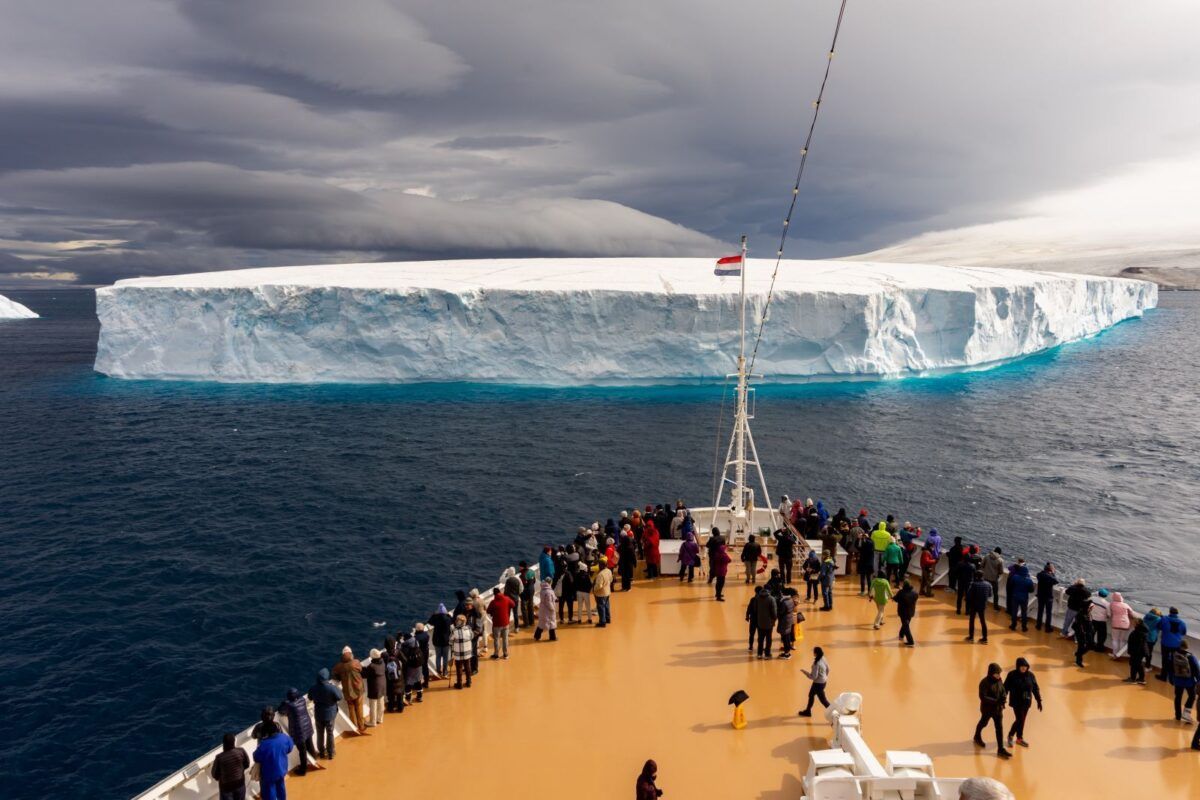
The primitive polar landscape is a massive contrast to the human environment and has always remained a strong tourist attraction.
Leading cruise lines offer incredible journeys to Antarctica for a vacation experience like no other as they sail through some of the remotest and beautiful locations in the world, yet to be touched by modern civilization.
Generally, Antarctica cruises sail from Buenos Aires, Argentina, on a 14-day trip covering several locations like Elephant Island, the Gerlache Strait etc, some popular South American ports as well as Port Stanley in the Falkland Islands.
It is advisable to explore the itineraries beforehand as the short cruise window is limited to the months of January and February, which are traditionally the two summer months in the Southern Hemisphere.
The future of Antarctica cruising
Gone are the days of sailing in polar expedition vessels made of steel designed more for scientific research than for transporting humans.
The newly launched Antarctica cruise ships by premier cruise companies have narrowed down the gap considerably between expedition and luxury by offering multiple onboard facilities and even a personal butler, all as a part of future Antarctica cruising.
While updated technologies will bring immense relief to seasickness sufferers, new onshore activities will include paddle boarding, helicopter rides and camping that can be enjoyed by one and all.
It is believed that in future the Antarctica cruise experience will become cleaner, quieter, and more immersive rather than intrusive as more and more hybrid technologies are introduced.
Trends and challenges to the future of Antarctica cruising
Record-breaking temperatures in the coldest place on earth and the rapid rise of polar travel have ignited the debate whether we should travel to such far-flung regions at all.
A large number of visitors travel to Antarctica each season. While roughly a quarter of them stay onboard, there are still an awful number of tourists wandering Antarctica’s penguin rookeries, particularly when the risk of transmitting a virus with long-term human impact is still largely unknown.
Another heart-wrenching truth is that the Antarctic ice is melting faster than ever before and the best way to address this alarming situation is by making cruise passengers Antarctica brand ambassadors.
Cruise ships, on their part, should lead the way by ensuring easy accessibility and novel methods to encourage education and immersion of all cruise guests.
The good news for travel to Antarctica is that it is now a significantly less carbon-intensive endeavour as modern cruise lines have increasingly invested in sustainability of both the ships and their operations.
Other operators are harnessing renewable energy to power the ships using hybrid electricity which is said to reduce emission by as much as 20% and reduces fine carbon emission, of which black carbon is a component, by a whopping 95%.
This has helped to limit fuel consumption while at the same time making the journey safe and smooth, a godsend especially when traversing the stomach-churning Drake Passage crossing.