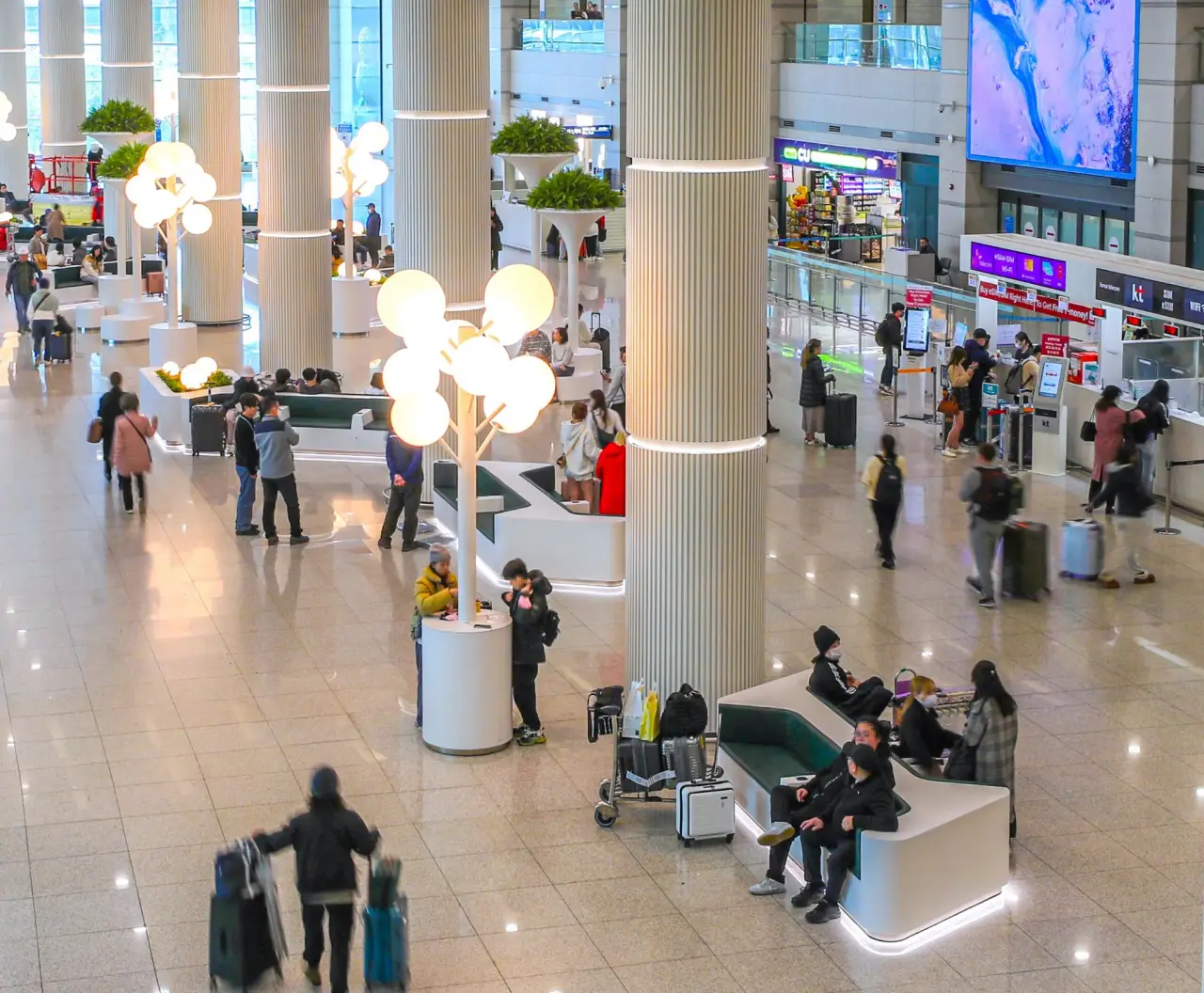
Airport workers across South Korea launched a nationwide strike on October 1, disrupting operations at 15 airports including Incheon and Gimpo.
The strike, which began at 6 a.m. local time, involves approximately 15,000 employees demanding better working conditions, improved hours, and increased safety measures.
The walkout, organized by multiple unions, is indefinite. Workers have stated they will continue their action until management addresses their demands. Rallies are scheduled to take place later in the day at Gimpo International Airport in Seoul and at Incheon International Airport, the country’s main gateway.
Nationwide Strike and Its Scope
The strike affects staff responsible for cleaning, facilities, terminal operations, and ground support. According to reports, around 2,000 employees from these areas joined the initial action. While essential maintenance crews remain on duty, airport corporations have deployed more than 400 replacement workers to minimize disruption.
South Korea’s Korea Airports Corporation said passenger services such as check-in and boarding are continuing without major disruption on the first day of the strike. Authorities added that contingency plans are in place to maintain core operations during the labor action.
Impact on Travelers
Despite the scale of the strike, flights at major hubs including Incheon International Airport and Gimpo International Airport have so far proceeded on schedule. Airlines and airport operators report no significant cancellations or delays as of the first day, though concerns remain about the potential impact on upcoming travel peaks.
The strike coincides with the Chuseok holiday period, one of South Korea’s busiest travel seasons. More than 5.2 million travelers are expected to pass through airports nationwide during the holiday, raising fears of disruptions if the strike continues into the holiday week.
Background and Union Demands
Union representatives argue that workers face long hours and insufficient rest despite increasing passenger traffic. The unions are calling for fairer scheduling, improved safety measures, and stronger labor protections. They also demand pay adjustments in line with rising workloads and inflation pressures.
Airport unions have previously warned that failure to address labor concerns could lead to prolonged industrial action. The strike marks one of the largest coordinated labor movements in the country’s aviation sector in recent years.
Government and Management Response
Airport authorities have emphasized that they are prioritizing stability of services and are open to continued dialogue with union representatives. The Ministry of Land, Infrastructure and Transport has stated that it is closely monitoring the situation to ensure minimal disruption for travelers.
Management has also underscored the introduction of replacement staff as a temporary measure. However, unions argue that stopgap efforts cannot resolve underlying issues, pressing for immediate negotiations to address worker demands.
While the first day of the strike has not yet caused widespread travel disruptions, the situation remains fluid. If the strike extends into the holiday period without resolution, the risk of passenger inconvenience and potential cancellations is expected to rise sharply.
The labor action underscores ongoing tensions in South Korea’s aviation sector as unions push for structural changes to working conditions. For now, operations at the country’s airports continue, but the outcome of negotiations will determine the strike’s long-term impact on both the travel industry and millions of passengers planning journeys during the peak holiday season.