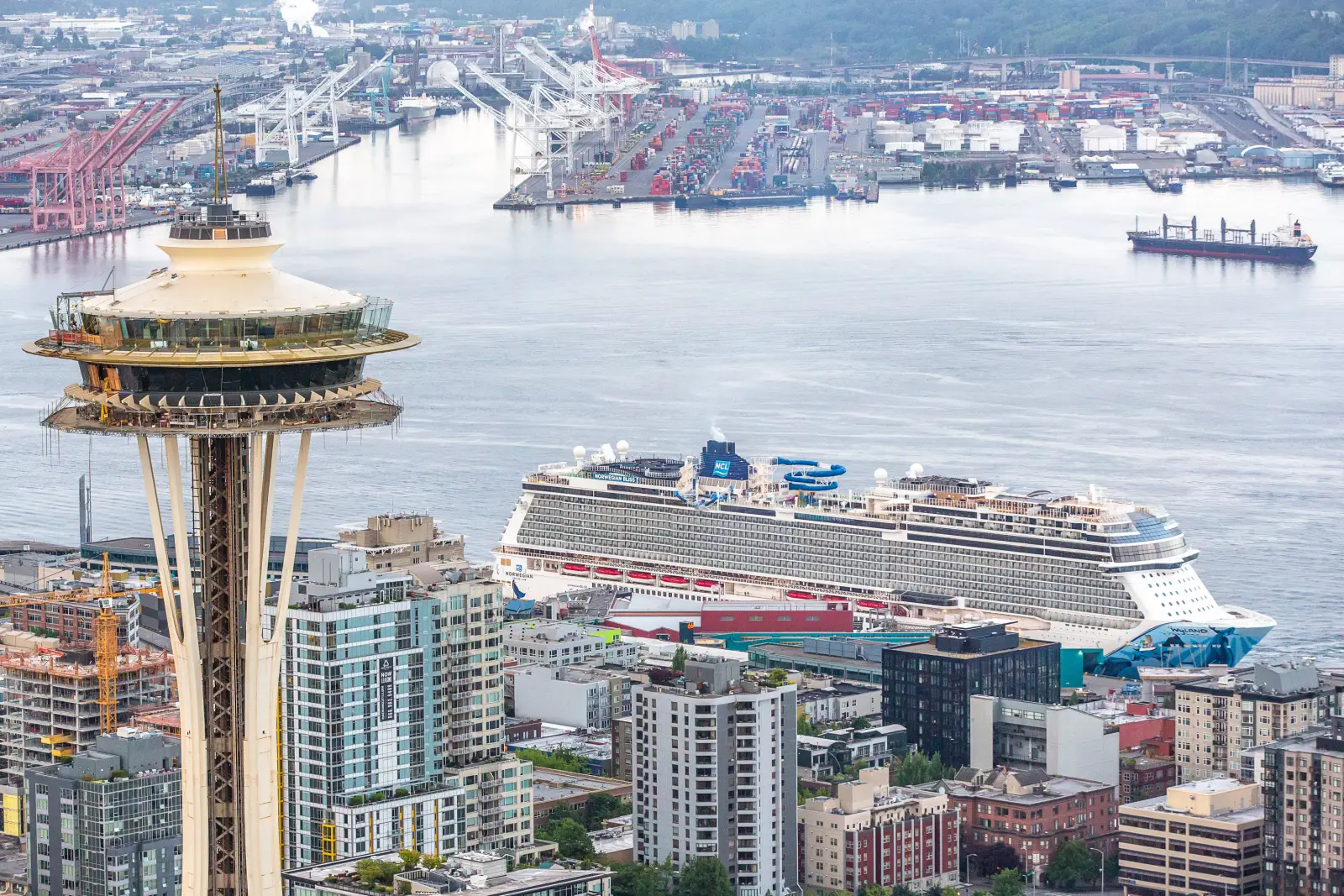
The Port of Seattle has concluded its 2025 cruise season, setting new records for passenger numbers, ship calls, and economic impact. The port reported an estimated $1.2 billion contribution to the regional economy, supported by 1.9 million passengers and 298 ship calls across eight home port cruise brands. The record-breaking season also marked major strides in environmental sustainability, with nearly two-thirds of visiting ships using shore power while at berth.
The 2025 season ended on October 21 and is being hailed as a milestone for both growth and sustainability in the U.S. Pacific Northwest’s cruise sector. The Port credited a collaborative effort between cruise lines, city planners, and environmental partners for the success, which created more than 5,120 direct and indirect jobs. The Port’s Executive Director, Steve Metruck, said the results reflected “a shared vision across the Port and our cruise partners” to balance economic development with environmental responsibility.
The Port of Seattle hosted 298 total ship calls during the season, with 14 different vessels representing eight major cruise brands. Passenger traffic reached 1.9 million, up from previous years, cementing Seattle’s status as one of North America’s leading cruise home ports. The Port also achieved a record for sustainability, with 65% of homeported ships connecting to shore power — a major increase from 42% in 2024. The Port has set a target for 100% of homeported ships to use shore power by 2027.
“Seattle set new standards this season on environmental sustainability and economic development by focusing on a shared vision across the Port and our cruise partners,” said Steve Metruck, Executive Director of the Port of Seattle. “We are not just preparing for the future — we are building it.”
The Port also supported Carnival Corporation in the first biofuel demonstration project in the Seattle cruise market, testing biofuel bunkering on three Holland America Line sailings. The trials are part of the Pacific Northwest to Alaska Green Corridor initiative, designed to promote alternative maritime fuels such as renewable biodiesel and green methanol.
“With major infrastructure investments, we are preparing for the 2027 requirement that all home port ships connect to shore power at the dock,” added Metruck. “Through our partnership work, we are advancing market development for alternative maritime fuels.”
This year marked the first time shore power was available at all three of Seattle’s cruise berths. According to the Port, 65% of ships plugged into shore power, avoiding an estimated 1.67 tonnes of diesel particulate matter (DPM) and more than 6,185 tonnes of carbon dioxide equivalent (CO2e) emissions. The figures highlight how shore power has become a cornerstone of the port’s sustainability strategy, reducing air pollution and aligning with international environmental goals for the maritime industry.
Beyond Alaska, the Port recorded 23 cruise sailings to destinations such as Mexico, Hawaii, New Zealand, and Asia, in addition to coastal voyages along the Pacific Northwest. These routes reflect a growing diversification in itineraries as cruise operators expand offerings from Seattle to appeal to international travelers and extended-voyage markets.
Sally Andrews, Vice President of Communications for the Cruise Lines International Association (CLIA), praised the season’s results. “Seattle is a premier home port for unforgettable Alaska cruise experiences, and the cruise industry is proud to bring significant economic impact to the region while showcasing the Pacific Northwest’s beauty, attractions, local businesses, and stunning new Waterfront Park,” said Andrews. “As the 2025 season ends, we celebrate another successful year of collaboration, innovation, and advancing sustainability goals.”
The Port of Seattle continues to leverage programs that connect cruise operations with local tourism. Its Port Valet service, which transfers luggage directly from ships to Seattle-Tacoma International Airport (SEA), handled more than 200,000 bags this season. The initiative gives passengers the flexibility to spend extra time exploring the city without managing their luggage, supporting restaurants, shops, and cultural attractions in the downtown area.
According to the Port, cruise tourism supports more than 5,000 jobs annually in the region, from dockside operations to hospitality and retail. Local businesses in Pike Place Market, Pioneer Square, and the new Seattle Waterfront Park have benefited from increased visitor traffic tied to cruise activity. The extended stays of disembarking passengers have become an important contributor to the city’s visitor economy.
In 2025, the Port welcomed Cunard’s Queen Elizabeth for its first Seattle home port season. The vessel made its maiden call on June 12 and completed 11 roundtrip voyages from the port, adding another highlight to the year’s operations. Cunard confirmed that the Queen Elizabeth will return to Seattle in 2026 following strong passenger demand.
The Port of Seattle is already preparing for an even busier 2026 cruise season. Two new cruise lines — Virgin Voyages with the Brilliant Lady and MSC Cruises with the Poesia — will join the roster of homeported ships next year. Both brands will bring additional passenger capacity and broaden Seattle’s international reach in the cruise market.
With ongoing investments in shore power infrastructure, renewable fuel testing, and expanded port facilities, Seattle is positioning itself as a leader in sustainable cruising. The port’s 2025 results underscore the city’s growing influence as a hub for environmentally conscious maritime travel and tourism. As the Pacific Northwest continues to attract global travelers seeking access to Alaska and beyond, the Port of Seattle aims to sustain its balance between growth, innovation, and environmental stewardship.