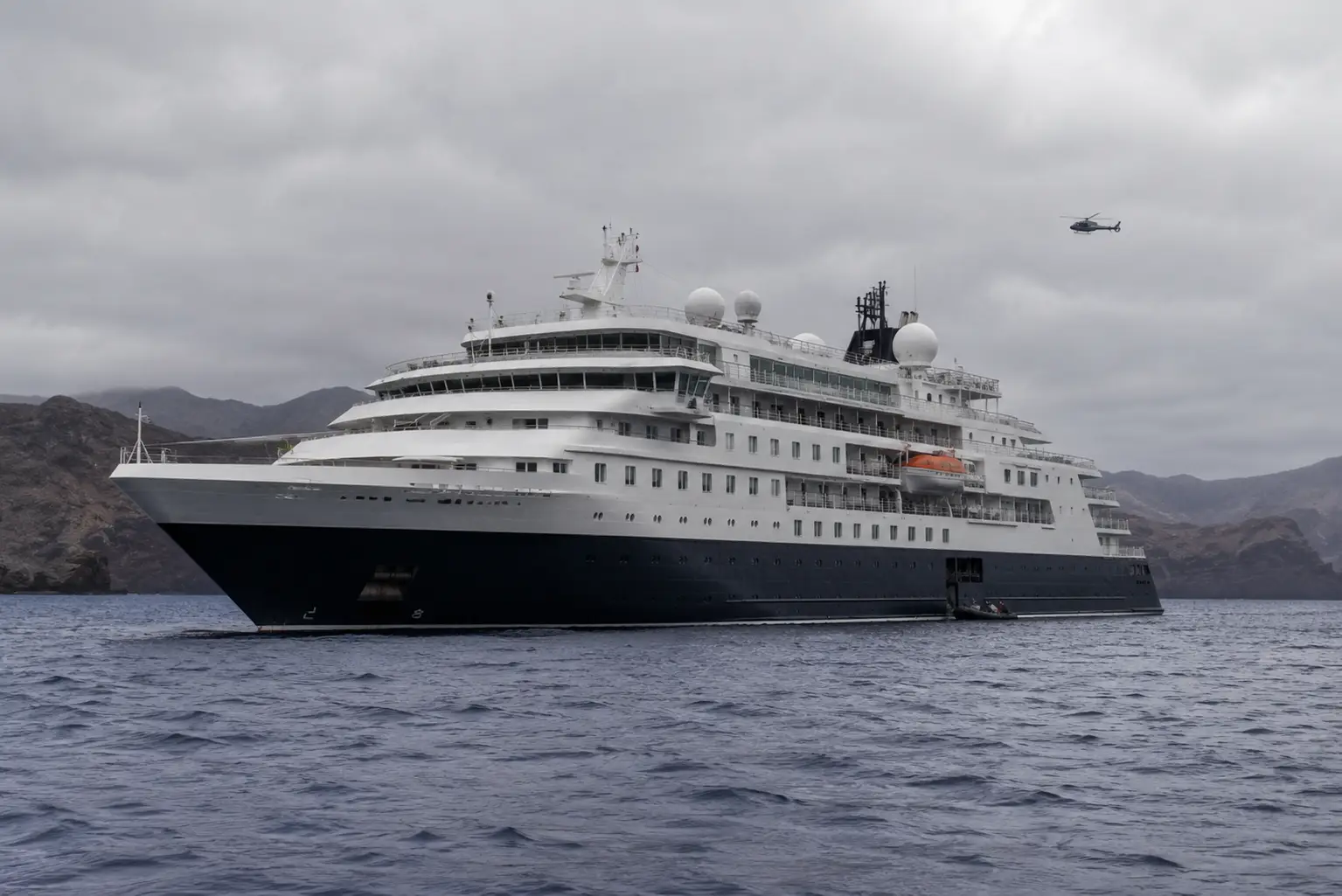
Spain has confirmed a second hantavirus infection among passengers evacuated from the cruise ship MV Hondius, as health authorities across multiple countries continue to monitor hundreds of people exposed during the outbreak.
The patient, one of 14 Spanish nationals quarantined at the Gómez Ulla military hospital in Madrid since 10 May, tested positive on 25 May 2026. Spain’s Health Ministry said the new case does not change the risk level for the general public, and the patient has been transferred to a high-isolation unit.
The MV Hondius, a Dutch-flagged expedition cruise ship operated by Oceanwide Expeditions, was carrying around 147 passengers and crew from 23 countries when a cluster of severe respiratory illnesses was first reported to the World Health Organization on 2 May 2026. Three passengers died during the outbreak, including one German national.
The ship had departed from the southern tip of Argentina in April. Initial cases emerged on board before the vessel made its way to Cape Verde, where several passengers were medically evacuated. Spanish authorities allowed the ship to anchor off Tenerife on 10 May, after which passengers and crew were taken ashore and repatriated to their home countries. The MV Hondius arrived at the port of Rotterdam on 18 May for decontamination.
Andes Virus: A Rare Person-to-Person Strain
Laboratory testing confirmed that the strain responsible for the outbreak is Andes virus, a hantavirus found in South America and the only known hantavirus capable of spreading from person to person. All laboratory-confirmed cases have tested positive for Andes virus infection. The working hypothesis from WHO investigators is that the first case acquired the infection on land before boarding, with subsequent human-to-human transmission occurring on board the ship.
Hantaviruses typically spread through the urine, droppings, and saliva of infected rodents. There is no approved vaccine. Symptoms can appear anywhere from one to eight weeks after exposure, which has complicated efforts to trace and contain the outbreak across multiple countries.
International Response
The WHO reported a total of 12 confirmed or suspected cases linked to the outbreak as of late May 2026. Cases have been confirmed in Spain, the Netherlands, France, Germany, and Switzerland, with former passengers and crew under observation or quarantine in more than a dozen countries including Australia, Canada, Singapore, South Africa, Turkey, and the United States.
The Netherlands confirmed a new case in a crew member who had returned home and was in quarantine. The National Institute for Public Health and the Environment (RIVM) said the patient had been in home quarantine before being admitted to hospital, where the person is in an isolation ward. Testing of all quarantined individuals connected to the outbreak is carried out weekly by RIVM and Erasmus MC.
WHO Director-General Tedros Adhanom Ghebreyesus confirmed the Netherlands case in a public statement. Dutch health authorities said the patient was hospitalised as a precaution.
In France, a woman in her 60s with underlying health conditions tested positive after disembarkation and was reported to be critically ill. Germany reported two suspected cases, both of whom were isolated and later allowed to quarantine at home after showing no symptoms. A case was also confirmed in Switzerland, with the virus sequence published on 8 May and designated ANDV/Switzerland/Hu-3337/2026.
Spain’s Monitoring Operation
Of the 14 Spanish nationals evacuated to Tenerife, 13 were passengers and one was a crew member. The first Spanish infection was confirmed on 11 May 2026, one day after disembarkation. The second case, confirmed on 25 May, was detected through ongoing weekly testing of those in quarantine.
Spanish authorities have maintained all exposed travellers under isolation and medical observation given the virus’s long incubation period. Health officials said the extended monitoring programme remains in place and that the detection of a case among those already in quarantine demonstrates the system is working as intended.
The outbreak has highlighted the challenges of managing infectious disease incidents on board cruise ships, where prolonged close contact between passengers from many countries can allow a virus to spread before symptoms appear. The involvement of Andes virus, with its documented capacity for human-to-human transmission, has made the international response more complex and coordinated monitoring more critical.