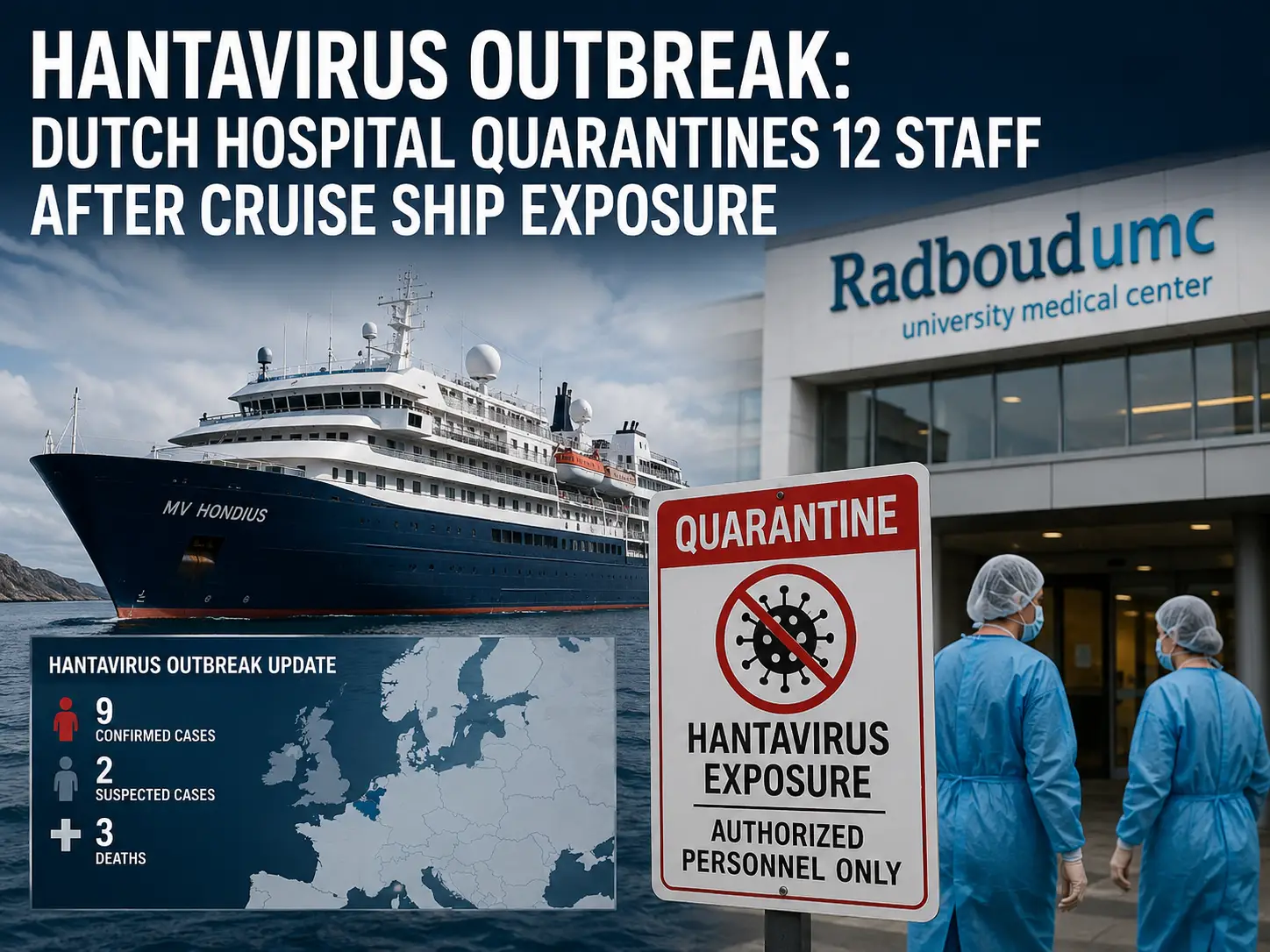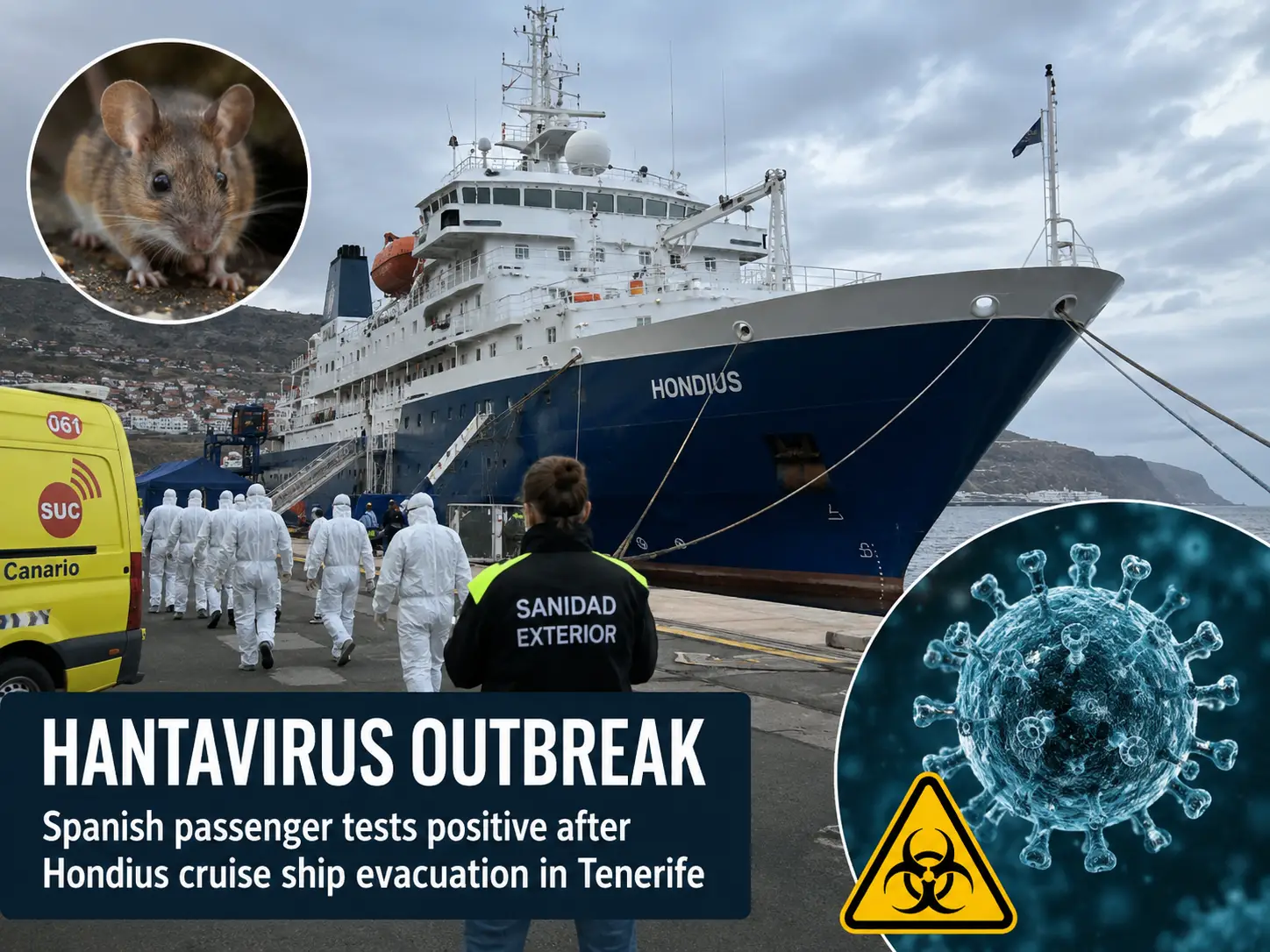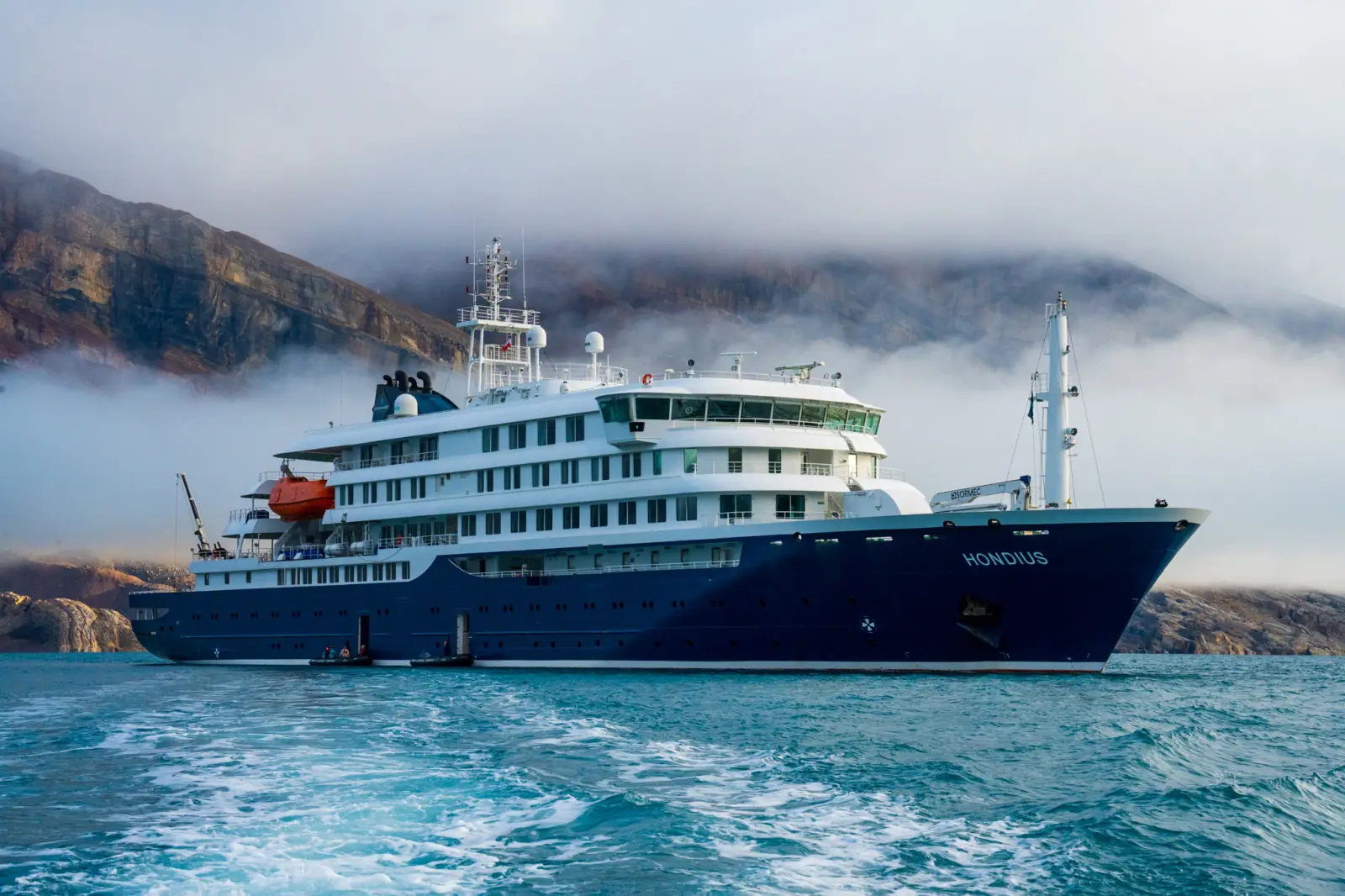
The World Health Organization has confirmed a hantavirus outbreak on the MV Hondius, a cruise ship anchored off the coast of Cape Verde in the Atlantic Ocean, after three passengers died and three others fell ill. One case has been confirmed by laboratory testing, with five additional suspected cases under investigation. The ship, operated by Dutch company Oceanwide Expeditions, is currently stationary in Praia, the capital of Cape Verde, with 149 people remaining on board.
Hantavirus is a rare but potentially fatal rodent-borne disease with no known cure or vaccine. The outbreak is considered medically unusual because the vessel had not travelled through any region where the virus is known to be endemic, raising questions about how transmission occurred.
Three Dead, One Critical as WHO Coordinates Emergency Response
The first passenger fell ill on April 27, after the ship departed from Saint Helena. A British national is now in critical condition at a private medical facility in Johannesburg, South Africa, and is the only case confirmed as hantavirus. A German national died on board on May 2, though his cause of death has not yet been formally established. Two crew members, one British and one Dutch, are experiencing acute respiratory symptoms and require urgent medical care; hantavirus has not been confirmed in either case.
WHO Director-General Tedros Adhanom Ghebreyesus said the agency “is facilitating medical evacuation of two symptomatic passengers, conducting a full risk assessment, and supporting affected people onboard.” In a separate statement, WHO said: “Medical care and support are being provided to passengers and crew. Sequencing of the virus is also ongoing.”
WHO has notified its National Focal Points in accordance with the International Health Regulations, the 2005 treaty governing cross-border public health risks. A public notice is also expected to be issued. The agency added: “While rare, hantavirus may spread between people, and can lead to severe respiratory illness and requires careful patient monitoring, support and response.”
How the Outbreak May Have Occurred
The MV Hondius departed Argentina approximately three weeks ago and was heading for the Canary Islands before anchoring off Cape Verde. Scott Miscovich, family physician and President and CEO of Premier Medical Group, told CNN the outbreak was highly unusual. “When I first read this, I thought that they were making a misprint,” he said.
Miscovich outlined two plausible explanations for the suspected outbreak. The ship may have been contaminated with rat or mice feces or urine, or one of the passengers may have contracted the Andes variant of hantavirus, for which there is limited evidence of human-to-human transmission. If human-to-human transmission is confirmed, Miscovich said it would “change the future of travel medicine and infectious disease and tropical medicine.”
Hantaviruses are spread by rodents and transmitted through contact with infected animals’ urine, saliva or droppings. Symptoms begin with fatigue, fever and muscle aches before progressing to coughing, shortness of breath and fluid in the lungs. More than one third of patients who develop respiratory symptoms may die, according to the US Centers for Disease Control and Prevention. There is no cure beyond treatment of symptoms; patients with severe breathing difficulties may require intubation. As of the end of 2023, just 890 confirmed cases of hantavirus disease had been reported in the United States since surveillance began in 1993.