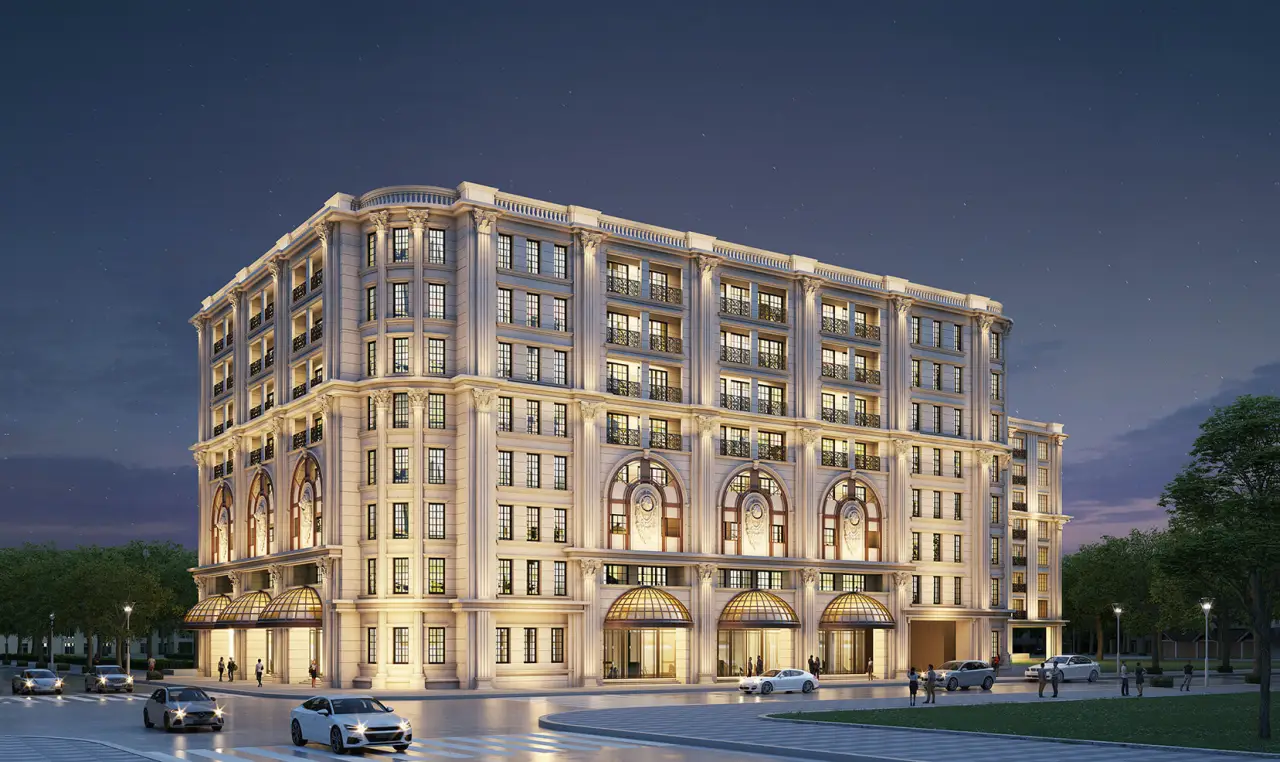
Vietnam ranks fourth globally in the number of branded residences in the market, behind only the U.S., Saudi Arabia and Mexico, indicating increasing interest in high-end properties, a report shows.
The country has more than 50 projects developed by 34 global brands, according to the Branded Residences 2025-2026 report by Savills.
Branded residences refer to properties affiliated to a popular brand and offering premium services and amenities, with the brand typically allowing a developer to market and sell residences under its name.

Vietnam, Thailand and India have been among the notable markets in the Asia Pacific for branded residences in recent years, with the number of projects growing by 55% in the last five years, Savills said.
A report by Thailand-based C9 Hotelworks consultancy said Vietnam accounts for 41% of branded residences supply currently under development in Asia.
This suggests Vietnam has gradually caught up with the pace of more established markets after more than two decades since the emergence of pioneering projects such as Four Seasons The Nam Hai and Hyatt Regency Danang Resort and Spa.
Branded residences branch out from coastal resorts to major cities
Savills analysts said branded residences in Vietnam used to be mainly associated with coastal resort developments, but have in recent years increasingly appeared in major cities such as Ho Chi Minh City and Hanoi in the form of apartments in central districts.
The trend reflects a shift from resort-oriented products to properties serving both residential demand and long-term investment.
One notable project is Grand Marina Saigon in Ho Chi Minh City developed by Masterise Homes, which brings together two international hotel brands, Marriott and JW Marriott.
In eastern Ho Chi Minh City, the ultra-luxury villa project The Rivus carries the Elie Saab fashion brand name and has 121 residences in the giant Vinhomes Grand Park urban area.
In Hanoi, The Ritz-Carlton Residences Hanoi at The Grand marks the first appearance of The Ritz-Carlton brand in the branded apartment segment.
The segment also continues to expand in resort destinations with developments such as InterContinental Residences Halong Bay, Regent Phu Quoc and Park Hyatt Phu Quoc.
Major brand operators dominate the market, supply seeing rapid growth

International hotel groups play a leading role in shaping the market. Three major operators, Marriott International, IHG Hotels & Resorts and Accor, account for 40% of the branded residences pipeline in Vietnam, according to Savills.
While supply is seeing rapid growth, so is demand. Research by Knight Frank shows the number of branded residence projects worldwide has increased from 169 in 2011 to more than 600 today and could exceed 1,000 by 2030.
Supply has grown from 27,000 units to more than 160,000 during the period.
Increasing number of locals buying branded residences
Knight Frank said most branded residence transactions in Vietnam used to be by foreign buyers and investors looking for rental properties, but in the last four or five years the number of local buyers purchasing for personal use has increased markedly, particularly in large cities.
Knight Frank also said the rapid expansion of the upper-middle class is driving a shift from “home ownership” to “lifestyle ownership.” The trend is bringing Vietnam’s demand for branded properties closer to levels seen in more affluent markets such as Singapore, Bangkok and Dubai.
Savills also said the growth of branded residences in emerging markets is driven not only by pricing but also by buyers’ trust. “Buyers place their trust in brands as a guarantee of finishing quality, operational standards and the long-term value of the asset.”
Future pipeline is huge
Researchers suggest branded residences are gradually becoming a long-term product development strategy for many developers rather than simply a tool to hike prices.
The Vietnamese market is expected to grow rapidly with around 30 new projects. Future supply is expected mostly in major cities such as Ho Chi Minh City and Hanoi and coastal resort destinations like Phu Quoc, Cam Ranh and Ha Long.
One such project is Enclave Phu Quoc, a subsidiary of construction firm ThaiGroup, wants to build a resort and residential complex on the island at a cost of VND34 trillion (US$1.3 billion).It will span 196 hectares. The project, which is being evaluated for environmental impact, will earmark 26 ha for resort and healthcare services and the rest of the area will have villas, townhouses, apartment buildings and hotels.