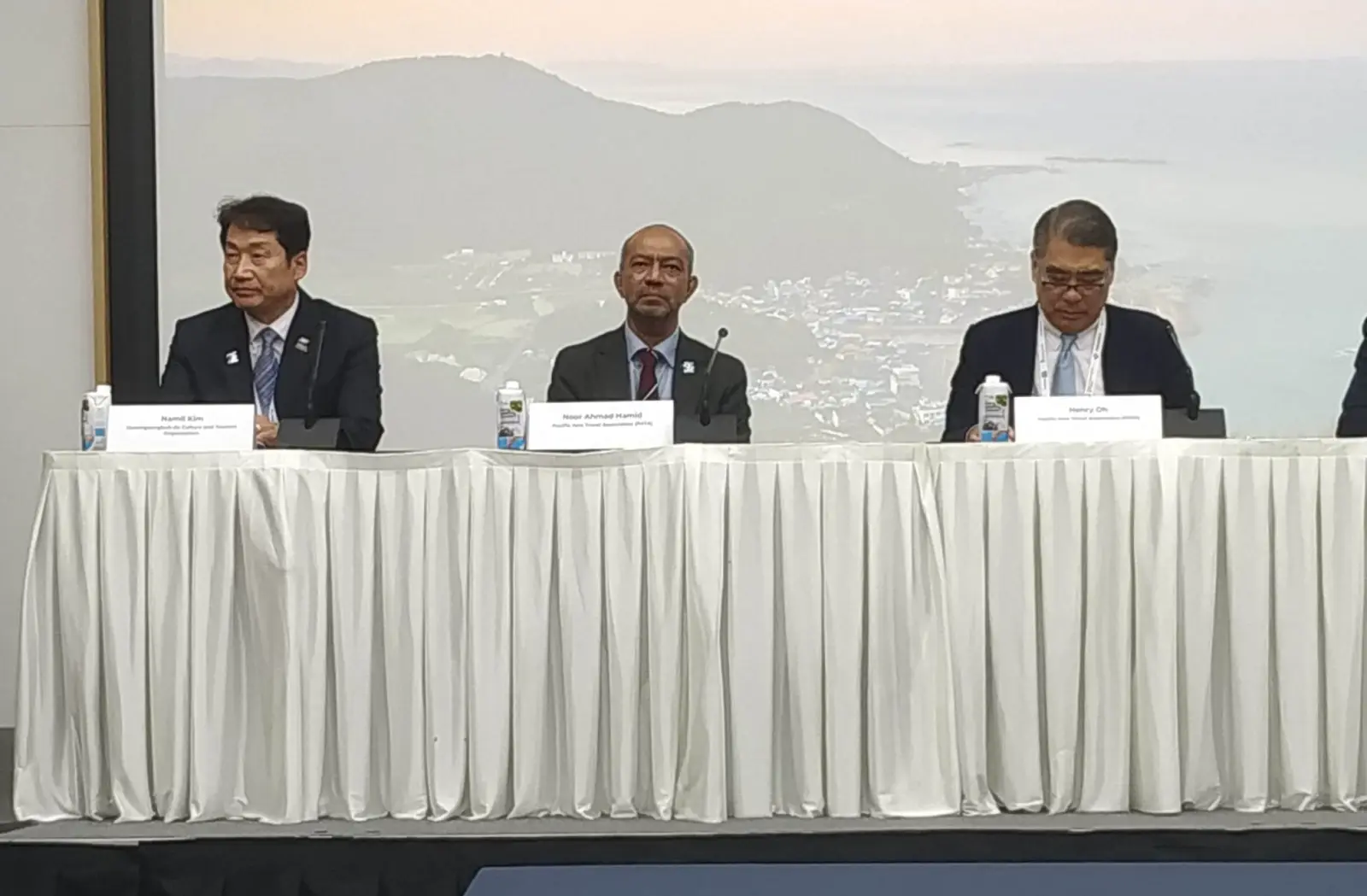
The Pacific Asia Travel Association (PATA) has convened its Annual Summit 2026 in South Korea, bringing together more than 550 delegates from over 35 destinations at venues in Gyeongju and Pohang, Gyeongsangbuk-do Province.
Held under the theme “Navigating Towards a Resilient Future”, the three-day event took place at Lahan Hotel in Pohang and HICO in Gyeongju, with participating delegations drawn from markets including China, India, the Maldives, Hong Kong SAR and the UAE.
The summit programme featured more than 60 speakers, moderators and panellists from organisations including UN Tourism, the Azerbaijan Tourism Board, the Guam Visitors Bureau, the Global Sustainable Tourism Council, Plaza Premium Group, Amadeus and AirAsia MOVE.
Conference sessions covered a wide range of industry priorities, including sustainable tourism governance in a post-APEC landscape, digital tourism platforms and destination resilience, economic uncertainty and global travel trends, the next chapter of destination marketing, and strategic opportunities for travel and tourism in a changing world.
Across the three-day programme, the event encompassed the PATA Youth Symposium, Industry and Education Roundtables, Executive Board and Board Meetings, the Annual General Meeting, a Policy Forum, conference plenaries, breakout salons and immersive destination experiences across Gyeongju and Pohang.
“As an Association, our focus remains clear: to deliver value to our members through knowledge-sharing, practical insights, and meaningful connections,” said Noor Ahmad Hamid, Chief Executive Officer of PATA. “This is reflected not only in our discussions, but also in the way we design our programmes, ensuring they are relevant, actionable, and forward-looking. The future of tourism will depend not only on technology and infrastructure, but on people, on how we attract, train, and empower the next generation of industry talent.”
On the morning of 11 and 12 May, PATA convened a series of leadership discussions and stakeholder dialogues, including the Industry Roundtable, Education Roundtable and the PATA Policy Forum. The sessions created opportunities for tourism leaders, educators and industry partners to exchange perspectives on the future of the visitor economy across the Asia Pacific region.
Those discussions took place alongside key governance meetings, including the Executive Board Meeting, Board Meeting and Annual General Meeting, where PATA leadership discussed the priorities and initiatives shaping the association’s strategic direction.
The summit also marked PATA’s 75th anniversary, with commemorative activities celebrating the association’s legacy in Asia Pacific tourism since its founding in 1951. Delegates engaged with interactive historical exhibitions and activities highlighting key milestones throughout the organisation’s history.
“Seventy-five years ago, in 1951, PATA was founded with a bold vision for tourism in Asia Pacific,” said Hamid in his conference opening remarks. “That vision helped shape an organisation that would grow alongside one of the most dynamic tourism regions in the world.”
Long-standing members were recognised with the Long-standing Member Awards and commemorative certificates in appreciation of their enduring support and relationship with the association.
On the second day of the event, the PATA Small Garden was unveiled at the Bomun Tourist Complex Watermill Garden as a permanent monument commemorating the hosting of the 75th PATA Annual Summit in Gyeongju.
A Gala Dinner was held at Expo Grand Park, a cultural theme park and landmark in Gyeongju known for its iconic Gyeongju Tower. The evening featured K-Culture experiences and an outdoor fashion show. Senior attendees included DaeHyun Kim, Vice Minister of the Ministry of Culture, Sports and Tourism; SungHyeuck Park, President of the Korea Tourism Organization; MyuongSuk Hwang, Acting Governor of Gyeongsangbuk-do; HyukJun Choi, Acting Mayor of Gyeongju City; Sang Gil Jang, Acting Mayor of Pohang City; and NamIl Kim, Chief Executive Officer and President of the Gyeongsangbuk-do Culture and Tourism Organization.
On 13 May, PATA unveiled its new Microcredentials Programme, offering accessible, expert-led learning pathways in digital transformation, sustainability and emerging technologies. The programme aims to equip tourism professionals with the capabilities needed to lead in an increasingly complex and fast-changing environment.
Hamid extended his thanks to all those who contributed to the event. “I would like to thank our delegates, partners, speakers, youth and student participants, local industry professionals, volunteers, and members of the media for contributing to the energy and success of this Summit, and for being part of this journey,” he said.
The summit was co-hosted by the Korean Ministry of Culture, Sports and Tourism, Gyeongsangbuk-do Province, the cities of Gyeongju and Pohang, and the Gyeongsangbuk-do Culture and Tourism Organization. Korean Air served as the supporting airline, with additional support from MMGY Global as Policy Forum Sponsor, Booking.com as Private Lunch Sponsor, and HotelPlanner as the official online hotel booking partner. BBC Studios served as Premier Media Partner.