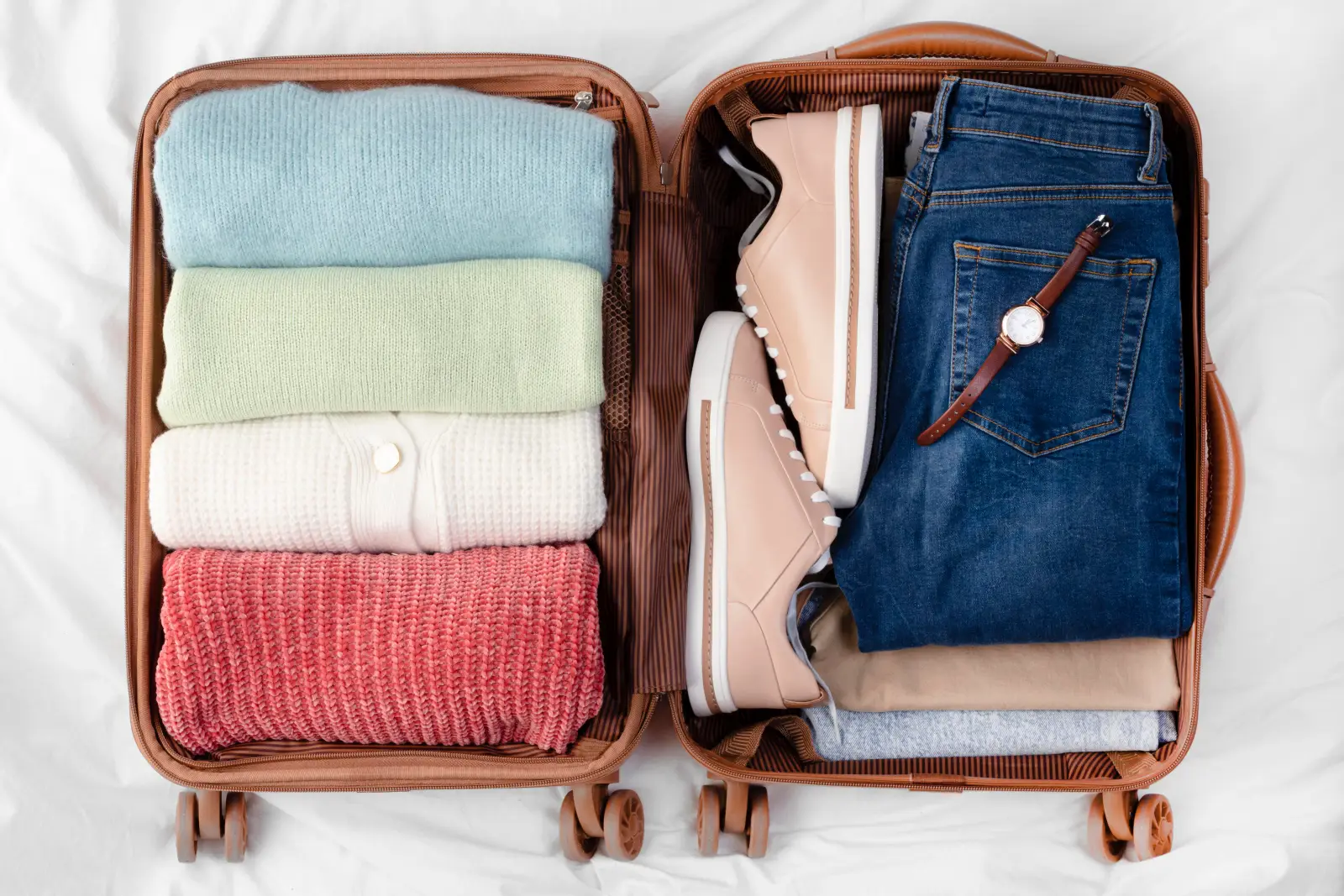
An eDreams survey has revealed that 6 out of 10 Spanish travelers rely on rolling their clothes to avoid excess baggage fees. Conducted in May 2025, the international survey gathered insights from 9,000 travelers, including 1,000 participants from Spain, to understand how people across different countries approach packing, planning, and managing their luggage before a trip. The findings expose a mix of strategy, personality quirks, and creative hacks used to reduce luggage bulk, maximize space, and steer clear of check-in counter surprises.
Spain Rolls Ahead with Packing Tricks
Among Spanish respondents, 63% admitted to rolling their clothes tightly in their luggage — a method widely recommended by travel experts for its ability to save space and reduce wrinkles. Following this popular trick, 23% said they wear multiple layers of clothing to the airport to reduce what they pack, while 18% use vacuum storage bags or look for duty-free bags to sneak in extra items.
Interestingly, the rolling technique is not unique to Spain. It’s also embraced by 61% of travelers in Portugal and the United States, making it a globally popular hack for avoiding checked baggage fees. Younger Spaniards aged 25–34 are more inclined to wear multiple clothing layers during travel (34%), while older participants aged 55–64 prefer carefully folding clothes (71%).
By gender, Spanish women are more likely than men to use space-saving hacks. About 66% of women use the rolling method compared to 58% of men, and 25% of women wear layers, versus 19% of men.
The Psychology Behind the Suitcase
The eDreams survey also explored how travelers define their packing style. A full 35% of Spanish respondents said they have an “anxious” approach, overpacking to prepare for every possible scenario. Women were more likely to identify with this style (41%) than men (28%).
Other personalities emerged too:
- 20% excessive: willing to pay for extra luggage if needed
- 19% forgetful: tend to leave something important behind
- 18% minimalist: prefer packing light and coming home heavy
These trends reflect broader cultural patterns. For example, 44% of Portuguese travelers said they pack anxiously, while Italians (25%) and Americans (24%) were more likely to describe themselves as minimalist packers.
Planning vs. Improvisation
How do people decide what to pack? According to the survey, 45% of Spanish respondents describe themselves as planners, using detailed checklists. This habit is most common among women (50%) and travelers aged 45–54 (48%). Meanwhile, 25% take a spontaneous approach and pack based on their mood or last-minute inspiration, while 23% identify as perfectionists — striving for the perfect balance of style and function.
Outside Spain, spontaneity is even more prominent, with 36% of French travelers and 30% of Portuguese travelers packing in the moment rather than with a list.
When Do Spaniards Pack?
More than half (55%) of Spanish travelers begin packing just a couple of days before departure. This is especially true among older adults aged 65 and up (81%).
Other timelines include:
- 27%: begin packing a few weeks ahead
- 10%: start several weeks in advance
- 8%: pack at the last minute
Younger travelers (18–24) and middle-aged travelers (55–64) are more likely to leave packing until the final hours — a pattern that’s also seen in Portugal (16%) and Germany (14%).
Strangest Things Seen at Security
The survey took a humorous turn by asking participants what unusual items they had seen in other people’s luggage during airport security checks. For Spaniards, the most common responses were:
| Item Type | Percentage of Spaniards Who Reported Seeing It |
|---|---|
| Food | 33% |
| Intimate Items (e.g., underwear, toys) | 32% |
| Miscellaneous (e.g., houseplants, remote controls) | 26% |
Men reported seeing intimate items more often than women (34% vs 31%), and the 25–34 age group reported the highest rate of spotting odd objects (35%). In comparison, U.S. travelers were most likely to see food (40%) and intimate items (32%), while British travelers were the least observant — 53% claimed they’d never noticed anything unusual in someone else’s luggage.

About the eDreams Survey
The survey was conducted by eDreams, Europe’s largest online travel agency and part of eDreams ODIGEO, a global leader in subscription-based travel services. eDreams brings together services from over 700 airlines, hotels, rental car companies, and more — while offering innovative tools like eDreams Prime, a pioneering travel subscription program with more than 6.5 million members worldwide.
The packing habits study was based on responses from travelers across seven countries — Spain, France, Germany, Italy, Portugal, the United Kingdom, and the United States — who had traveled within the past five years.
Whether you’re a checklist-loving planner or a roll-it-and-go minimalist, the eDreams survey shows that how we pack is as personal as how we travel. And while the rolling technique continues to win hearts and save euros, the real secret might be in embracing your own packing personality — quirks and all.