Europe’s rail network is poised for a major renaissance in 2026 with the launch and planning of at least five new train services designed to expand connectivity, boost sustainable travel and offer alternatives to short-haul flights.
These new routes include everything from revived overnight sleepers between Paris and Berlin to a fresh daytime link between Prague and Copenhagen, a new night train from Basel to Malmö, a faster Paris–Munich connection and a much-anticipated link between London and Stirling in Scotland.
Rail operators and national networks across Europe are banking on growing demand for train travel, supported by research showing that a significant portion of travellers expect to ride more by rail in the years ahead. With survey data pointing to rising interest in cross-border and city travel by train, the new services reflect a broader shift in how Europeans — and visitors to the continent — may choose to move between major cities and remote regions in 2026 and beyond.
Reviving and expanding iconic routes
This year has seen a wave of announcements from national and private rail operators outlining plans to refresh some classic lines and introduce entirely new services. Among the most eye-catching is the return of the overnight sleeper service between Paris and Berlin, which had been discontinued after Austrian operator ÖBB withdrew funding late in 2025. European Sleeper has stepped in to take over the route, with trains scheduled to depart three times a week from Paris Gare du Nord to Berlin Hauptbahnhof and Ostbahnhof starting on 26 March 2026.
The sleeper service is aimed at travellers looking for an eco-friendly, comfortable way to move between two of Europe’s great capitals without relying on flights. Operating on Tuesday, Thursday and Sunday evenings from Paris, and returning on Monday, Wednesday and Friday evenings from Berlin, the train will offer a leisure-oriented alternative that maximises time on the rails rather than in airports or on short domestic flights.
Late in 2026, travellers can also expect an enhancement of the Paris–Munich connection. Run jointly by Germany’s Deutsche Bahn and France’s SNCF, the new service is set to be faster and more frequent than the existing once-daily TGV link, further integrating two of continental Europe’s major economic and cultural centres. Although specific timetables and pricing details have yet to be released, the collaboration between the two operators suggests a more robust cross-border high-speed link will soon be available.
Daytime comfort and longer overnight journeys
Beyond these Franco-German connections, 2026 will also see the introduction of a brand-new daytime service linking Prague and Copenhagen via Berlin. Operated as a joint venture by Deutsche Bahn (DB), Danish Railways (DSB) and Czech Railways (ČD), this year-round route will launch on 1 May 2026 and is expected to take around seven hours between Copenhagen and Berlin and about eleven hours between Copenhagen and Prague.
The Prague–Copenhagen service will be furnished with ČD’s new ComfortJet trains, which provide a range of amenities tailored to long-distance daytime travel. These include an on-board restaurant, Wi-Fi, bicycle storage and space for 555 passengers. Accessibility features such as wheelchair lifts and radio-transparent windows designed to improve mobile connectivity underscore the focus on comfort and convenience. A particularly family-friendly aspect of the service will be the inclusion of a children’s cinema, offering a unique way to entertain younger travellers as landscapes unfold outside the window.
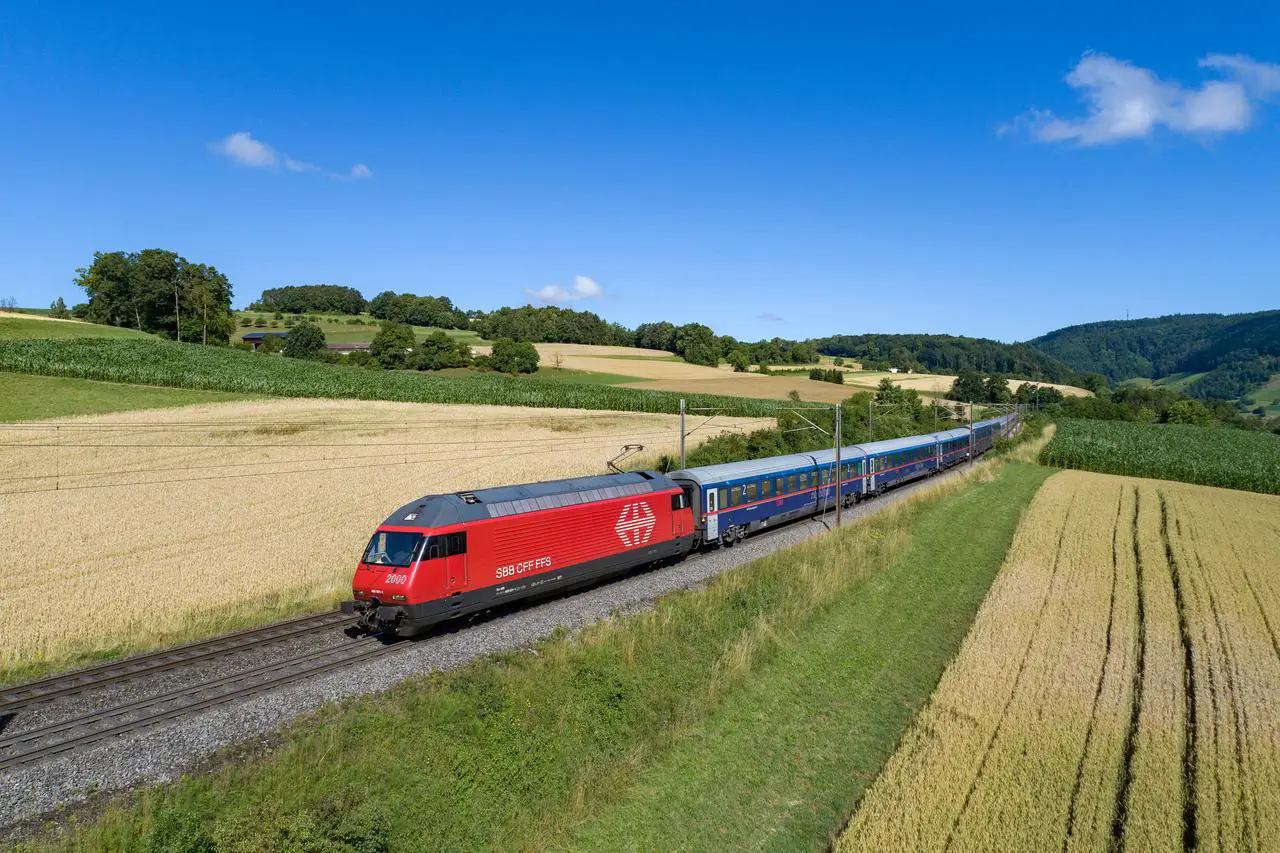
In parallel, Swiss Federal Railways (SBB) has unveiled plans for a new night train that will run from Basel to Copenhagen and Malmö. While the route still awaits formal approval tied to government financial support, tickets are already on sale and the service is slated to begin on 15 April 2026. The EuroNight route will operate three times a week in each direction, covering approximately 1,400 kilometres and stopping in key German cities such as Freiburg (Breisgau), Karlsruhe, Mannheim, Frankfurt (Main) Süd and Hamburg before continuing through Denmark.
Although the night train won’t stop at Copenhagen Central Station due to scheduling constraints, passengers can connect to the Danish capital via the S-Bahn urban railway from either Copenhagen Airport or Høje Taastrup in about 15 minutes. The sleeper service will include a mix of sleeping, couchette and seating carriages capable of accommodating around 350 passengers, providing a relaxed overnight alternative to hopping between multiple flights for long-distance travellers.
Underrated routes and new horizons
While international connections grab headlines, 2026 will also bring fresh attention to domestic and regional rail travel that has traditionally played second fiddle to air travel. In the UK, low-cost operator Lumo is planning a new daytime route linking London Euston with Stirling in central Scotland. Expected to launch in mid-2026, the service will call at Lockerbie, Carlisle, Preston and Nuneaton en route, offering a scenic and practical way for travellers to explore an often-overlooked city with a striking medieval castle and the iconic National Wallace Monument.
For rail enthusiasts and sustainable travel advocates, the emergence of these routes in 2026 marks a turning point. With more options for overnight sleepers, high-speed corridors and comfortable daytime journeys, Europe’s rail network is positioning itself as a credible, attractive alternative to short-haul flights. Whether you’re planning a relaxed cultural trip between capitals, a family adventure across borders or a scenic exploration of hidden gems like Stirling, trains in 2026 promise to make flying easier to skip.