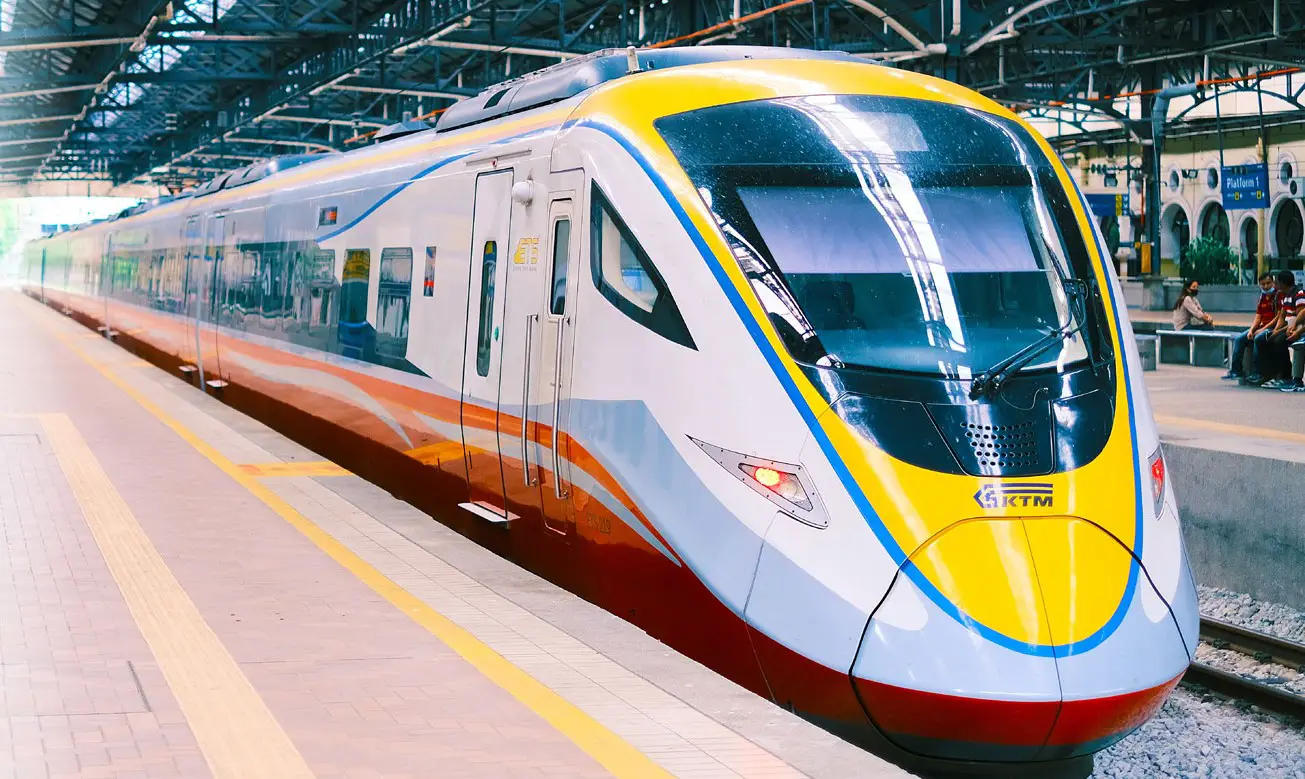
A new electric train between Kuala Lumpur and Johor Bahru was launched on 12 December and has been welcomed as a game changer for domestic travel in Malaysia.
The electric train service (ETS) can complete the trip between the Malaysian capital of Kuala Lumpur and Johor Bahru which is its closest border with Singapore, in about four hours and 20 minutes. This is half the time required on national railway operator KTMB’s diesel trains, which can take seven hours to cover the same route.
A direct flight between the two destinations takes approximately 50 minutes to one hour, not including time spent at the airport.
Running at speeds of up to 140kmph, the new ETS3 line stops at 16 stations and offers a quicker, more reliable alternative along one of Malaysia’s busiest travel corridors.
The new six-coach ETS trains seat 312, offering amenities such as power sockets, toilets and a prayer room. Business-class features include wider seats, complimentary meals, personal entertainment screens and in-seat ordering.
There will be four services daily. Two departures from Kuala Lumpur (KL Sentral: 7.45 am and 5.35 pm) and two Johor Bahru (JB Sentral: 8.40 am and 4.20 pm). Starting from Jan 1, 2026, the first service from Kuala Lumpur will depart at 7.55 am, and frequencies will increase.
Completion of southern line
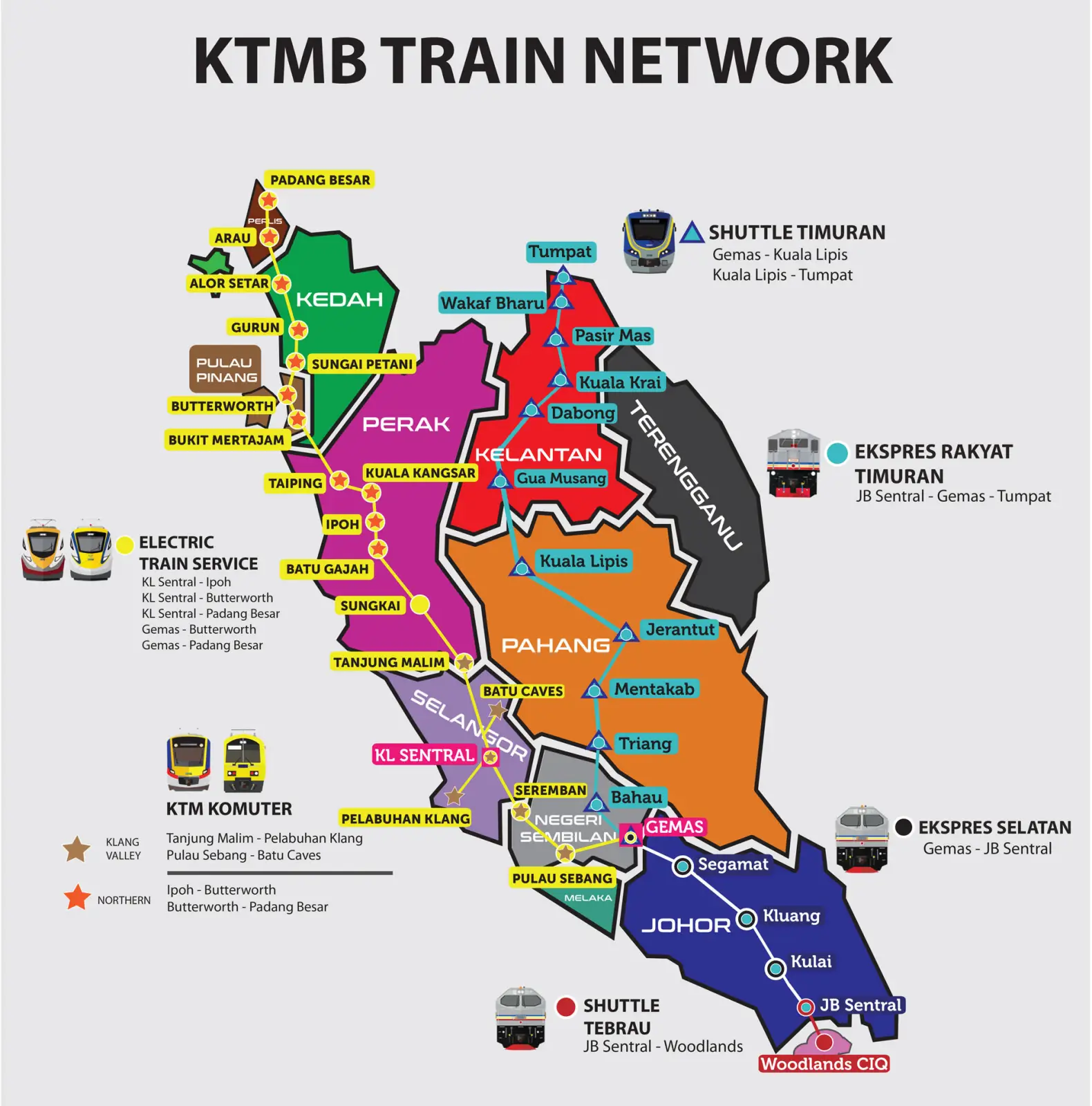
The fast train’s arrival in Johor Bahru marks the completion of an upgrade more than a decade in the making. The ETS was first introduced in 2010 on the Kuala Lumpur-Ipoh (in the state of Perak) line before expanding north to Butterworth, Penang and Padang Besar near to the border with Thailand.
South of the Klang Valley beyond Kuala Lumpur, however, the network remained unfinished, ending at Gemas in Negri Sembilan for many years. That changed in 2025, when KTMB extended the line to Segamat (Johor) in March, Kluang (Johor) in August and the final stretch to Johor Bahru in December. Malaysian’s southernmost city is now integrated into the country’s electric rail system for the first time.
Passengers going north still need to change trains in Kuala Lumpur to travel to Penang
Powered by 25 kilovolt overhead lines, the ETS3 offers a faster and smoother ride compared to KTMB’s diesel trains, though it is not designed to match the speed of next-generation bullet trains.
The extension also completes a fully electrified rail spine running from Johor Bahru to Penang and the Thai border. While the infrastructure allows trains to run the whole distance, KTMB’s timetable is divided into segments, requiring passengers to change trains in Kuala Lumpur if they wish to continue north.
Malaysia has a way to go in order to catch up in terms of speed of the trains. China’s high-speed services operate at 300-350 kmph, Japan’s Shinkansen at 240-320 kmph and South Korea’s KTX at more than 300 kmph, while Malaysia’s ETS cruises between 140-160 kmph.
However, it still moves faster than most Southeast Asian intercity lines. The extension strengthens its links to Kuala Lumpur and the Klang Valley and shortens travel times for commuters, students and businesses in towns in Johor such as Batu Pahat, Kluang and Segamat.
With the southern electric line finally complete, this new rail service now offers passengers in the southern state of Johor a direct rail link to Kuala Lumpur.
Photo and map: KMTB website