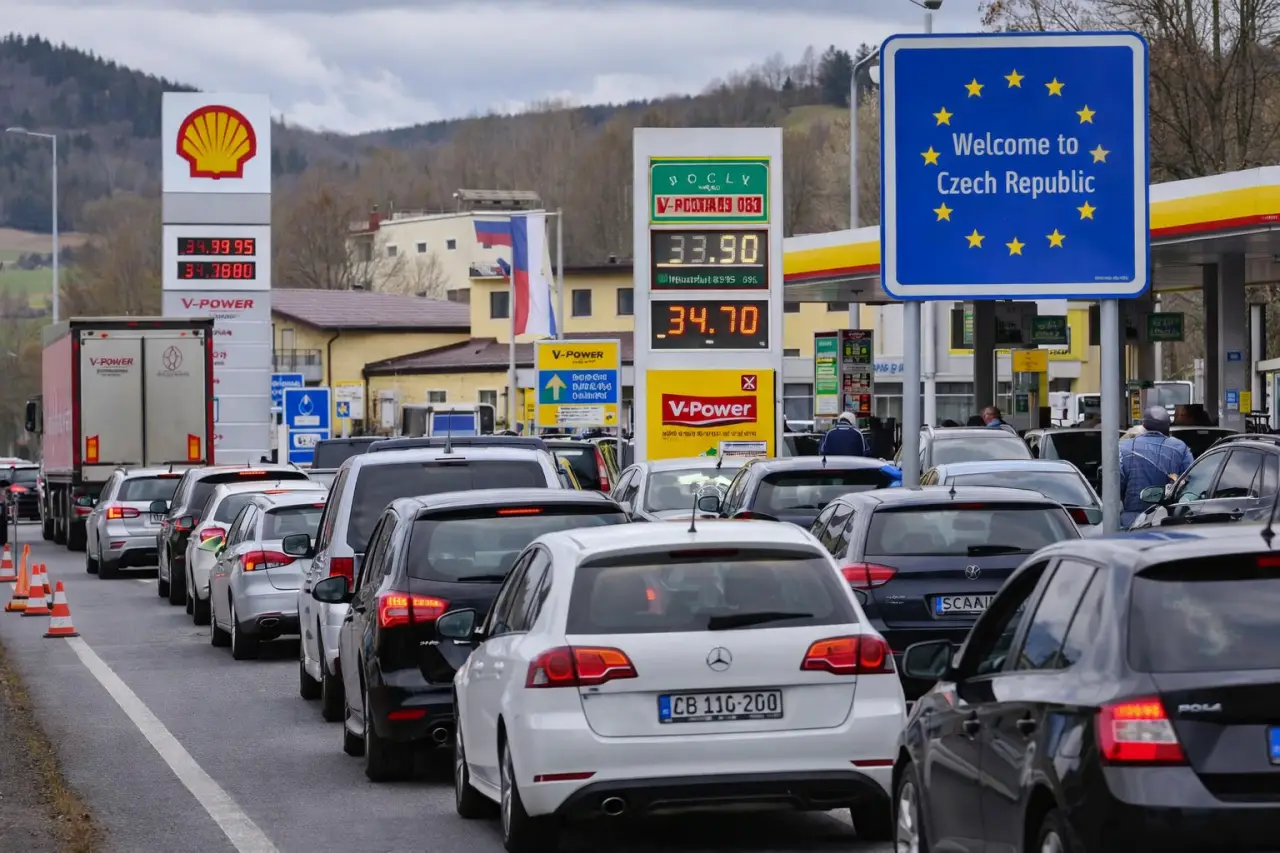
Rising fuel prices across Europe are driving a surge in so-called “fuel tourism”, as motorists cross borders to fill up in cheaper neighbouring countries. The trend has intensified in recent days amid higher oil prices linked to geopolitical tensions, with price gaps between countries widening due to differing tax policies, subsidies and market structures.
Drivers travelling between countries such as Portugal and Spain, Germany and Poland, and the Netherlands and Belgium are increasingly adjusting routes to take advantage of lower fuel costs. The shift is already creating queues at border petrol stations, straining supply in lower-priced markets and prompting some governments to consider restrictions.
One of the clearest examples is emerging along the German-Czech border, where significantly lower fuel prices in the Czech Republic are drawing large numbers of drivers from Germany. In border regions such as Johanngeorgenstadt in the Ore Mountains, petrol stations have reported severe supply pressure, with some sites temporarily running out of petrol and others limiting access to diesel and premium fuels.
The surge in demand has led to long queues, blocked local roads and growing frustration among residents. Reports from multiple locations along the border suggest that some drivers have had to turn back without refuelling as stations struggle to keep up with demand.
The situation has been building for weeks. In Petrovice, near the A17 motorway, petrol stations have experienced heavy traffic, with vehicles waiting in long lines and certain fuel types periodically selling out. Staff at these stations report an unusually high number of customers, many of them travelling from Germany specifically to refuel.
The main driver behind this trend is the persistent price gap between the two countries. According to data from Germany’s ADAC motoring organisation, a litre of premium petrol costs around €1.56 in the Czech Republic, while diesel is about €1.74. In Germany, diesel prices have at times reached €2.30 per litre, making cross-border refuelling financially attractive despite rising costs overall.
Tax differences play a significant role in this gap. In Germany, fuel prices are driven higher by energy taxes and CO2 levies, while in the Czech Republic these components are lower or partially absent. Variations in value-added tax rates and a more competitive fuel retail market, with a higher number of independent petrol stations, also contribute to lower prices across the border.
Regulations also shape how drivers take advantage of these differences. German customs rules allow motorists to import up to 20 litres of fuel in a suitable jerrycan, while Czech regulations permit only up to 10 litres to be carried in a vehicle. Despite these limits, cross-border refuelling remains widespread.
Elsewhere in Europe, similar patterns are emerging. Motorists in Portugal are crossing into Spain, where government measures have kept prices lower, while drivers in the Netherlands are travelling into Belgium. In central Europe, German motorists have also been heading into Poland for cheaper fuel, adding pressure to local supply chains.
The impact is being felt beyond individual drivers. Transport and logistics operators are increasingly planning refuelling stops across borders to reduce costs, while higher fuel prices are expected to feed through into broader travel expenses. Airlines have already warned that rising fuel costs could push up fares, while some consumers are reconsidering travel plans or switching to electric vehicles.
As Europe approaches the busy summer travel season, analysts warn that fuel tourism could intensify further if price differences persist. While the practice offers savings for drivers, it is creating new challenges for border communities, infrastructure and fuel supply, highlighting the uneven impact of energy costs across the continent.