Long before GPS apps and online maps guided travelers, the Romans mastered the art of connectivity. Their vast web of roads linked distant provinces across continents, enabling trade, military control, and cultural exchange on an unprecedented scale. Now, a new digital project is letting modern audiences explore those same routes with extraordinary precision.
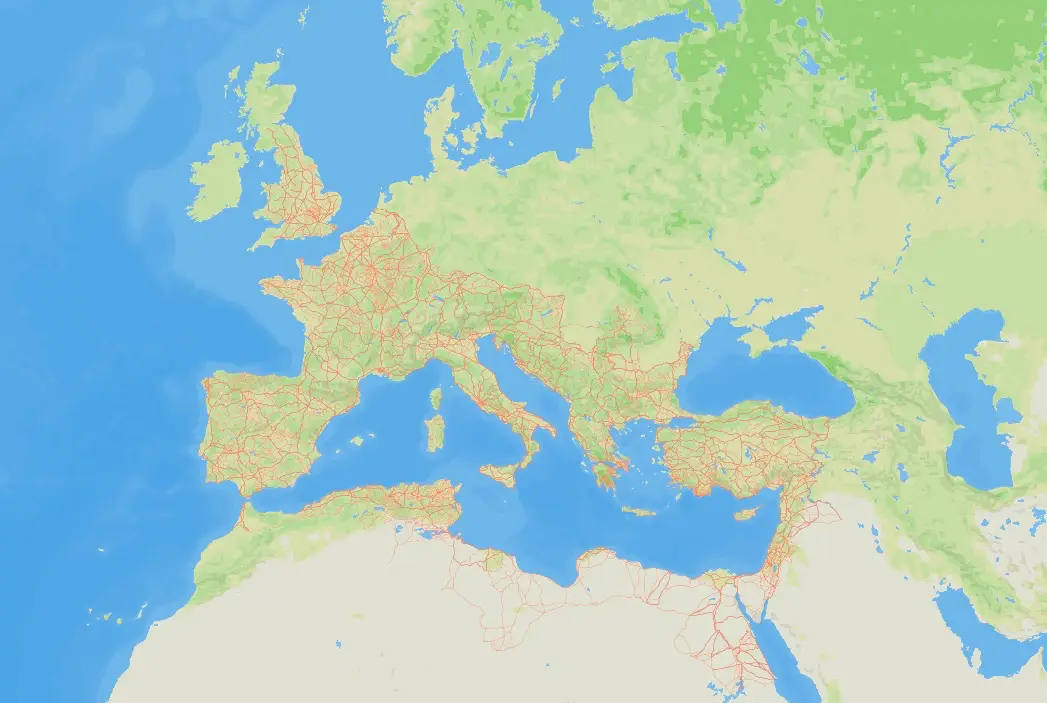
A team of researchers from the Autonomous University of Barcelona and Aarhus University in Denmark has unveiled Itiner-e, the most detailed digital map ever created of the Roman Empire’s road network. Published in the journal Nature Scientific Data, the interactive map reconstructs nearly 300,000 kilometers of ancient roads as they existed around 150 AD, during the reign of Emperor Antoninus Pius.
The initiative, co-led by Spanish archaeologist Pau de Soto Cañamares, offers what experts call a “transformative tool” for understanding how people and goods moved across one of history’s most powerful empires. Itiner-e nearly doubles the total known length of Rome’s road system compared with previous research, revealing previously undocumented routes in regions such as North Africa, Greece, and the Iberian Peninsula.
Recreating the Empire’s Arteries
According to the research team, the project combines archaeological reports, ancient travel itineraries such as the Itinerarium Antonini, the Tabula Peutingeriana, and modern satellite imagery to digitally reconstruct the full expanse of Rome’s terrestrial communications. “We don’t know if all roads led to Rome, but it’s certain that Roman roads led everywhere in the empire,” said De Soto, who describes the map as a reflection of “how the Romans designed occupation and administration through an extraordinary network of infrastructure.”
In total, Itiner-e charts 299,171 kilometers of Roman roads, including 103,478 kilometers of main paved routes. The system breaks down the network into 14,769 individual segments, each georeferenced using high-resolution spatial data. The researchers estimate that around 90% of the hypothesized routes are accurate, even though only 2.7% of the original roads can be confirmed through archaeological remains.
The map’s level of detail allows users to see how ancient engineers built routes that adapted to geography, from mountain passes in the Alps to coastal plains in Greece. Unlike earlier maps that relied on straight-line estimates, Itiner-e follows natural corridors and elevation contours, offering a realistic representation of travel and trade routes used two millennia ago.
Technology Meets Ancient History
What makes Itiner-e stand out, researchers say, is its accessibility and precision. The database is open access and scientifically validated, allowing anyone—from historians to curious travelers—to visualize and analyze the network. “Our project offers the most complete, extensive, and detailed digital reconstruction of the Roman world’s roads ever produced,” said De Soto. “It’s easy to use, fully documented, and free.”
The project began in 2019, when De Soto set out to map the roads of the Western Roman Empire. After joining forces with Danish archaeologist Tom Brughmans and a multinational team, the project expanded to cover the empire’s entire territory. Students from the Autonomous University of Barcelona contributed to the labor-intensive task of manually digitizing routes based on historical and archaeological data.
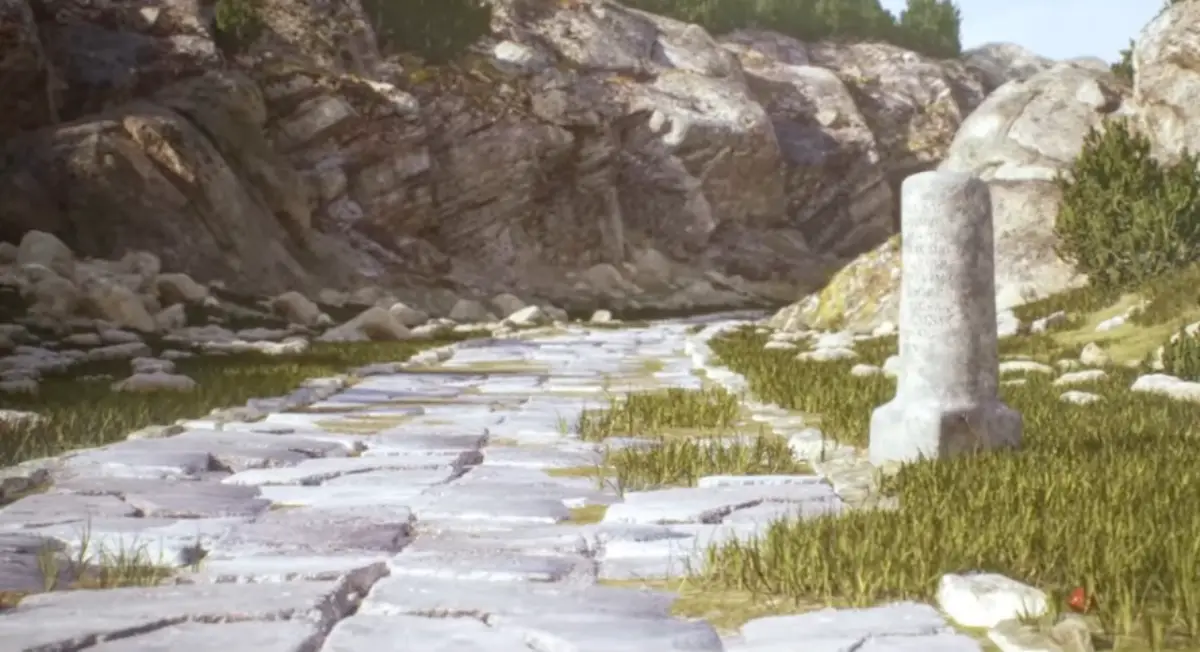
Beyond its academic value, Itiner-e provides fresh insight into how infrastructure shaped the ancient world. The Romans built their roads not only for military logistics and commerce but also as instruments of political control and propaganda. Along the highways, travelers would encounter miliaria—stone milestones engraved with the name of the emperor responsible for the road’s construction or repair. These markers celebrated imperial power while guiding wayfarers through a world held together by stone and ambition.
The research team plans to expand the map to include maritime and river routes, which were essential for transport and communication across the Mediterranean world. Another upcoming feature will add a chronological dimension, showing how the road network evolved from the Republic through the later imperial centuries.
By combining archaeology, data science, and geography, Itiner-e opens a digital window onto the mobility and logistics of the ancient past. For travelers, historians, and the simply curious, it offers a rare chance to trace the footsteps of legions, merchants, and messengers who once crossed an empire—no app download required.
An animation movie on YouTube reveals the diversity of Roman roads, from paved roads leading to major ancient cities, over wide camel tracks in the Egyptian desert, to steep roads in mountain passes