Restaurants are evolving into more than places where food is served. They are becoming spaces where experiences shape how people connect with meals and with one another. Technology is now stepping into the heart of dining rooms, and it is changing the way guests interact with every part of the environment.
Artificial intelligence is gaining importance in the hospitality industry, and seating has become a surprising area of focus. Responsive furniture is no longer just about cushions and frames. These new restaurant booths adjust in real time, giving every diner a level of comfort that feels personal. The restaurant technology sector is already valued at billions worldwide, with most operators planning to expand their use of AI in the coming year. Diners themselves are driving this shift, often prioritizing immersive experiences over price. Many are willing to share personal information in exchange for better service. For restaurants, this presents an opportunity to combine efficiency with emotional engagement, making smart seating both practical and visually appealing.
Breaking Down What Makes Seating Smart
What separates AI-responsive booths from ordinary seating is the intelligence built inside them. These booths use a mix of sensors, smart materials, and data-driven systems to create comfort that adjusts on the spot. Features such as pressure detection, climate control, and even voice recognition give them flexibility. With machine learning, booths can track and remember preferences, offering familiarity when a guest returns.
They are also tied to wider restaurant systems. By integrating with management software, booths can collect valuable insights that enhance service throughout the venue. Early trials in hospitality settings have already demonstrated the effectiveness of this approach. Guests feel the benefits directly, while operators learn from the data. The Internet of Things adds another layer, allowing booths to monitor behavior and react instantly. When linked with customer profiles, they can anticipate needs without waiting for a request. At the same time, analytics provide valuable information on energy use and seating turnover.
How Adaptive Booths React in Real Time
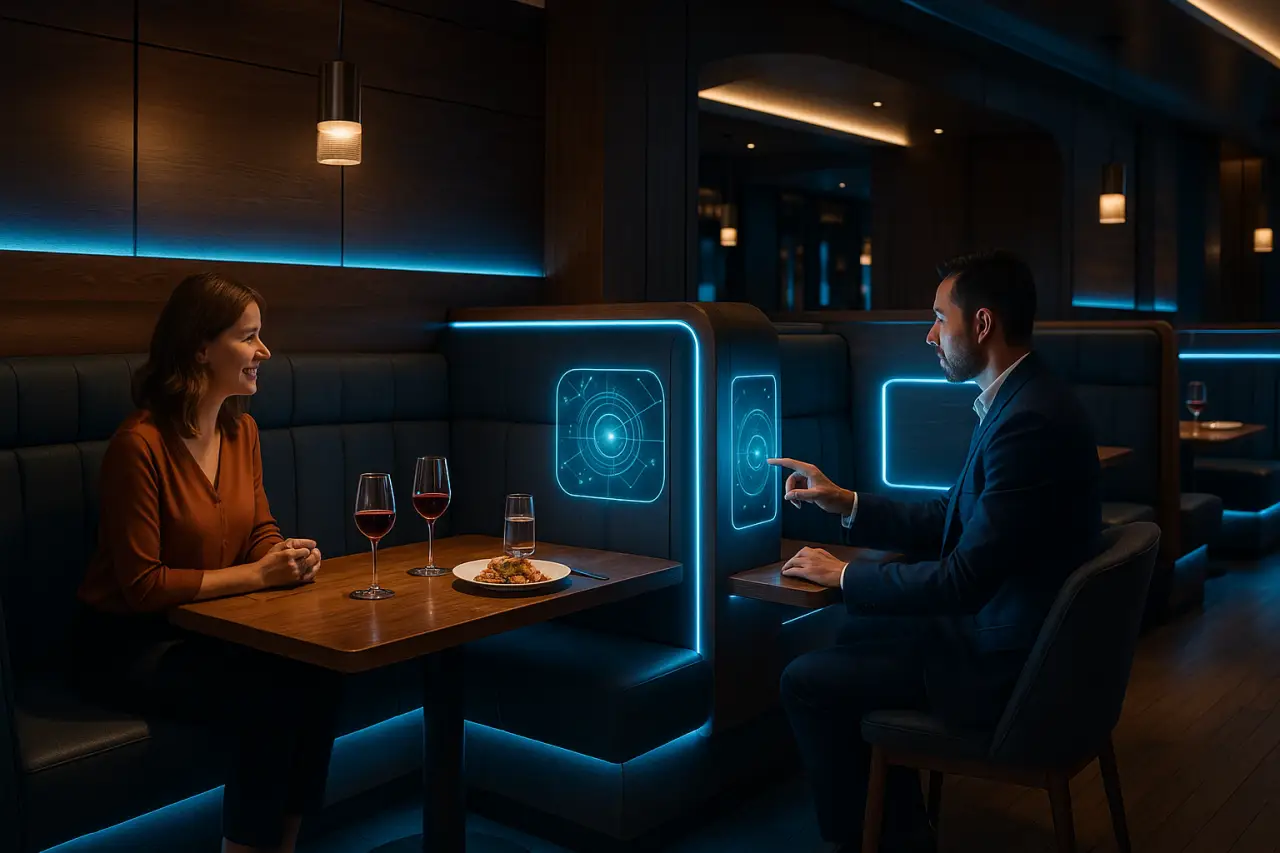
Adaptability is at the heart of this innovation. Seats automatically adjust in height or depth to accommodate different body types. Lighting built into the booth changes depending on the time of day or the atmosphere of the group. Cushions and side panels can be adjusted to warm or cool, matching the season and keeping guests at ease throughout the meal.
Practical convenience is built in as well. Charging ports, similar to those found on airplanes, respond to device usage, ensuring guests stay connected. Meanwhile, acoustic controls help manage noise levels for added privacy. Studies show that satisfaction improves when these adjustments happen automatically, reducing the need for staff intervention. The technology goes further, with pressure sensors detecting posture and adjusting lumbar support to maintain comfort. Air circulation systems add another layer by refreshing the atmosphere, and some concepts even experiment with scent to enhance ambiance. Guests can signal servers without speaking, using soft glow indicators that light up discreetly within the booth.
Personalized Experiences at Every Meal
Dining has become deeply personal, and seating plays a vital role in shaping that. Smart booths remember how guests like to sit and recreate those settings on their return. Table arrangements can be suggested based on party size, which speeds up the seating process and creates more thoughtful layouts. Accessibility is also improved, with booths adapting to ensure that every guest, regardless of ability, feels welcome.
Different groups benefit in different ways. Families may find the settings adjusted for children, while couples enjoy a cozy, more private environment. Solo diners can make use of integrated workspace options or entertainment features. Mobile apps extend these capabilities, enabling booths to sync directly with customer profiles. Personalization has a strong impact on loyalty, with research showing that repeat visits increase when guests feel the experience is designed for them. Diners are also more likely to choose restaurants that create tailored ambiance. In the future, health-related personalization may allow booths to adapt based on wearable data, adjusting ergonomics or lighting in ways that support wellness.
Why Operators Benefit From Smart Booths
The value of AI-responsive seating extends beyond guests. Operators see significant benefits in day-to-day operations. One of the biggest is energy efficiency. Instead of heating or cooling an entire dining room, booths adjust their own climate locally. Staff spend less time managing small comfort details, which allows them to focus on service. The data collected also helps owners make decisions about menu planning, seating flow, and space optimization.
These improvements bring financial gains. Greater comfort leads to quicker table turnover and higher customer satisfaction, both of which contribute to increased revenue. Predictive maintenance reduces costs by identifying issues before they become problems. Restaurants using innovative technology often report lower energy consumption. Industry surveys also indicate that operators anticipate significantly higher profit margins through the adoption of AI. Booth data supports demand forecasting, making it easier to schedule staff effectively. Additionally, connecting booth data with loyalty programs enables restaurants to offer targeted promotions that strengthen customer relationships.
Fusing Design and Technology Seamlessly
Smart booths must blend seamlessly into the restaurant’s atmosphere without feeling intrusive. Technology is carefully hidden within the structure, ensuring that the overall aesthetic remains appealing. Modular designs facilitate the integration of sensors and allow for the easy upgrade of components as needed. Choosing the right materials is essential, with options that provide durability while supporting embedded technology.
Lighting and color schemes can be coordinated with booth adjustments to shape moods that match the occasion. Restaurants are embracing both futuristic and cozy design approaches, depending on their brand identity and target audience. Studies consistently show that ambiance affects how long people stay and how much they spend. Guests also associate a stylish, sophisticated design with higher value. Using sensor-ready fabrics and materials ensures that booths last longer and provide a strong return on investment. Adaptable covers and lighting features allow for updates over time, keeping the environment fresh without requiring full replacements.
The Future of Adaptive Dining Environments
The potential of AI-responsive booths extends far beyond what is available today. Future designs may include integration with augmented reality menus, turning meals into immersive experiences. Health data could inform adjustments, with booths automatically supporting wellness through posture and comfort controls. Predictive systems can rearrange layouts in real-time based on guest demand, making dining rooms more efficient throughout the day.
Fully automated dining is also a possibility. Every part of the guest experience, from seating to ordering and payment, could happen seamlessly. Smart booths will not be limited to indoor spaces. Outdoor terraces and event venues could adopt similar systems, adapting to weather and crowd size. Wearable devices can connect directly to booths, instantly refining posture and comfort. Voice-activated settings will let guests create mood presets or adjust lighting with a simple command. Partnerships between hospitality and wellness brands could lead to shared experience zones that offer comfort on a whole new level.
To Wrap It Up: The Standard for Tomorrow’s Dining
The story of restaurant innovation continues to evolve, and AI-responsive booths mark the next step in that journey. Guests gain comfort, personalization, and a smoother dining experience, while operators enjoy efficiency, cost savings, and valuable insights. The combination of thoughtful design, technology, and attentive service creates a balance that keeps dining both human and modern.
Adaptive seating will soon be viewed as a standard feature rather than a novelty. Early adopters stand to gain a clear advantage, attracting loyal customers and setting themselves apart in crowded markets. As these technologies grow, collaboration between designers, engineers, and restaurateurs will be vital. Together, they will ensure that the future of dining remains welcoming, innovative, and responsible. The promise of AI seating lies not just in the tools themselves but in the experiences they make possible, where every meal feels like it was designed for the person enjoying it.