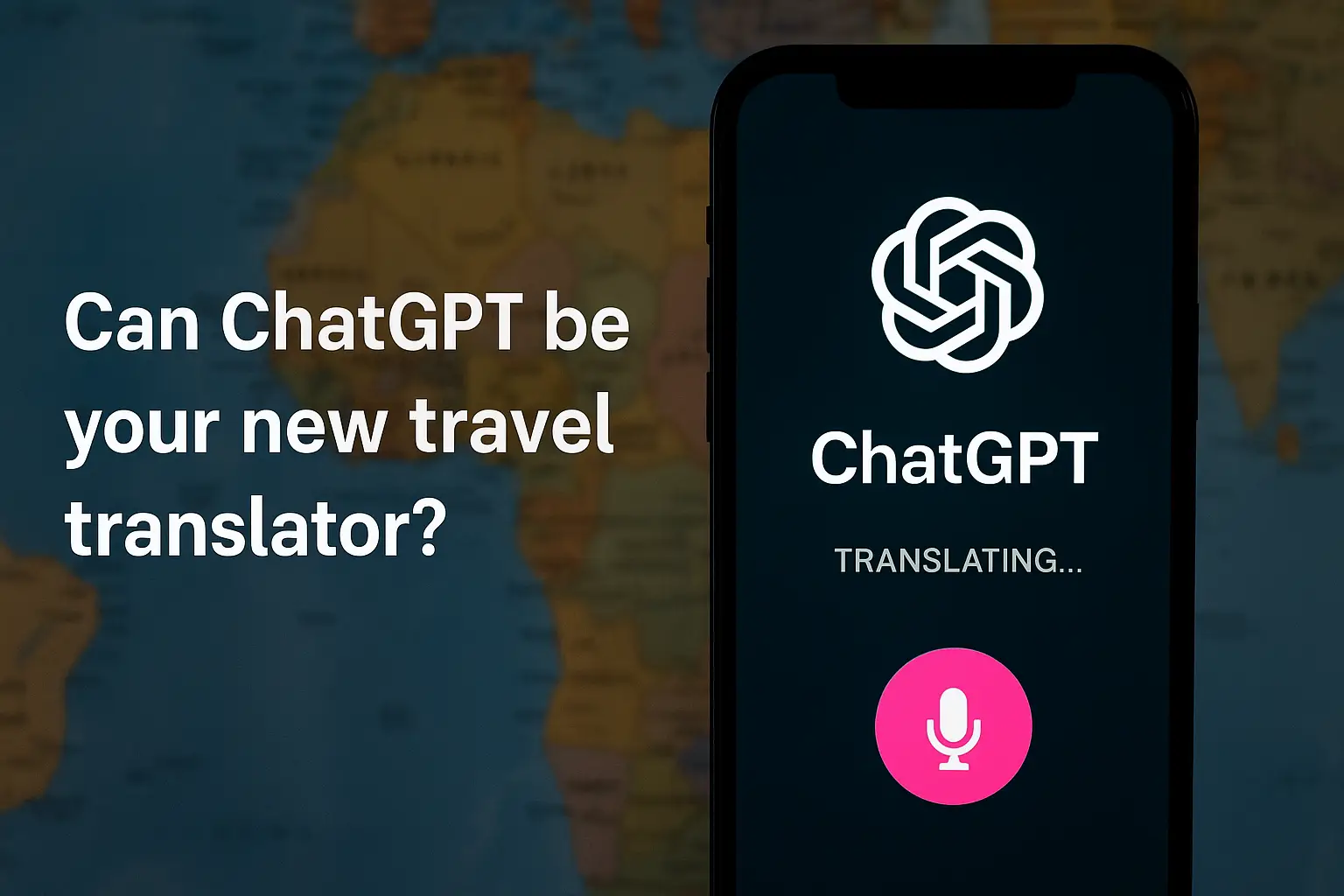
Can ChatGPT be your new travel translator? With OpenAI’s latest updates to its advanced voice mode, the answer is increasingly leaning toward yes. The new feature allows for seamless real-time translation, making conversations in foreign languages smoother, faster, and more natural—an appealing development for frequent flyers, backpackers, and digital nomads alike.
ChatGPT’s upgraded voice mode doesn’t just translate sentences—it sustains two-way conversations across languages until told to stop. That means a traveler can ask for directions in Tokyo, order dinner in São Paulo, or chat with a taxi driver in Istanbul, all without needing to tap their screen again and again. It’s a big leap in making AI a truly useful travel companion in real-time, high-stakes situations.
How the New Voice Mode Works
The updated voice feature is designed to understand natural speech patterns more accurately. Improvements include better intonation, more appropriate pauses, realistic rhythm, and enhanced emotional expression. ChatGPT is now better at conveying empathy, sarcasm, and nuance—tones often lost in robotic AI voices of the past.
Travelers can activate voice translation simply by asking ChatGPT to translate. Once started, the assistant continues interpreting both sides of the conversation until it’s manually stopped or given a new task. This is particularly useful in multilingual environments such as airports, train stations, restaurants, or hotels, where quick and clear communication is key.
Voice Translation Meets Global Travel
Can ChatGPT be your new travel translator in countries where you don’t speak the language? For paid users, especially those using the app on mobile, this upgrade could be a game-changer. Whether you’re trying to negotiate prices in a Moroccan souk or ask for gluten-free dishes in a small town in Italy, ChatGPT’s voice mode is now a tool with real-world value.
For example, a user in France can say something in English, and the AI instantly replies in fluent French. The local speaker’s response is then translated back into English. The back-and-forth flow makes the interaction feel human and spontaneous, which is crucial for building rapport and avoiding awkward miscommunications.
Limitations Still Exist
Despite its improvements, the voice feature is not without flaws. OpenAI has acknowledged that the voice mode can still suffer from rare “hallucinations,” which may cause unintended background music, pitch changes, or nonsensical sounds. These bugs are not yet fully resolved and are more likely to occur with certain voice options.
Temporary technical restrictions also apply to o3-pro—the updated model powering these capabilities. For now, it does not support image generation or temporary chats, and responses can take slightly longer due to its more advanced reasoning process. However, these trade-offs are often worth it when reliability and context matter, such as in multilingual or complex conversations.
Beyond Travel: Education, Business, and Daily Use
While the travel implications are exciting, the use cases extend far beyond tourism. Language learners can benefit from interactive practice. International teams can hold cross-language meetings without the need for separate interpreters. Students, teachers, and remote workers alike can use this tool to break communication barriers quickly and intuitively.
OpenAI noted in its release that o3-pro is now the top-rated version in expert evaluations, surpassing previous models in clarity, accuracy, and instruction-following. It is now available to Pro and Team users, with Enterprise and Edu users gaining access soon after. Because o3-pro builds on the foundation of GPT-4o, it still includes advanced tools for web browsing, file analysis, coding, and personalized memory.
The Future of AI as a Travel Companion
So, can ChatGPT be your new travel translator? It’s not only plausible—it’s already happening. The technology has matured from quirky novelty to reliable travel assistant. Whether you’re asking for directions in Seoul, reserving a table in Lisbon, or explaining food allergies in Cairo, ChatGPT is becoming a valuable tool for global travelers seeking more independence and fewer miscommunications.
As OpenAI continues to refine its models and address remaining bugs, the experience will only improve. For now, travelers with ChatGPT Pro in their pocket may already be carrying one of the most useful language tools of 2025—and it speaks your language, no matter where you go.