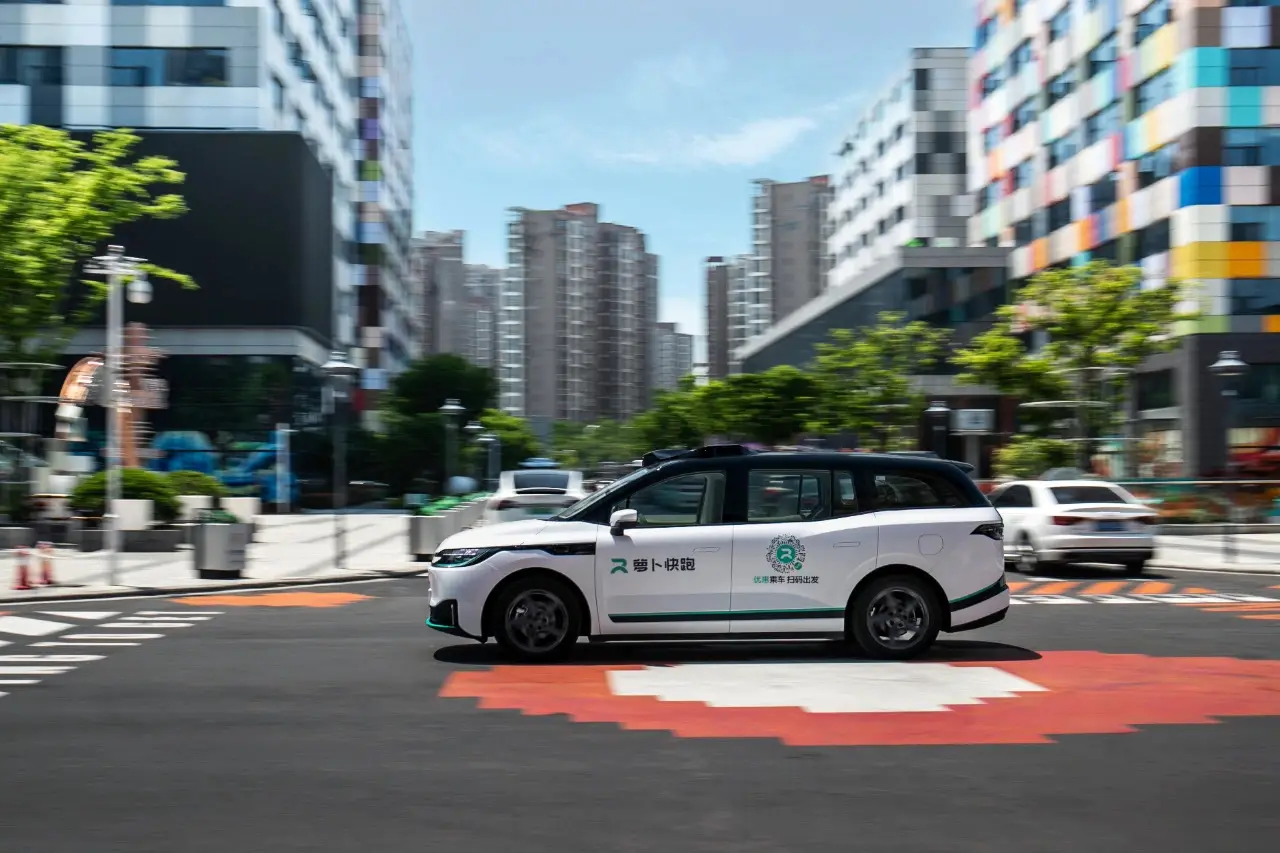
A mass outage of Baidu driverless taxis in Wuhan left passengers stranded in moving traffic, raising fresh concerns about autonomous vehicle safety. Authorities said more than 100 robotaxis stopped mid-journey due to a system failure. The incident unfolded this week on busy urban roads designed for high-speed flow.
Wuhan is the capital of Hubei in central China. With a population of over 13 million, it is the seventh-most-populous city in China. China-based Baidu (Apollo Go) operates over 500 robotaxis in Wuhan.
Sudden system-wide failure
Multiple vehicles halted abruptly, some in active traffic lanes. A preliminary investigation pointed to a “system malfunction,” though officials did not share technical specifics. Passengers described confusion and delays. Media reports showed some riders leaving safely. Others hesitated due to dangerous positioning.
Several taxis stopped on elevated ring roads, where fast-moving traffic passes continuously on both sides. Authorities said emergency teams responded and assisted stranded passengers. Officials continue to investigate the root cause.
Other incidents involving autonomous vehicles worldwide
The outage marks the first large-scale robotaxi shutdown reported in China. It adds to a growing list of incidents involving autonomous vehicles worldwide.
In December 2025, a power outage halted cars operated by Waymo in San Francisco, causing widespread disruption. Owned by same the same parent company as Google, Waymo operates throughout the San Francisco Bay Area as well as other cities in the U.S.. It expects to offer rides in London and Washington, DC, this year. The company said it provided more than 14 million trips in 2025, three times the number of rides in 2024.
In May last year, Waymo recalled over 1,200 autonomous taxis after a string of accidents involving utility poles, chain link fences, and other stationary objects but no injuries were reported.
In August 2025, an autonomous vehicle operated by Baidu’s Apollo Go robotaxi service fell into a deep construction pit while carrying a passenger in Chongqing in south-western China. Luckily, the female passenger was uninjured and was rescued by local residents using a ladder. News reports stated that the construction site had barriers and warning signs, though it remained unclear how the vehicle bypassed these safety measures.
Experts say such failures highlight new categories of risk. While many studies suggest autonomous systems can reduce accidents, failures like this raise questions about reliability under real-world conditions.
Baidu’s global expansion plans
Baidu operates over 1,000 robotaxis, mostly across Chinese cities. Wuhan serves as a major testing ground and early deployment hub. The company has expanded aggressively into international markets.
This year, Baidu’s Apollo Go launched services in Abu Dhabi and Dubai. Baidu also partnered with ride-hailing firms to explore expansion into Europe. Trials in the United Kingdom could begin in 2026, pending regulatory approval.
Continuing debate on innovation v.s. passenger safety
For U.S. audiences, the event mirrors ongoing debates around autonomous mobility. Companies continue to test driverless systems in cities like San Francisco and Phoenix. Regulators must balance innovation with public safety.
The Waymo and Baidu incidents underscore key engineering challenges and raise fresh concerns about how self-driving cars respond in real-world environments, especially where quick, ethical decisions are required.
Breakthrough research reducing passenger danger using AI
But a breakthrough from the Hong Kong University of Science and Technology could help autonomous vehicles handle traffic with the moral reasoning of a human driver, where self-driving cars can reduce pedestrian danger by 51% with new ‘thinking’ AI.
Researchers have developed a cognitive encoding framework that mimics how humans assess risk and make socially aware decisions. This innovation could significantly reduce traffic risk while improving safety for vulnerable road users.
The system isn’t one-size-fits-all as it has to be adjusted to different regions’ driving norms and legal structures. Next, the team will build a dataset reflecting different global driving patterns and continue talks with partners to bring the system into real-world testing.