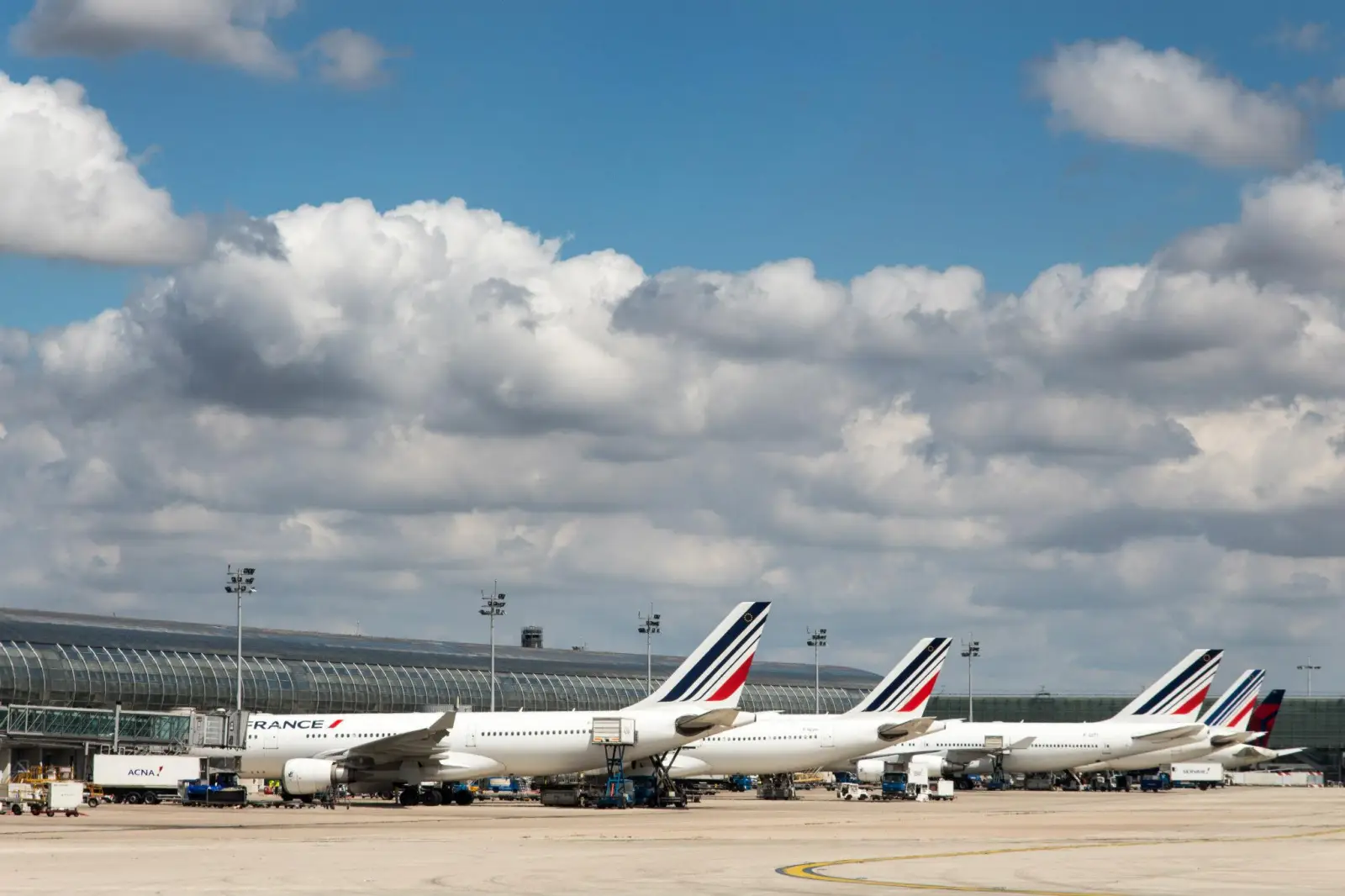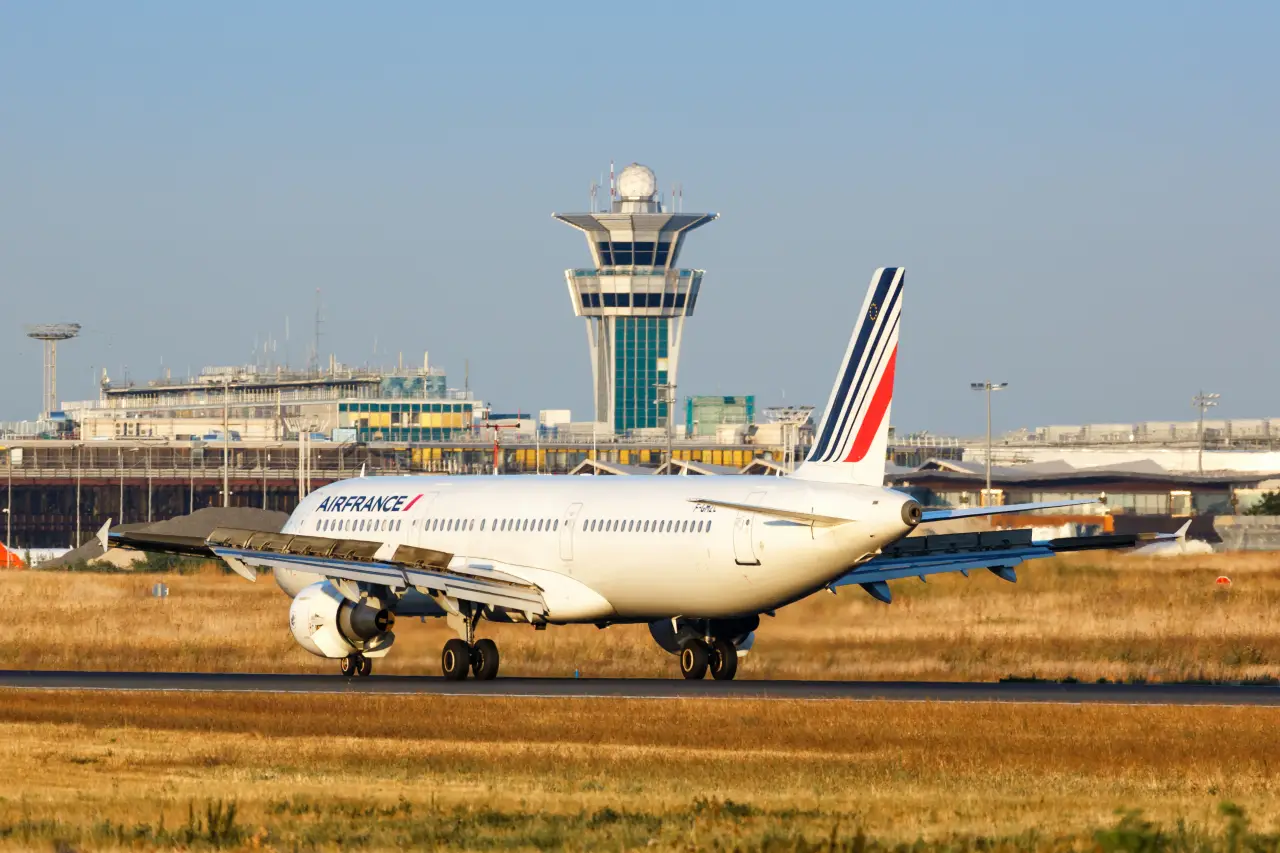
Air France has permanently withdrawn from Paris Orly Airport, ending a historic chapter for France’s flagship carrier at one of the capital’s two main aviation hubs.
The final Air France flight, arriving from Nice, touched down at Orly at 9:55 p.m. on Saturday, marking the end of the airline’s operational presence at the airport.
From now on, all mainline Air France services previously operated from Orly, including flights to Nice, Toulouse, and Marseille, transfer to Paris Charles de Gaulle Airport. Flights to French overseas territories, including Pointe-à-Pitre in Guadeloupe, Fort-de-France in Martinique, Cayenne in French Guiana, and Saint-Denis on Réunion Island, also move to Charles de Gaulle.
Why Air France made the move
The airline cited operational logic as the primary driver behind the consolidation. Centralising flights at a single hub makes international connections more convenient for passengers, the airline said. Air France also noted that maintaining two active hubs in the same city requires a volume of activity that its Orly operations could no longer sustain.
For a carrier competing on an increasingly congested European aviation market, the decision reflects a broader strategic push to streamline costs and improve connectivity. Charles de Gaulle, as France’s largest airport and a major transatlantic and intercontinental hub, offers far greater onward connection possibilities than Orly.
Transavia stays at Orly
Despite the mainline withdrawal, the Air France group retains a presence at Orly through its low-cost subsidiary Transavia. On the Sunday following Air France’s final departure, Transavia had already scheduled eight flights each to Toulouse and Nice, and two services to Marseille, effectively picking up some of the domestic traffic the parent airline leaves behind.
For budget-conscious travellers, Transavia’s continued operation at Orly means the airport remains a viable Paris gateway, particularly for domestic French routes. Orly sits closer to central Paris than Charles de Gaulle, making it a convenient option for those whose journeys begin or end on the city’s southern side.
Travellers flying Air France to or from Nice, Toulouse, Marseille, or the French overseas territories will need to plan around Charles de Gaulle going forward. The airport is located around 25 kilometres northeast of central Paris and is well connected by the RER B suburban rail line, as well as road and coach services.
For passengers previously accustomed to Orly’s shorter transfer times and more compact layout, the shift to Charles de Gaulle represents a meaningful change in their travel experience. Orly, located roughly 14 kilometres south of Paris, had long been favoured for domestic and short-haul travel precisely because of its proximity to the city and its ease of navigation.
A significant moment for Paris aviation
Air France’s departure leaves Orly without its most prominent full-service tenant, closing a relationship between airline and airport that stretched back decades. The move consolidates Paris’s status as a single-hub city for Air France, aligning it more closely with the model used by major European competitors.
For Orly, the challenge now is to define its identity in a post-Air France era. With Transavia, other low-cost carriers, and charter operators continuing to use the airport, it remains an active and important part of the Paris aviation landscape, even if its most storied chapter has now come to a close.
Photo Credit: Markus Mainka / Shutterstock.com