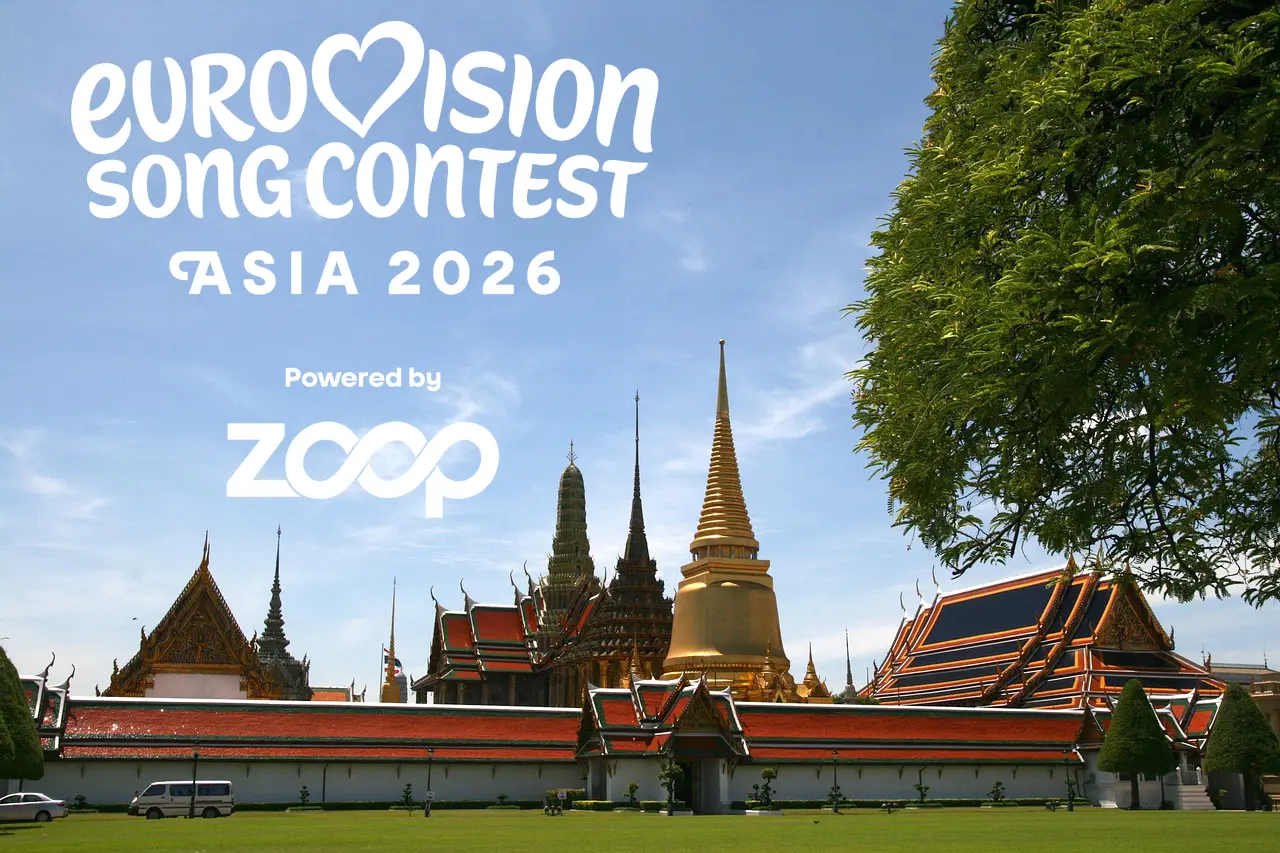
Eurovision is heading to Asia for the first time, with Bangkok confirmed as the host city for the inaugural Eurovision Asia song contest, set to take place in November 2025. Organisers have announced a partnership with Asian production companies to bring the beloved competition to a new continent, with ten countries already registered to compete.
The event is expected to draw an audience of up to 600 million viewers, dwarfing the 166 million who tuned in to Eurovision 2025 in Europe. Registration remains open, and organisers anticipate that more nations will join the initial ten before the November contest.
Which countries are taking part?
Thailand, as the host nation, will take to the stage alongside the Philippines, Nepal, and South Korea. South Korea’s participation is particularly notable given the global dominance of its K-pop industry, which has built a vast and passionate international fanbase over the past two decades.
The ten confirmed countries represent a fraction of the 35 nations that typically compete in the original Eurovision Song Contest. However, with registration still open, the final lineup could look considerably different by the time the contest arrives in Bangkok this November.
A long time coming
The idea of a Eurovision-style contest for Asia is far from new. The first serious attempts to organise an Asian edition date back to 2009, making this year’s launch the culmination of more than 15 years of planning, false starts, and renewed ambition.
The timing carries added significance. Eurovision celebrates its 70th anniversary in 2025, and the Bangkok debut marks one of the most ambitious expansions in the contest’s history. What began as a post-war European broadcasting experiment has grown into a global entertainment brand, and Asia represents its most significant frontier yet.
Why Bangkok and why now?
Thailand has emerged as a natural choice for the contest’s Asian home. Bangkok is one of Southeast Asia’s most visited cities, with a thriving music scene and the infrastructure to stage a large-scale international broadcast event. The city regularly ranks among the world’s top travel destinations, and hosting Eurovision Asia is likely to amplify its profile further among younger, music-focused international audiences.
The partnership with Asian production companies signals that this is not simply a European export but a locally rooted project designed to reflect the region’s own musical traditions and pop cultures. With South Korea, the Philippines, Nepal, and Thailand already on board, the contest spans a remarkable range of musical identities from the outset.
What it means for travellers
For fans of the original contest, Bangkok in November offers an intriguing new pilgrimage. Eurovision events traditionally generate significant tourism, with host cities seeing a surge in visitors drawn by the spectacle, the parties, and the sense of shared cultural celebration.
Thailand’s capital will be hoping to replicate that effect on an Asian scale. If the projected audience of 600 million materialises, Eurovision Asia would instantly become one of the most-watched music contests on the planet, and Bangkok would be at the centre of it all.