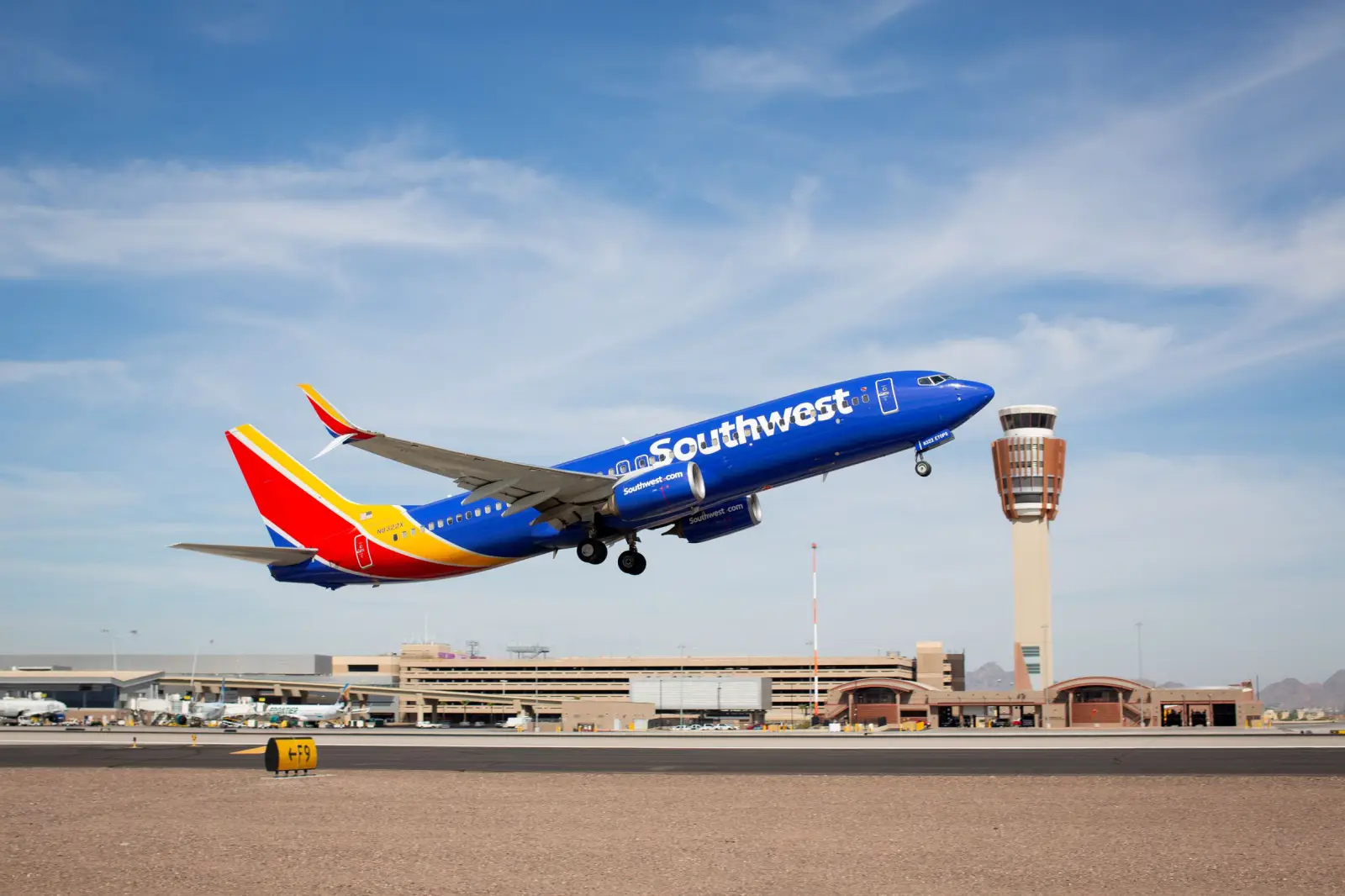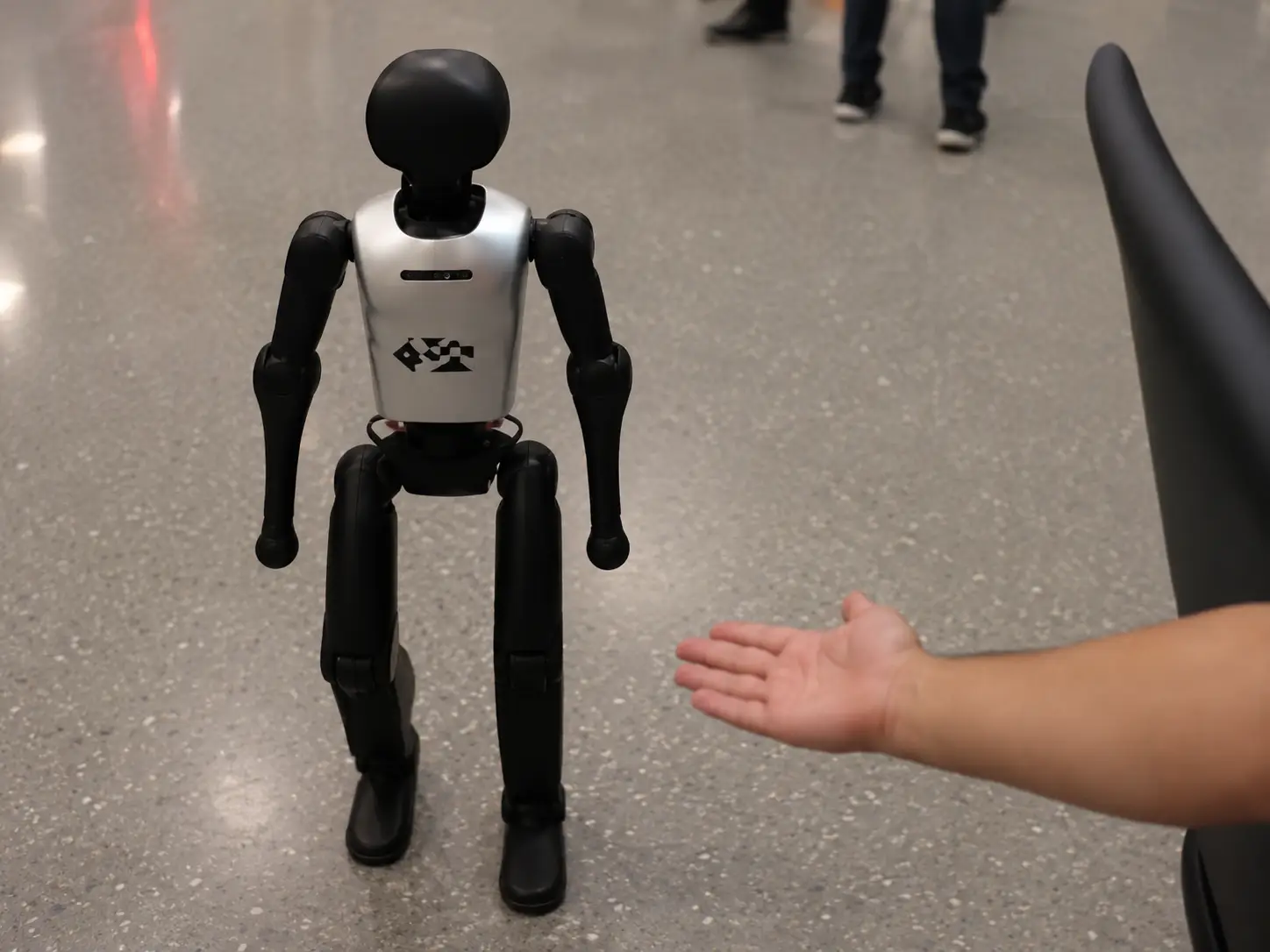
Southwest Airlines has banned humanoid robots from its flights after a robot named Stewie completed what appears to have been one of the first commercial passenger journeys involving a human-like robot seated inside an aircraft cabin.
The policy change came days after Stewie, a 3.5-foot humanoid robot, traveled on a Southwest flight from Las Vegas to Dallas with a paid passenger seat. The unusual trip quickly went viral online and drew widespread attention from passengers, airline staff and aviation observers.
The Dallas-based airline later updated its baggage and cabin rules to prohibit “human-like” and “animal-like” robots from being transported either in the cabin or as checked baggage, regardless of size.
Southwest said the decision was linked primarily to concerns over lithium-ion batteries used inside advanced robots. Airlines worldwide have tightened scrutiny of lithium battery-powered devices in recent years because of the risk of overheating, thermal runaway and onboard fires.
A Southwest spokesperson said the airline updated its policy “to ensure compliance with our guidelines for traveling safely with lithium-ion batteries.”
The airline added that humanoid robots posed additional operational and safety concerns because of their size, movement capability and power systems.
How Stewie boarded the flight
The robot was flown by Aaron Mehdizadeh, founder of Texas-based company The Robot Studio, which rents humanoid robots for events and public appearances.
According to multiple US media reports, Mehdizadeh purchased Stewie a separate passenger seat rather than checking the robot as cargo. Airlines already allow some fragile items, including musical instruments, wedding dresses and delicate equipment, to occupy cabin seats if an additional ticket is purchased.
The robot reportedly passed through airport security after its original battery pack was replaced with a smaller battery system.
German AI reporter Paul Klinzing documented the trip on Instagram, describing the journey as a publicity stunt designed to test how airports and airlines would react to humanoid robots traveling alongside passengers.
Videos shared online showed Stewie walking through the airport terminal, interacting with travelers and sitting beside the aircraft window during the flight.
Passengers reportedly reacted with curiosity and amusement, with many taking photos and videos of the robot during boarding.
Another robot incident reportedly delayed a flight
The Stewie journey was not the only recent robot-related incident involving Southwest.
US media reports said another humanoid robot named Bebop was involved in a separate Southwest flight earlier this year between Oakland and San Diego. That incident reportedly caused a delay after crew members raised concerns about seating arrangements and battery compliance.
According to reports, the robot initially occupied an aisle seat, which flight crews considered a safety issue for evacuation procedures. Airline staff later focused on whether the robot’s lithium battery exceeded approved limits.
Those incidents appear to have accelerated Southwest’s decision to introduce an explicit ban on humanoid and animal-like robots.
Robot owner disputes airline safety concerns
Mehdizadeh rejected the airline’s explanation and argued that Stewie’s battery system was comparable to those already allowed on commercial aircraft.
“It is not a question of the battery, because the battery that we used is basically a laptop battery,” he told CBS News Texas.
He also said the robot created a positive atmosphere inside the airport and aircraft cabin.
“Most people were very excited to see a robot flying and it provided so much entertainment,” he said.
Mehdizadeh added that he hopes Southwest eventually reviews and reverses the ban.
Growing challenge for airlines
The incident highlights a new challenge facing airlines and regulators as humanoid robots become increasingly advanced and commercially available.
Humanoid robots are designed to mimic human appearance and movement. Most include artificial intelligence systems, cameras, sensors, motors and rechargeable lithium-ion batteries.
While airlines already have established rules for laptops, power banks and mobility devices, there are few global aviation standards specifically covering humanoid robots traveling on passenger aircraft.
The Federal Aviation Administration and international aviation regulators have increased attention on lithium battery safety in recent years after several incidents involving overheating devices onboard aircraft.
Many airlines have already tightened rules covering portable chargers, electric mobility devices and high-capacity batteries.
Southwest has not said whether the ban could eventually be revised or whether other airlines are considering similar restrictions.
For now, however, Stewie’s journey may go down as one of the first and last times a humanoid robot flew as a ticketed passenger on a US commercial airline.