The bike sharing industry has seen fast growth over the past decade. From dense urban cities to small university towns, shared bikes are changing how people move. But while the idea of launching a fleet of bikes sounds simple, building a successful bike sharing business model takes real strategy, local understanding, and the right tools.
The bike-share boom: Business models & funding tips for first-time founders
In this post, we break down key business models, discuss early-stage costs and revenue options, and share tools that can help new founders get started quickly. Whether you plan to launch in a busy city or a coastal resort town, this guide gives you a solid overview to plan your first bike-share startup – and avoid common mistakes.
Why bike sharing keeps growing
People today want flexible, eco-friendly transport. Cities want to reduce traffic and carbon emissions. Bike sharing fits both needs. As a result, many local governments and private investors support new mobility operators.
More people are also looking for active transport solutions. Cycling promotes healthier lifestyles, saves commuting time, and lowers transport costs. With the rise of compact urban living and climate-conscious choices, the bike-share model is no longer just a niche trend – it’s becoming part of city life.
But not every bike-share service succeeds. Poor planning, weak pricing, and unreliable operations can quickly burn through resources. That’s why choosing the right business model early on matters.
Common bike sharing business models
There are several ways to run a bike sharing operation. Each model fits a different type of city, market, and investment level. The right choice depends on your location, goals, and budget.
1. Dockless (free-floating) model
This model is the most popular among modern startups. Bikes are GPS-enabled and can be parked anywhere in a defined area. Users locate and unlock bikes through a mobile app.
Pros:
- Low infrastructure costs (no docking stations)
- Easy to scale and relocate
- Faster market entry
Cons:
- Needs strong software and hardware to manage usage and theft
- Cities may require special permits or zoning compliance
Dockless sharing works well in mid-size cities, tourist areas, or campus settings. ATOM Mobility’s white-label platform supports this model out of the box, including GPS tracking, in-app payments, and fleet management tools.
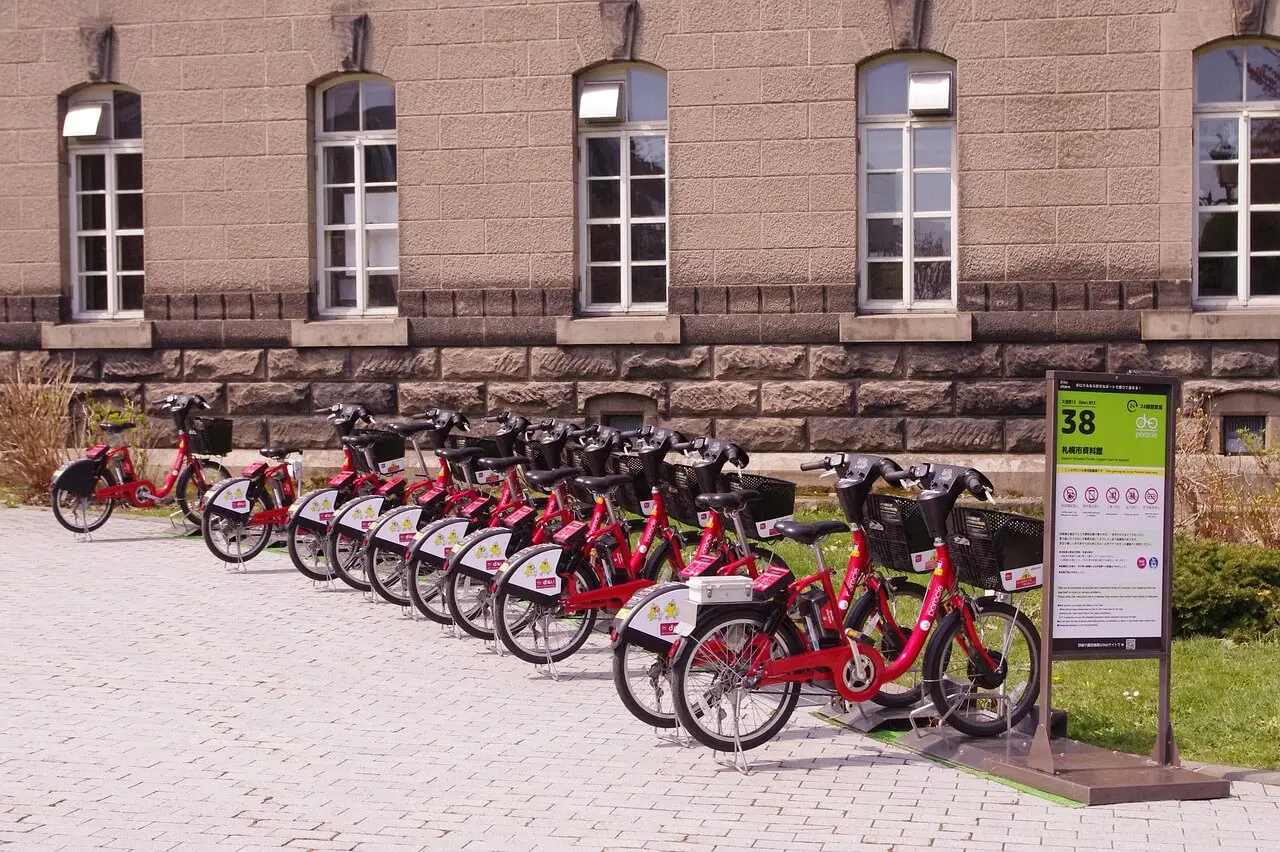
2. Docked (station-based) model
In this model, bikes must be picked up and returned to fixed stations. This is how early public bike-share systems (like in Paris or London) were designed.
Pros:
- Easier control of bike parking
- Trusted by city planners
- Potential for local subsidies
Cons:
- Higher setup costs (docking infrastructure)
- Less flexible for users
Docked systems are often used by city transport agencies or larger mobility operators. While more expensive, they offer stability and structured data reporting, which cities often prefer.
3. Hybrid model
Hybrid bike sharing mixes both station-based and free-floating approaches. Bikes can be picked up anywhere but are encouraged to be returned to specific locations (like virtual stations or parking zones).
Pros:
- Combines flexibility with control
- Lower fines from city authorities
- Better user behavior
Cons:
- More complex operations and software setup
Hybrid is a smart option for founders launching in cities with partial restrictions or looking to balance user needs with local regulations.
Revenue models: how bike sharing makes money
Once the basic business model is chosen, the next step is to plan revenue streams. Most bike-share businesses earn through a mix of user payments, partnerships, and in some cases, subsidies. A strong mix of income sources helps reduce risk and support steady growth.

1. Pay-per Ride
This is the default for most operators. Users pay for each ride, often calculated per minute. The pricing must match local expectations while covering costs like maintenance and customer service.
2. Subscriptions
Monthly or annual plans help increase loyalty and predictability. Some operators offer different tiers for students, daily commuters, or tourists. Subscriptions can also improve user retention and reduce marketing spend per ride.
3. Sponsorships & ads
Local businesses or big brands may pay to place ads on bikes, within the app, or on stations. This works well in areas with high foot traffic or tourist visibility. Sponsorships can also fund community campaigns and seasonal discounts.
4. Public-private partnerships
In some cities, local governments support bike-share systems financially. To qualify, operators need to share usage data, follow regulations, and prove reliability. Public partnerships can also lead to exclusive contracts or access to city infrastructure.
5. Additional services
Some operators bundle services like guided bike tours, helmet rentals, or even delivery options. While not the core business, these can add value and diversify income. In some cases, bike-sharing operators also partner with local events or offer special pricing for festivals.
Tools to build your bike sharing business
No founder builds a bike-share platform from scratch anymore. The right software and support system can save months of development and thousands in costs. Instead of hiring a tech team, you can launch faster with a complete mobility solution.
All-in-one platform by ATOM Mobility
ATOM Mobility offers a full solution for launching and managing a bike sharing business. From rider apps to backend admin tools, everything is already built and tested across markets.
Key features:
- White-label mobile apps for iOS/Android
- Real-time GPS tracking
- Smart lock integrations
- Dynamic pricing settings
- Fleet analytics dashboard
- User support tools
You can customize branding, language, and pricing plans easily. This allows you to focus on operations and growth, not app development. Atom’s tools are used in more than 50 cities across Europe and beyond.
Hardware integrations
Atom Mobility supports most modern IoT locks and smart bike systems. That means you can source hardware locally or work with trusted global manufacturers. Compatibility with leading hardware saves time and prevents costly surprises later on.

Hardware partners usually offer:
- Smart locks with GPS and Bluetooth
- Built-in alarms or motion sensors
- Remote locking/unlocking
Operations dashboard
The backend dashboard helps founders monitor vehicle usage, detect issues, manage tickets, and track revenues. You can see heat maps, vehicle status, and key metrics in real-time. This improves decision-making and reduces downtime.
Detailed reporting also helps with compliance, city partnership negotiations, and planning fleet expansion based on real demand.
How to fund your first bike-share startup
Starting costs can vary a lot depending on the business model, size of the fleet, and the country. But here’s a basic breakdown:
Startup costs may include:
- Bikes and locks: €300–€800 per unit
- Software platform: setup + monthly license
- City permits: depends on location
- Insurance and legal fees
- Marketing and launch costs
Bootstrap or raise capital?
Some founders start small with personal savings or local loans. Others look for angel investors, mobility-focused accelerators, or even crowdfunding. The best choice depends on how quickly you want to scale and how much capital you need upfront.
To raise capital, you’ll need a clear plan with projected revenue, fleet growth, and go-to-market strategy. A strong bike-sharing business plan is essential. It shows investors that you’re serious and understand the unit economics. It also helps you clarify your goals, timeline, and risk factors.
Final tips for first-time founders
- Start small, learn fast. A pilot project with 50 bikes can teach you more than months of research.
- Know your city. Regulations, terrain, weather, and demographics all affect success.
- Focus on the user. Easy booking, working bikes, and fast support build long-term trust.
- Invest in maintenance. Nothing kills growth faster than broken bikes.
- Talk to local partners. Bike shops, cafes, and schools can help promote your service.
Build your future with ATOM Mobility
A smart bike sharing business model backed by reliable tools can grow into a profitable and sustainable venture. ATOM Mobility helps early-stage founders every step of the way, from planning to scaling.
If you’re serious about launching your own service, start with a real plan. Check out our pricing and setup guide to understand the costs and support options available. With the right model and support, your first fleet can be on the road in just a few weeks.