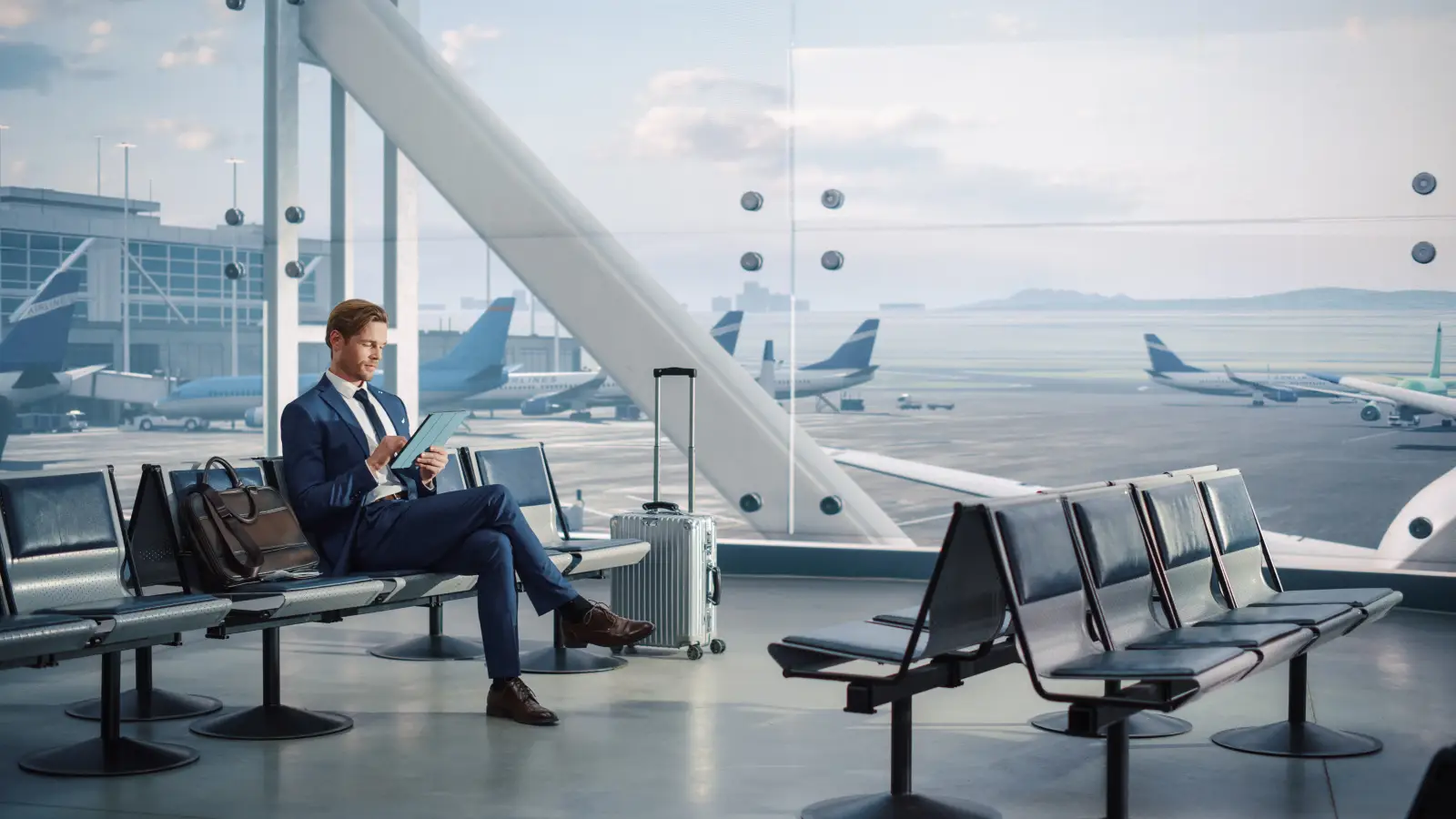
Global business travel spending to hit $1.57 trillion in 2025 amid trade uncertainty, marking a new record despite global economic headwinds.
The latest forecast from the Global Business Travel Association (GBTA) highlights both resilience and complexity as companies navigate shifting trade dynamics and evolving corporate travel behaviors.
Released during the GBTA Convention in Denver, the 17th edition of the BTI™ Outlook reflects a moderate growth rate of 6.6% year-over-year. However, the long-term path toward recovery remains uneven, with spending growth projected to slow compared to previous expectations due to inflation, trade frictions, and broader geopolitical volatility.
Moderate Growth Masks Regional and Sector Divergence
Spending Projections and Timeline
While 2025 is set to mark a historic peak in nominal global business travel spending, the path to sustained recovery continues to vary. According to GBTA’s BTI report, spending will reach $1.57 trillion this year and rebound to 8.1% growth in 2026. By 2029, global business travel spending is projected to exceed $2 trillion, though this milestone will arrive one year later than previously anticipated.

Recent adjustments underscore a cooler outlook than in previous years. For instance, the 2025 growth rate was revised downward from 10.4% to 6.6%, and 2026 from 9.2% to 8.1%. Meanwhile, spending for 2024 was slightly lower than forecasted, rising to $1.47 trillion instead of the projected $1.48 trillion. Even so, this still set a new nominal high.
Inflation-Adjusted Figures Tell a Different Story
Despite these gains, real spending adjusted for inflation remains 14% below pre-pandemic levels, signaling a slower return in business travel volume. This reveals that while companies are spending more in absolute terms, they are still traveling less compared to pre-2020 benchmarks, largely due to persistent economic uncertainty and rising costs.
Regional Highlights: Winners and Laggards
The top 15 business travel markets are expected to account for $1.31 trillion in 2025. The United States will reclaim the number-one position with $395.4 billion in projected spend, followed closely by China at $373.1 billion. Together, these two giants comprise 58% of global business travel spending.
Germany, Japan, and the United Kingdom round out the top five. Notably, India, South Korea, and Turkey are among the fastest growing markets, while Spain and the Netherlands are projected to show minimal or even negative growth.
| Top 5 Markets (2025) | Projected Spend (USD) |
|---|---|
| United States | $395.4 billion |
| China | $373.1 billion |
| Germany | Not specified |
| Japan | Not specified |
| United Kingdom | Not specified |
Sector Trends: Services Lead, Agriculture Lags
Industry-wise, divergence remains stark. Manufacturing, which accounts for nearly a third of global business travel spending, faces heightened exposure to trade disruptions. Wholesale trade similarly remains vulnerable. In contrast, service-oriented sectors like Arts & Entertainment and Professional Services have exceeded pre-pandemic travel spending, with some segments growing over 20%.
Looking forward, Mining and Information & Communication are forecast to experience the strongest growth in business travel spending. Meanwhile, Agriculture shows the weakest outlook due to reduced access to export markets amid protectionist policies and logistical constraints.
Shifting Business Travel Behaviors and Expectations
Corporate Travel Is Back — But Different
The GBTA survey of more than 7,300 global business travelers across 33 countries offers deeper insight into post-pandemic travel patterns. Despite economic and political uncertainty, business travel remains highly valued—86% of respondents said their trips were worthwhile.
On average, 74% of business travelers took between one and five trips in the past year, while more than 80% are traveling as much or more than they did before 2019. Average trip expenditure increased to $1,128 from $834 a year earlier, reflecting both inflation and an evolving definition of value in travel experiences.
Technology and Payments Go Mobile
The digitalization of business travel continues to accelerate. Corporate credit card access reached 69%, with 73% of North American travelers holding a corporate card. However, only half of cardholders are required to use them, suggesting ongoing inefficiencies in corporate travel policies.
Mobile wallet adoption is on the rise globally, particularly in Asia Pacific, where 72% of travelers now use digital wallets. Comfort with artificial intelligence (AI) travel booking tools is also growing, especially in Asia Pacific, where 78% of respondents reported ease with AI systems.
Edward Galvin, Vice President and head of North America B2B Commercial Payments at Visa, commented, “As corporate travelers increasingly expect seamless, mobile-first payment experiences, it’s no surprise the report found notable usage of corporate credit cards through mobile wallets. At Visa, we’re focused on enabling this shift, offering secure, flexible digital payment tools that meet travelers where they are, and help organizations modernize their expense processes.”
Purpose and Productivity Remain Key Drivers
Globally, training and conferences were cited as the primary reason for business trips, though purpose varies by region. With organizations placing greater emphasis on the ROI of each trip, the future of business travel will likely focus more on strategic engagements than on routine travel.
As geopolitical tensions continue and the global economy adjusts to new norms, business travel is being reshaped—not reduced. While the road to recovery remains uncertain, the trends indicate a sustained demand for purposeful, digitally integrated, and experience-driven travel in the business world.
Photo Credit: Gorodenkoff / Shutterstock.com