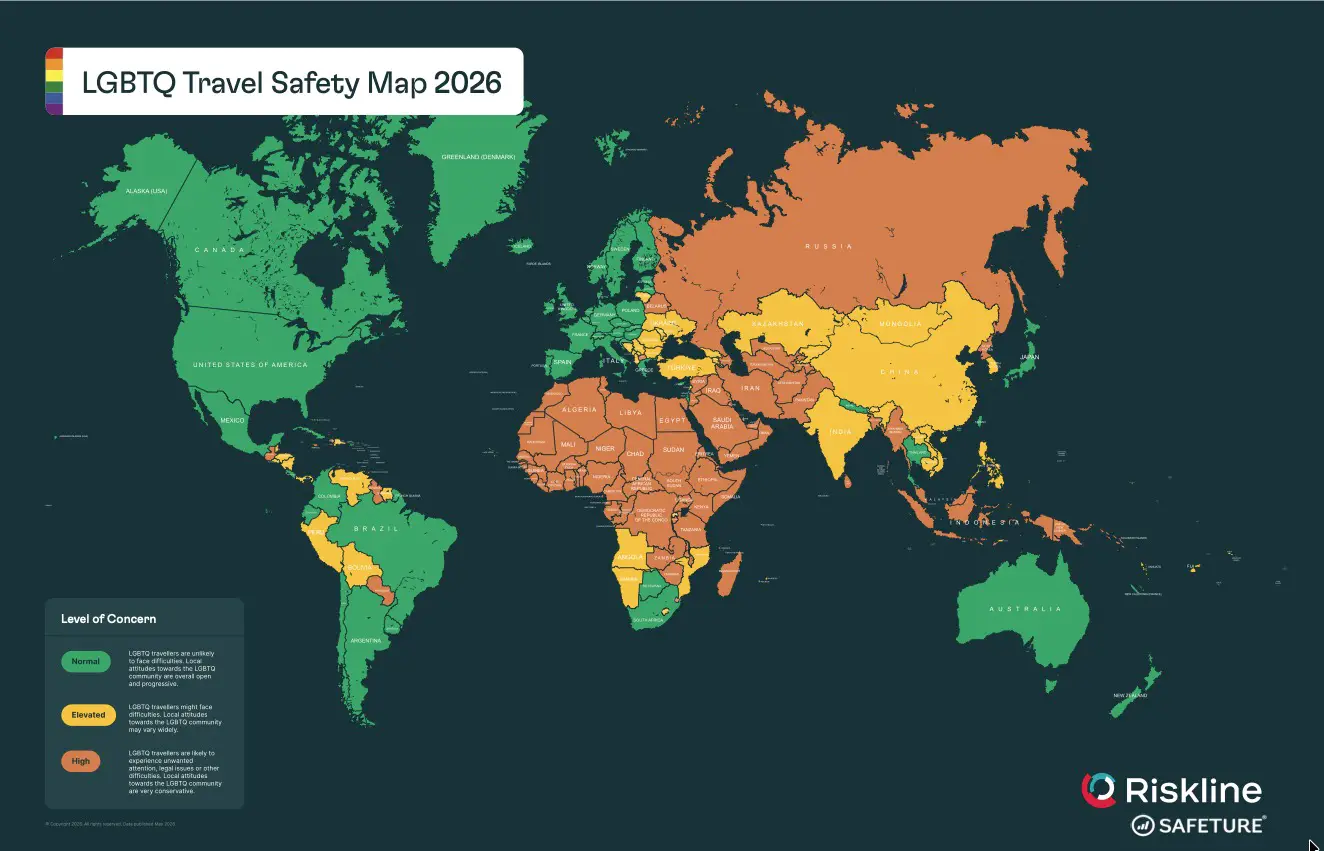
The LGBTQ+ travel safety 2025 report shows a shifting global landscape where social acceptance, legal protections, and on-the-ground experiences vary drastically. The new survey released by ITB Berlin in collaboration with Diversity Tourism and A3M Global Monitoring digs deeper than laws—focusing on how safe queer travelers actually feel across the globe.
Based on survey responses gathered between December 2024 and April 2025, along with expert interviews, the report delivers nuanced insights into the everyday realities of LGBTQ+ individuals on the move. While some destinations earn high marks for inclusivity, others continue to pose safety risks despite progressive reputations.
LGBTQ+ Travel Perception vs. Legal Protections
Spain and Canada Lead as Model Destinations
Two nations emerge as global leaders in LGBTQ+ travel safety: Spain and Canada. In both countries, 100% of survey respondents said queer travelers are treated with respect. Additionally, public displays of affection were seen as unproblematic, especially in Spain (90%) and Canada (71%). Police interactions in both countries were widely considered positive.
These findings echo long-standing reputations. Spain’s Mediterranean regions, Canary Islands, and cities like Madrid and Barcelona have built welcoming infrastructures. Meanwhile, Canada’s legal protections are supported by a generally accepting public attitude.
USA: A Divided Experience
Unlike Spain and Canada, the United States presents a complex picture. Only about one-third of participants agreed that queer couples can safely show affection or that the police are LGBTQ+ friendly. Responses revealed a deep divide between progressive urban centers and more conservative rural regions.
For travelers, this fragmentation means safety can depend on geography. A trip to New York or San Francisco may feel welcoming, while visits to other states might pose discomfort or risk.
Germany’s Ambivalence
Despite progressive legislation, Germany garnered mixed reviews. Around half of the participants reported feeling comfortable expressing their identity in public, and only a similar share said they felt treated equally by authorities.
Even with the enactment of Germany’s Self-Determination Act in November 2024—meant to strengthen the rights of transgender, intersex, and non-binary people—social acceptance appears to lag behind the laws.
Key Findings by Region
Where Legality Doesn’t Equal Safety
One key takeaway from the survey is the gap between legal recognition and perceived safety. Laws on paper do not always ensure security in practice—especially for transgender and intersex individuals, who often face unique challenges.
- Transgender travelers report facing obstacles at borders due to unrecognized gender markers.
- Security checks often lack staff training in handling gender diversity.
- Medical access for LGBTQ+ travelers is uneven and unreliable in many regions.
As Thomas Bömkes, managing director of Diversity Tourism, stated, “Legal frameworks on their own are frequently not enough. What matters is how safe people actually feel at a destination.”
South America and Asia: Complex Realities
In South America, destinations like Brazil, Chile, and Peru show a relatively high level of tolerance in tourist regions—despite existing restrictive legislation. This “pragmatic tolerance” often depends on local tourism dynamics.
In China and Dubai, discretion is key. While overt LGBTQ+ behavior might draw scrutiny, authorities tend to take a hands-off approach if travelers behave “modestly.”
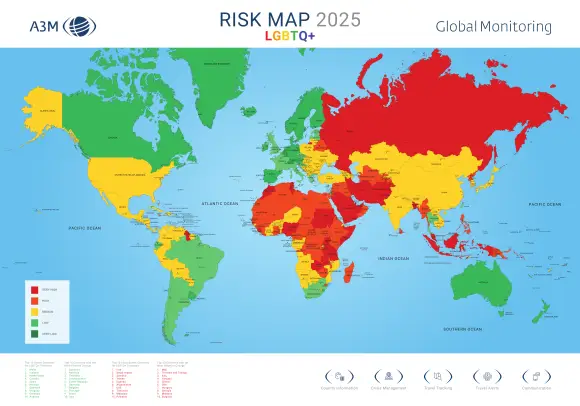
2025 LGBTQ+ Risk Map: Positive and Negative Shifts
Countries Showing Progress
Several nations made significant strides in LGBTQ+ rights over the past year, enhancing their travel safety profiles. These include:
| Country | Development | Date |
|---|---|---|
| Dominica | Decriminalization of homosexual acts | April 2024 |
| Namibia | High Court repealed anti-LGBTQ+ laws | June 2024 |
| Germany | New Self-Determination Act implemented | November 2024 |
| Thailand | Legalized same-sex marriage | January 2025 |
Rising Setbacks
Unfortunately, not all changes were positive. Several countries introduced new laws criminalizing LGBTQ+ identities and behavior:
- Iraq: Harsh criminal penalties enacted (April 2024)
- Mali: Criminalized same-sex relationships (December 2024)
- Trinidad and Tobago: Reversed liberal ruling, re-criminalized homosexuality (March 2025)
- Georgia: Passed wide-ranging anti-LGBTQ+ legislation (September 2024)
These legal setbacks underscore the importance of up-to-date, destination-specific safety information for queer travelers.
What’s Next: A Safer Future for Queer Travelers
A3M’s Global Safety Network Initiative
To provide real-time, peer-informed safety data, A3M plans to launch an international network that gathers traveler experiences and regional updates. The goal is to make LGBTQ+ travel more transparent, predictable, and safe.
The survey authors emphasize that “safety is more than a right – it is about perceptions and experiences.” This initiative aims to empower queer travelers with the tools to make informed choices, supported by a community and trusted insights.
Survey to Become Annual Benchmark
ITB Berlin and its partners plan to repeat the LGBTQ+ travel survey annually, helping to track social and legal developments worldwide. Each year’s edition will refine our understanding of both improvements and regressions.
This evolving report could become an essential reference for LGBTQ+ travelers, policymakers, and tourism boards striving for more inclusive and respectful travel environments globally.