UNESCO has added the Domus de Janas, known as Sardinia’s “fairy houses,” to its World Heritage List in 2025, strengthening Italy’s lead as the country with the most UNESCO-recognized sites.
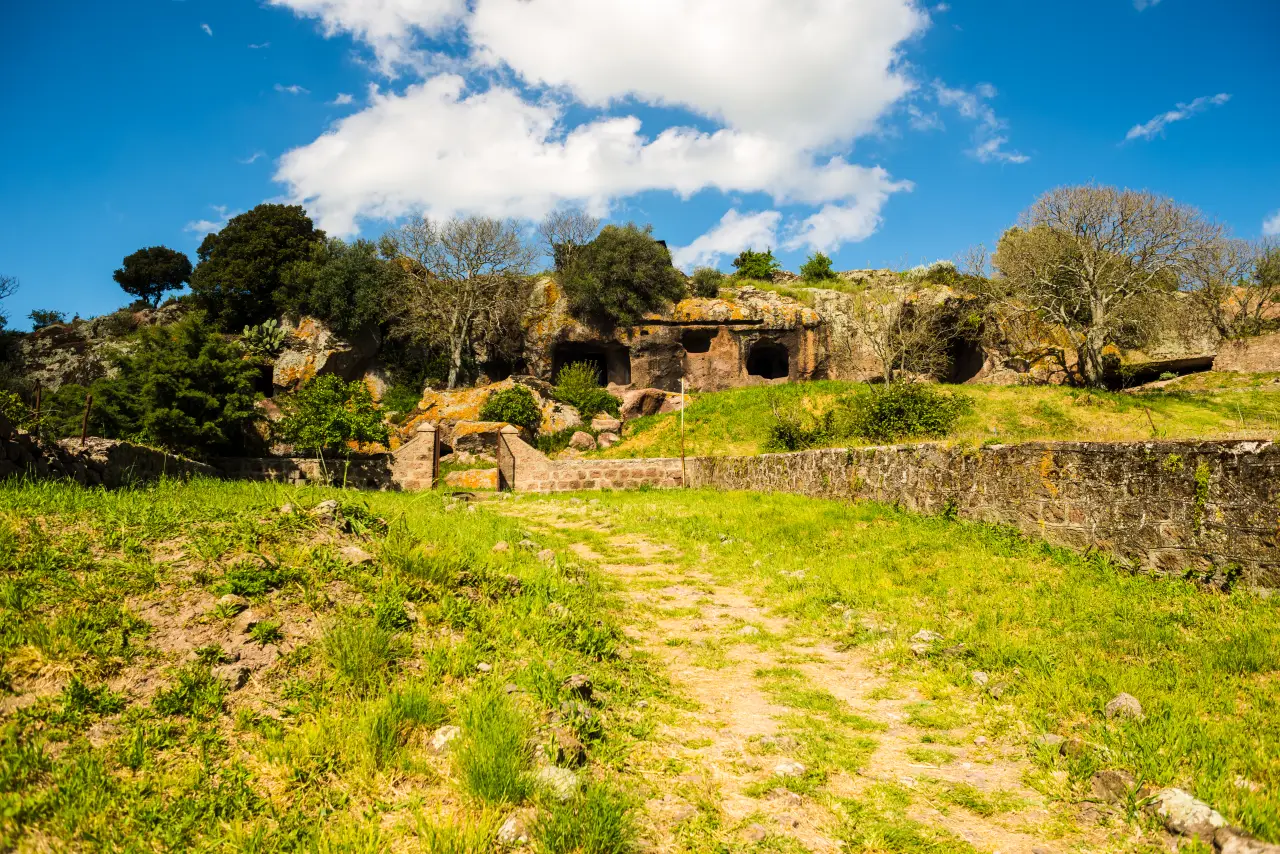
The prehistoric burial complexes, carved into rock between 5000 and 3000 BC by the Ozieri people, are located across the island of Sardinia and number more than 3,500 monuments.
The decision highlights the archaeological and cultural significance of the Domus de Janas, which provide rare insights into Neolithic life and beliefs. Italy now has 61 UNESCO sites, ahead of China with 60, followed by Germany with 55, France with 54, and Spain with 50.
Prehistoric Rock-Cut Tombs
The Domus de Janas are subterranean chamber tombs that mirror the structures of dwellings from the same era. Many include gabled roofs, columns, and multiple rooms decorated with spiritual motifs. Their elaborate design reflects the Ozieri culture’s emphasis on death and the afterlife.
These funerary monuments are spread throughout Sardinia’s interior, with some sites located near the sea. The necropolis of Loccis Santus, close to the town of San Giovanni Suergiu, is one example of a coastal complex. Other notable locations include Sant’Andrea Priu, S’Incantu, and Sas Concas, where the architecture reveals highly developed techniques for carving rock.
Legends and Local Lore
The Domus de Janas are closely tied to Sardinian folklore. According to local legends, fairies once inhabited these rock-hewn spaces, performing tasks from weaving to watching over children’s dreams. This association has contributed to their enduring name, “fairy houses.”
Archaeologists note that while the tombs served a funerary function, their form also provides evidence of daily life among the island’s prehistoric populations. The designs replicate domestic structures, offering clues to how communities organized their living spaces thousands of years ago.
Sardinia is widely known as a summer tourism destination for its Mediterranean beaches and clear waters, but the addition of the Domus de Janas to the UNESCO list draws attention to its inland heritage. The recognition underscores the diversity of Italy’s cultural landscape, extending beyond the peninsula to its islands.
UNESCO’s inclusion of the Domus de Janas reflects both their historical value and their unique position within European prehistory. The burial sites stand as evidence of the island’s role as a center of early human culture in the Mediterranean, combining archaeology with myth in a landscape that continues to attract global visitors.
Photo Credit: Eugenio Marongiu / Shutterstock.com