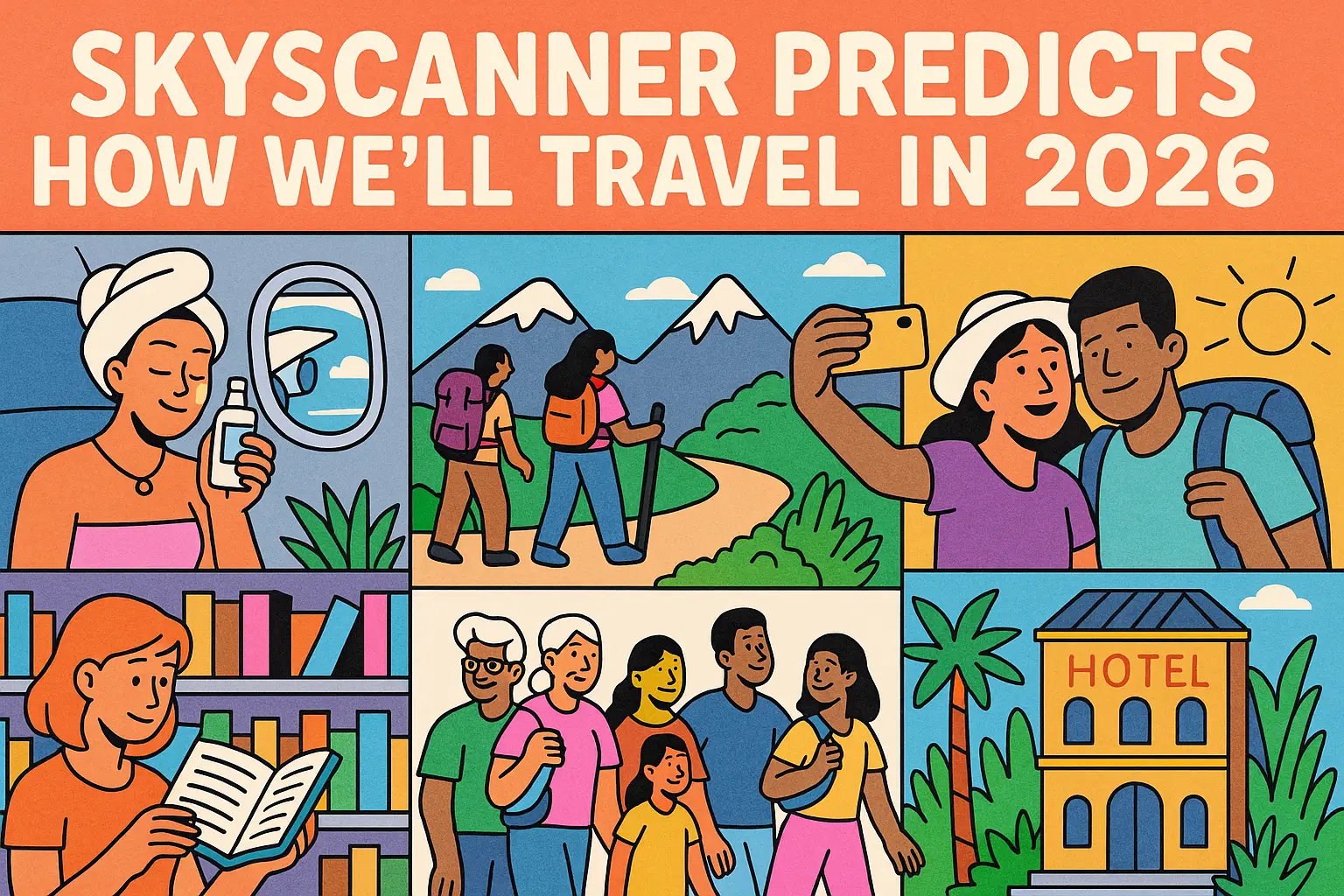
Travel in 2026 will be more personal, purposeful, and creative as travellers look for experiences that align with their interests, values, and lifestyles, according to Skyscanner’s new Travel Trends 2026 report.
The global travel app unveiled seven major trends that are expected to shape how people plan, book, and experience travel next year, drawing on booking data, international surveys, and insights from global brands including Reddit, Penguin Books, Malin + Goetz, and AllTrails.
The report highlights a shift toward travel that feels “worth it,” as cost-conscious consumers continue to prioritise meaningful experiences over volume. From beauty-based itineraries to mountain escapes and family adventures, Skyscanner’s findings suggest that travel in 2026 will be guided less by destination and more by personal connection, affordability, and self-expression.
The Seven Trends Defining Travel in 2026
Skyscanner identified seven key movements shaping the future of travel: Glowmads, Shelf Discovery, Altitude Shift, Bookbound, Catching Flights and Feelings, Family Miles, and Destination Check-in. Each reflects changing motivations and lifestyles as travellers combine technology, culture, and self-care into their journeys.
Glowmads — Beauty routines and skincare rituals are becoming part of the travel experience itself. One in three travellers (33%) want to experience local beauty culture during their trips, and one in five (20%) say their travel choices are influenced by TikTok and social media. From Seoul’s beauty markets to inflight skincare routines, beauty tourism is moving from trend to itinerary.
Shelf Discovery — Culinary travel is taking a more local turn, with 35% of global travellers saying they plan to shop at local supermarkets on their next trip. Instead of fine dining, travellers are exploring grocery aisles, vending machines, and neighbourhood bakeries to “eat like a local.”
Altitude Shift — The appeal of the mountains now extends far beyond ski season. Seventy-six percent of travellers are planning alpine getaways in summer or autumn, seeking tranquillity and open air. Skyscanner reports a 103% year-on-year increase in hotel bookings using its “Room with a mountain view” filter.
Bookbound — Literary travel is on the rise, with 57% of travellers booking or considering trips inspired by books. From reading retreats to library-themed stays, searches using Skyscanner’s “library” hotel filter have grown 70% year-on-year, reflecting how literature is reshaping leisure travel.
Catching Flights and Feelings — Social connection is a major motivation for travel. Fifty-five percent of travellers have gone, or would go, abroad to meet new people — whether for friendship, dating, or community. Solo travel continues to grow, with Skyscanner reporting an 83% increase in hotel bookings using its “solo” filter.
Family Miles — Multi-generational travel is on the rise as families look to share costs and reconnect. Thirty-one percent of travellers plan to take family trips in 2026, with more younger adults travelling alongside parents and grandparents to create shared experiences and memories.
Destination Check-in — Hotels are becoming destinations in their own right. Twenty-nine percent of travellers will choose accommodation that defines the experience rather than complements it. From architectural design hotels to influencer-loved stays, accommodation is increasingly the main event.
Travel Gets More Curated and Clever
According to Bryan Batista, CEO of Skyscanner, the trends highlight how the future of travel will be increasingly self-curated. “Skyscanner’s 2026 Travel Trends report shows how travel is about to get more personal than ever,” said Batista. “Whether it’s building a trip around a must-stay destination hotel, getting lost in a new favourite book, incorporating a beauty routine into their itinerary, or bringing the whole family along, travel will become more curated, grounded and unique.”
The study also points to how digital technology continues to reshape decision-making. Social platforms are increasingly driving travel inspiration, while artificial intelligence is evolving from a simple assistant to an “agentic” role — helping travellers plan and adapt trips in real time. Skyscanner’s report predicts that 2026 will be the year when AI tools, social media, and smart search fully converge to create hyper-personalised travel experiences.
Despite economic pressures, global appetite for travel remains strong. Eighty-four percent of travellers surveyed said they plan to go abroad as much or more in 2026 than in 2025. Skyscanner’s findings suggest that travellers are stretching budgets strategically, focusing less on distance and more on depth — favouring experiences that feel both meaningful and memorable.
The full Skyscanner Travel Trends 2026 report is available at skyscanner.net/travel-trends.