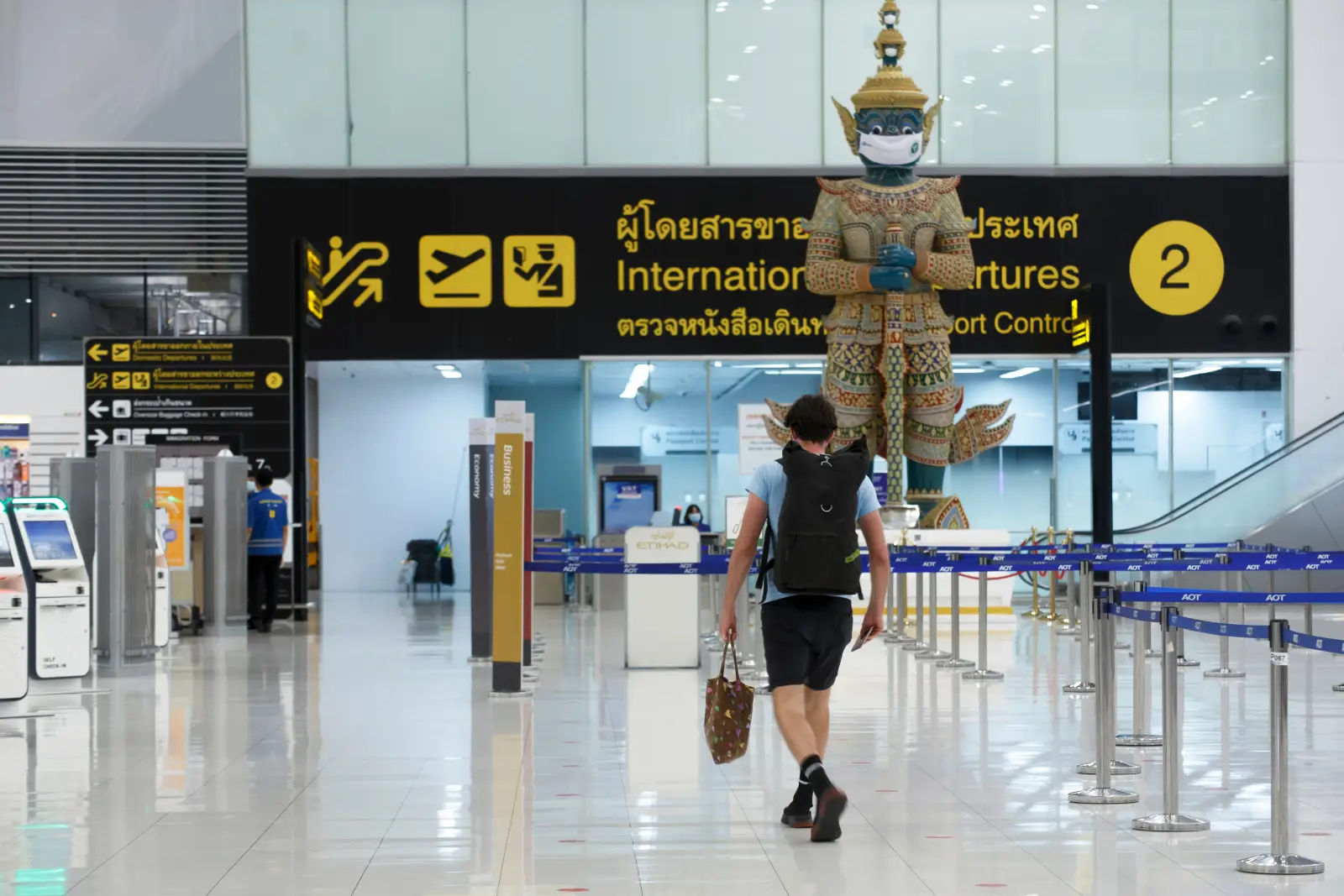
Thailand will increase multiple travel-related fees in 2026, raising the overall cost of air travel to and within the country as authorities seek additional funding for aviation oversight, airport infrastructure, and tourism management.
Confirmed measures include higher airport passenger service charges at major international airports and an increase in the national aviation passenger fee, with changes taking effect from early 2026. A separate tourist entry fee has also been proposed for foreign visitors, with implementation expected later this year, pending final confirmation.
The fee increases apply primarily to international air travelers using Thailand’s largest gateways, including Bangkok’s Suvarnabhumi and Don Mueang airports, as well as Phuket, Chiang Mai, Hat Yai, and Chiang Rai. Officials say the changes are intended to strengthen airport capacity, fund regulatory operations, and support tourism infrastructure as visitor numbers continue to recover and expand. The adjustments come as Thailand positions itself for sustained growth in international arrivals in 2026 and beyond.
Airport and aviation fees set to rise
The most significant confirmed increase affects the Passenger Service Charge (PSC) for international departures at six major airports operated by Airports of Thailand. From early 2026, the international PSC will will increase from 730 baht (about USD 21, EUR 19, GBP 16) to 1,120 baht (about USD 32, EUR 30, GBP 25) per international passenger, an approximately 53% increase. The charge is typically included in airline ticket prices at the time of booking and applies to passengers departing Thailand on international flights.
Authorities estimate that the higher PSC will generate an additional 10 billion baht (approx. USD 290 million, EUR 270 million, GBP 230 million) annually, with revenue earmarked for airport development, terminal upgrades, and operational improvements.
Airports of Thailand has cited the need to modernize facilities, expand capacity, and enhance passenger processing systems as international traffic volumes grow. The fee adjustment follows several years without changes to the PSC, during which airports absorbed rising operational and maintenance costs.
In addition to the PSC, the Civil Aviation Authority of Thailand will increase its aviation passenger fee from 15 baht (about USD 0.40, EUR 0.37, GBP 0.32) to 25 baht (about USD 0.70, EUR 0.63, GBP 0.55) per person per trip. This fee applies to both arriving and departing passengers and is scheduled to take effect on February 1, 2026. The authority said the increase is intended to support regulatory oversight, safety supervision, and administrative operations across Thailand’s aviation sector.
Proposed tourist entry fee and broader impact
Alongside confirmed aviation-related increases, Thailand is moving closer to implementing a long-discussed tourist entry fee for foreign visitors. Under current proposals, international travelers would pay a fee of around 300 baht when entering the country by air, land, or sea. The measure has been described by officials as a way to fund basic travel insurance coverage for visitors and to support tourism infrastructure projects nationwide.
While the tourist entry fee has been delayed multiple times in previous years, government officials have indicated that 2026 remains the target for implementation. Final details, including collection mechanisms and exemptions, are expected to be announced closer to the launch date. Industry groups have urged authorities to ensure that the process is simple and integrated into existing arrival systems to avoid delays at border checkpoints.
Taken together, the PSC increase, the higher aviation passenger fee, and the proposed tourist entry charge will add several hundred baht to the cost of a typical international trip to Thailand. For long-haul travelers and families, the cumulative impact may be noticeable, particularly when combined with airline fare fluctuations and seasonal demand.
Airlines, travelers, and competitive positioning
Airlines serving Thailand are expected to pass on the higher airport and regulatory charges to passengers through ticket pricing, as is standard practice for government-imposed fees. Carriers operating high-frequency routes to Bangkok and major resort destinations will need to update fare structures and communicate changes clearly to customers booking travel for 2026.
Tourism analysts note that while the fee increases raise costs, Thailand remains price-competitive compared with many long-haul destinations, particularly in the Asia-Pacific region. Neighboring countries have also introduced or increased tourist taxes, airport charges, and environmental fees as they seek sustainable funding models for tourism growth. In this context, Thailand’s adjustments are seen as broadly in line with regional trends.
For travelers, the changes underscore the importance of reviewing fare breakdowns and understanding which charges are included in ticket prices versus those paid on arrival. Travel agents and tour operators are expected to update package pricing to reflect the new fees as details are finalized.
Thai authorities have emphasized that the additional revenue generated in 2026 will be reinvested in aviation safety, passenger experience, and destination management. As international arrivals continue to rise, the government faces pressure to balance affordability with the need to maintain infrastructure standards and regulatory capacity. The coming year will test whether the higher fees deliver visible improvements while preserving Thailand’s appeal as one of the world’s most popular travel destinations.