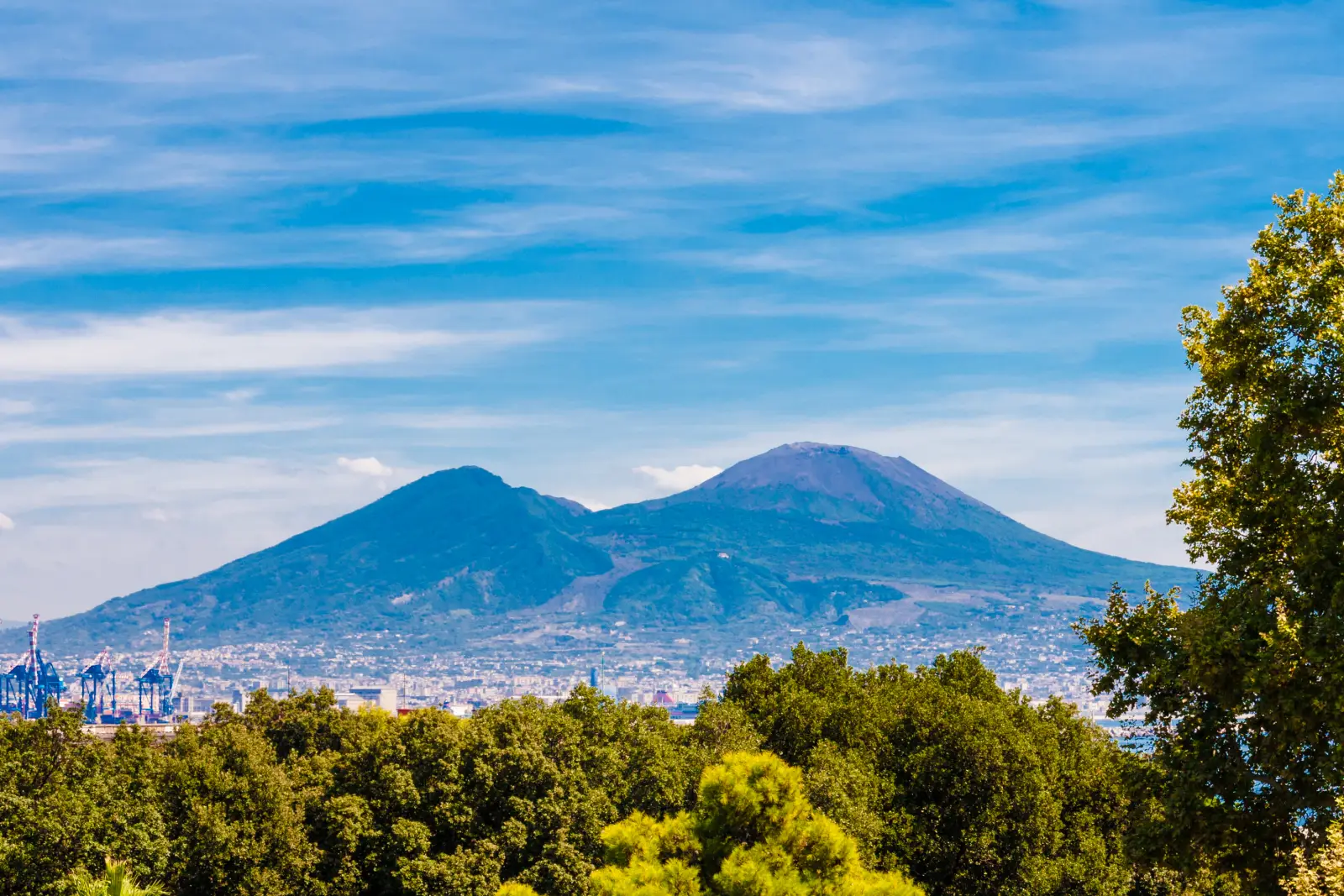
Italy’s famed Mount Vesuvius, one of the world’s most iconic volcanoes, has fallen silent to hikers as a massive wildfire sweeps across its slopes. The entire trail network, which draws more than 600,000 visitors annually, has been closed since Saturday to ensure public safety and support firefighting operations. For now, the mountain’s panoramic paths and crater viewpoints remain off-limits, with no date set for reopening.
Firefighting teams have been working tirelessly since Friday to contain the blaze, which has already destroyed around 500 hectares of woodland. According to La Repubblica, more than 150 firefighters are operating on three active fronts, battling high temperatures, strong winds, and the natural tinder of pine needles that accelerate the flames’ spread.
Ongoing Firefighting Efforts
Authorities in the Campania region confirmed on Sunday that the Terzigno pine forest, located on Vesuvius’s eastern flank, has been one of the hardest hit areas. Italy’s national fire service has deployed 12 ground teams and six Canadair planes to douse the fire from above. Onsite officers are also using drones to track the blaze’s movement and identify new flare-ups in real time.
Additional fire department units from neighboring regions have been called in to reinforce local crews. Despite these efforts, firefighting remains challenging due to the weather conditions and the terrain’s flammability. Italo Giulivo, head of Campania’s Civil Protection department, noted that the combination of heat, wind, and pine debris “contributes to the spread of the flames” and complicates containment.
Impact on Tourism at Mount Vesuvius
While Vesuvius National Park remains closed to hikers, the nearby UNESCO World Heritage Site of Pompeii continues to welcome visitors. Still, the temporary loss of access to Vesuvius’s trails represents a significant blow to the local tourism industry, which relies heavily on nature and adventure tourism linked to the volcano.
Beyond hiking, the fire is causing severe damage to local agriculture. The national agricultural lobby group Coldiretti described the situation as an “enormous disaster” for vineyards and farms in the region. Valentina Stinga, head of Coldiretti’s Naples branch, emphasized that Vesuvius National Park is also an important producer of regional specialties such as Pellechiella apricots and Piennolo tomatoes. She warned that recovery “will be difficult for everyone” involved in the area’s agricultural economy.
Investigating the Cause
The exact cause of the fire remains unknown, but local officials have not ruled out human involvement. Francesco Ranieri, mayor of Terzigno, suggested on Saturday that there may be “a criminal hand” behind the blaze. Gioacchino Madonna, mayor of Massa di Somma, said that “arson or incompetence” were among the leading theories.
Authorities are reviewing footage from the park’s video surveillance system as part of an investigation launched by the Public Prosecutor’s Office in Nola. The inquiry aims to determine whether the fire was deliberately set or caused by negligence. This heightened scrutiny comes just eight years after another destructive fire swept through the park in 2017, leaving behind severe environmental damage and worsening drought conditions.
Environmental and Cultural Significance
Mount Vesuvius holds both environmental and historical importance. Its national park is home to rare plant and animal species and offers sweeping views of the Bay of Naples. The area’s volcanic soil supports the cultivation of unique crops cherished by locals and visitors alike. The current fire threatens not only the immediate ecosystem but also the cultural and culinary heritage tied to the land.
Authorities stress that the closure of hiking routes is a necessary measure to safeguard lives and ensure that firefighting teams can operate without obstruction. Once the flames are under control, attention will shift toward rehabilitation—restoring damaged landscapes, replanting trees, and supporting the recovery of affected farms and small businesses.
Visitor Advice for Mount Vesuvius
For travellers currently in the Campania region, alternative activities include exploring the archaeological sites of Pompeii and Herculaneum, visiting the Amalfi Coast, or enjoying Naples’s historic center. However, tourists are urged to respect all safety advisories and avoid approaching restricted zones near the volcano.
Updates on the status of Mount Vesuvius and its hiking trails will be provided by the park authorities as firefighting efforts progress. Until then, the mountain stands as a reminder of nature’s beauty and its unpredictable power—an enduring symbol of resilience for the communities living in its shadow.
Photo Credit: Ewa Studio / Shutterstock.com