Chiang Rai hosted the PATA Destination Marketing Forum 2025 from December 1–3, positioning the northern Thai province in front of more than 320 global delegates as a UNESCO Creative City of Design and a destination built on heritage, community identity and wellness.
The event took place at the Heritage Chiang Rai Hotel & Convention and focused on secondary and tertiary destination development across Asia Pacific. Co-hosts included Chiang Rai Province, the Thailand Convention and Exhibition Bureau (TCEB), the Designated Areas for Sustainable Tourism Administration (DASTA) and the Tourism Authority of Thailand (TAT).
Under the theme Steeped in Tradition, Rooted in Wellness: Weaving the Meaningful Narrative of Travel, the programme combined community interaction, conference sessions and on-the-ground activities. Delegates joined local tours, attended cultural performances, exchanged insights during industry discussions, and took part in networking events designed to highlight Chiang Rai’s craftsmanship, creative talent, natural landscapes and cultural depth.
Forum places wellness, heritage and creativity at the centre of destination strategy
Throughout the three-day event, representatives across public and private sectors discussed how identity-driven marketing and community-led narratives could strengthen long-term tourism resilience. The approach aligned with TCEB’s goal to elevate emerging MICE destinations and with PATA’s focus on equitable growth within the region. Speaker sessions explored how design recognition, cultural continuity and wellness-based tourism could anchor Chiang Rai’s appeal for future travellers.
Opening the forum, Mr Napintorn Srisunpang, Minister Attached to the Prime Minister’s Office of Thailand, said the theme “reflects an important direction for global tourism—one that embraces heritage, community, and holistic well-being. It is also closely aligned with the government’s commitment to driving sustainable growth and strengthening local economies through cultural identity and creative development.” He added, “I believe the insights, case studies, and dialogues shared today will inspire new approaches that help shape a stronger and more resilient tourism landscape for the Asia-Pacific region.”
Chiang Rai Governor Mr Choocheap Pongchai highlighted the province’s stories rooted in landscape and community, stating, “Chiang Rai is a province full of stories—found in our mountains, our rivers, our temples, and in the everyday lives of our people.” He noted the role of local voices, creativity and wellness in shaping the province’s positioning. “For us, wellness is more than physical health; it is about feeling connected, feeling embraced by the community, and feeling at home in an environment that is warm and caring. Our Chiang Rai representatives—joining as speakers across several sessions—will share their experiences, ideas, and hopes for the future.”
PATA Chair Mr Peter Semone emphasised the intersection of tradition and creativity, saying, “Throughout the day, we will explore how wellness can be integrated into the visitor experience, how creativity can enrich destination identity, and how local voices can guide tourism development in ways that are both authentic and sustainable.” He described Chiang Rai as a model destination where heritage and innovation coexist, adding, “Its example encourages us to think differently about how destinations can thrive: by cultivating a sense of place, enabling communities to lead the narrative, and ensuring that the benefits of tourism are shared widely.”
Tours, performances and workshops showcase local community and design heritage
Technical tour routes on December 2 introduced delegates to well-known landmarks and lesser-visited communities under three themes: Creative City of Design for Sustainability; Cave, Coffee and Contemporary Culture; and History, Locality and Artisans. Stops included Wat Rong Khun, Doi Tung Development Project, Ban San Thang Luang Community, Tham Luang – Khun Nam Nang Non National Park, Pha Mee Community, Doy Din Dang Pottery, Baan Dam Museum, the Golden Triangle, Chiang Saen, Wat Chedi Luang and Khwai Din Daak Art House. Activities ranged from craft workshops to traditional offerings and studio-led art sessions.
Evening events included a welcome dinner at Singha Park hosted by TAT, as well as the Chiang Rai WOW Market & Famous Food Festival, featuring cultural performances and more than 100 booths of regional products and cuisine. The forum’s second full day opened with Mist of Heritage: Grace of Lanna Ethnic Women, a Lanna dance presentation highlighting the Lahu, Hmong and Tai Lue cultures.
Conference discussions brought international tourism organisations such as UNESCO, Sabah Tourism Board, Jeju Tourism Organization and The Trade Desk together with Thai cultural leaders and national artists. Panels addressed topics including destination transformation through tradition, hyper-local positioning to attract global interest, creativity in placemaking and technology-driven emotional storytelling. A social media contest recognised the most engaging Chiang Rai content, emphasising the power of user-generated promotion.
Dr Supawan Teerarat, President of TCEB, said Chiang Rai’s design status “positions Chiang Rai at the heart of Thailand’s strategic vision for MICE development, offering international delegates increasingly valuable experience: authentic culture, sustainable community engagement, and the transformative journey that today’s travelers seek.” She noted that MICE tourism could drive long-term community prosperity. Mr Santi Sawangcharoen, Executive Director of the Americas, Middle East, and Africa Region at TAT, described the province as “a pioneer in the future of restorative and wellness-driven travel.”
DASTA Director-General Mr Siripakorn Cheawsamoot highlighted the province’s progress within the UNESCO Creative Cities Network and noted awards including the PATA Gold Awards 2025 for Ban San Thang Luang and Skål International Sustainable Tourism recognition for Ban Pha Mee Community. He said DASTA recognises Chiang Rai as an example of creative community development linked to sustainability and visitor engagement.
The forum concluded with The Taste of Wellness, Experience WOW Market reception, closing three days of collaboration between public agencies, tourism innovators, cultural practitioners and visiting delegates. Attendees represented 18 destinations spanning Asia Pacific, Europe, the Middle East and North America. Discussions, field tours and performances collectively underlined Chiang Rai’s objective to advance as a design-led, culturally anchored and wellness-forward travel destination.
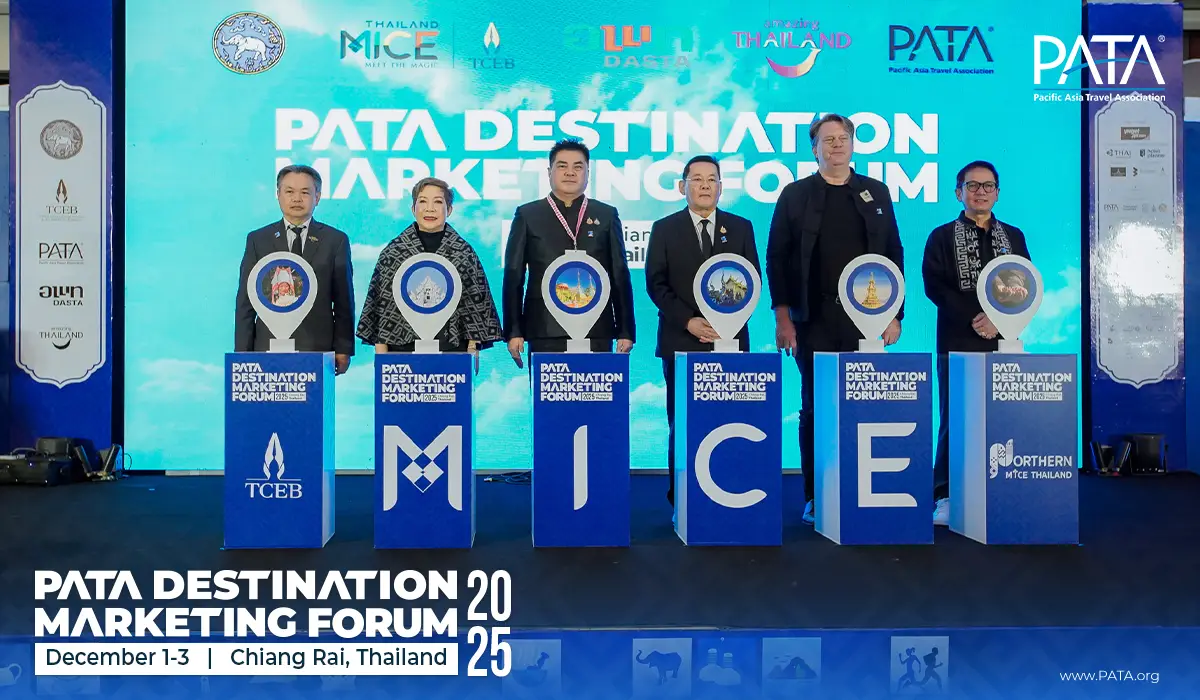
Photo (L/R): Mr Santi Sawangcharoen, Executive Director of the Americas, Middle East, and Africa Region, TAT; Dr Supawan Teerarat, President, TCEB; Mr Choocheap Pongchai, Governor of Chiang Rai; Mr Napintorn Srisunpang, Minister Attached to the Prime Minister’s Office, Thailand; Peter Semone, Chair, PATA; and Mr Siripakorn Cheawsamoot, Director-General, DASTA, officiating the opening ceremony of PATA Destination Marketing Forum 2025.