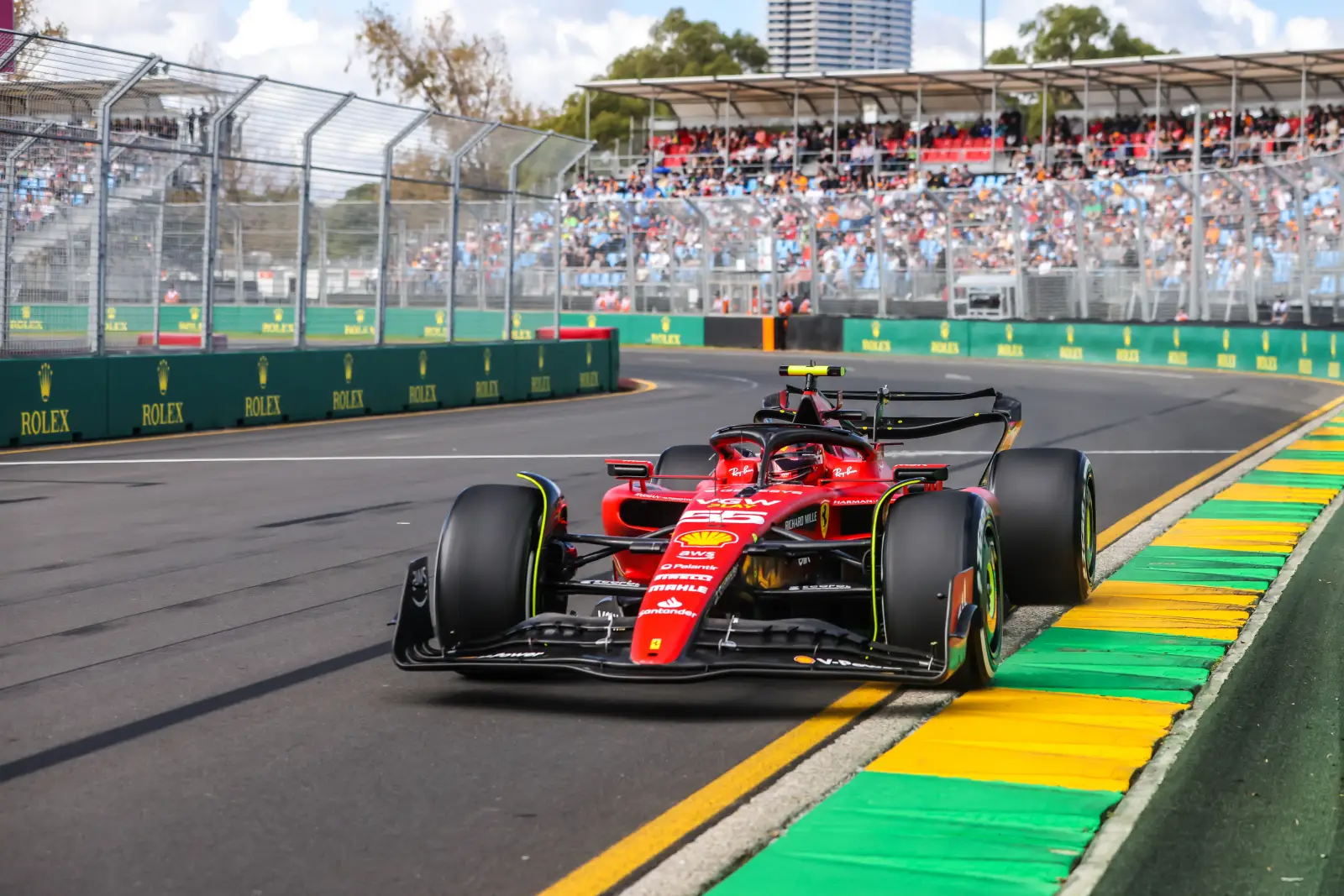
Denmark’s long-standing ambition to host a Formula 1 Grand Prix has been revived with a bold new proposal to build a world-class racing circuit at Padborg in southern Jutland, backed by an investment of approximately 3.8 billion Danish kroner, equivalent to more than €500 million.
The project, named Circuit of Denmark, is being driven by Danish investors Henrik Lyngbye Pedersen and his son Mathias Lyngbye Villadsen, heirs to the fortune linked to pharmaceutical giant Novo Nordisk. The plan involves transforming and significantly expanding the existing Padborg Park circuit, currently the country’s southernmost permanent racing venue.
The new facility is designed to become the longest circuit in Northern Europe at 6.006 kilometres, with a seating capacity of 100,000 spectators. Circuit design has been entrusted to Austrian firm Wurz Design, led by former Formula 1 driver Alexander Wurz.
Project director Rebecca Palmberg Steele, formerly of the Danish Football Association and FC Copenhagen, confirmed the facility is being designed to meet the FIA’s strict Grade 1 homologation standards required for Formula 1. “What we are so lacking in Northern Europe is the international driving force that can attract the rest of Europe,” she said. “We lack a real home ground in motorsport that can help unleash the enormous talent we have here at home. That’s the void we’re trying to fill.”
The circuit’s location near the German border has been highlighted as a key commercial advantage. Steele noted that the facility sits within a gateway area to Europe, which could provide a significant boost to both the local and national economy. The site is also a five-hour drive from the Netherlands, placing it within easy reach of one of the largest Formula 1 fan bases in the world.
“The track being called ‘Circuit of Denmark’ and its position so near the German border gives it the best of both worlds,” said a project spokesperson.
The proposal has already been presented to Danish politicians and has attracted attention from across the motorsport world. Former Danish F1 project leader Helge Sander, who led the earlier attempt to bring a Copenhagen street race to the calendar before that project collapsed in 2020, welcomed the new initiative. “I clapped my little hands when I read about it, and I hope it can become a reality,” he told Danish newspaper Ekstra Bladet. “But I know from my own experience that it is a big project, and there is a long way to go.”
The economic case for the project is being built around more than just race-day revenue. Backers argue that an F1-grade circuit would drive international tourism, hospitality investment and broader regional development in southern Jutland. Project leadership has stressed that the location near a major European access corridor makes it commercially attractive beyond motorsport alone.
If the project were to succeed, Denmark would become only the second Scandinavian country to host a Formula 1 Grand Prix, following Sweden, which held six races between 1973 and 1978.
Despite the scale of the ambition and financial commitment, significant hurdles remain. The project is still at an early planning stage, and no official confirmation has been received from the FIA or Formula One Management regarding a potential Grand Prix slot. Formula 1’s global calendar is increasingly competitive, with multiple countries bidding for hosting rights, and any new entrant must present both a world-class venue and a compelling commercial case.
Photo Credit: FiledIMAGE / Shutterstock.com