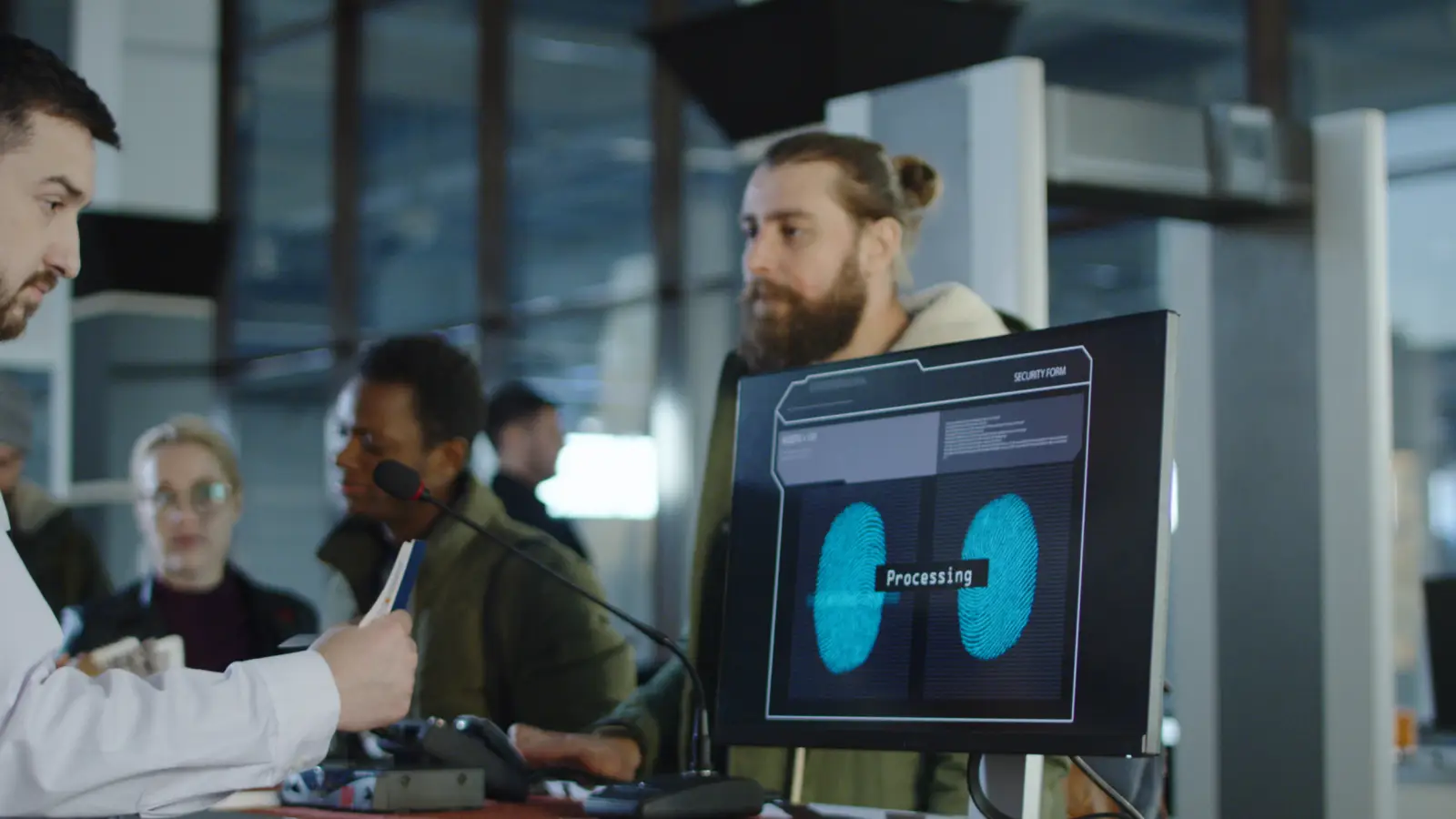
Spain’s airport authority AENA has introduced new measures allowing families with young children and passengers with disabilities to bypass biometric queues at Spanish airports, after the rollout of the European Union’s new Entry/Exit System triggered widespread disruption and lengthy delays.
Under the new rules, vulnerable passengers and families with young children can skip the biometric machines and proceed directly to passport control if the queue exceeds 25 minutes. AENA has requested that airport workers actively assist those passengers in avoiding the lines.
The changes come after a series of high-profile incidents at Spanish airports. Michelle Maguire, 38, and her daughter were due to fly home from Malaga to Liverpool on a Saturday evening but did not arrive until 24 hours later after becoming caught up in border chaos that ultimately cost the family £1,000.
Maguire described a packed airport in disarray, with travellers pushing to reach passport control through different entrances. “Everyone was panicking. Everyone was getting frustrated,” she told the Daily Mail. “Kids were crying. There was no one attending the crowd which was making it worse. People were coming out and coming back in.”
Alicante Airport has been among the worst affected. Spain’s police union recently warned the airport is being pushed to “breaking point” over the EES system and a shortage of staff. Barcelona-El Prat Airport has also seen significant disruption, with passengers reporting lengthy queues during peak hours.
On Reddit, one parent described standing in line with crying children for more than three hours with “nowhere to go other than the restroom,” while claiming airport staff did “nothing to help.”
The EES requires many UK passengers to register biometric details, including fingerprints and facial recognition images, when entering the Schengen Area. The additional checks have slowed processing times at some of Europe’s busiest airports since the system’s full introduction earlier this month.
Not all Spanish airports have fared equally. Adolfo Suárez Madrid-Barajas Airport was the first in Spain to roll out the EES system, in October 2025, and passengers there have reported more manageable queues. Some travellers have noted priority lines for children, though others have flagged that the biometric machines can be temperamental. One passenger told The Olive Press: “You have to press down hard on the passport for it to read, press fingertips down firmly to register.” Another reported a smoother experience: “From luggage drop-off to gate, it took us about 20 minutes, including biometric capture and passport control.”
Greece has gone further than Spain by suspending fingerprinting and facial scans altogether. Eleni Skarveli, director of the Greek National Tourism Organisation in the UK, said the decision would “ensure a smoother and more efficient arrival experience in Greece” and would “significantly reduce waiting times” while easing congestion at airports.
Greece’s move is widely seen as a strategic effort to protect its tourism sector, which depends heavily on British visitors travelling to destinations such as Corfu, Crete and Rhodes, each of which can receive more than 2,000 UK arrivals per day during peak season. With no confirmed end date for the exemption, speculation is growing that other Mediterranean countries could follow suit.
A spokesman for ABTA noted that European destinations are seeing stronger interest from British travellers this year. “Because of the war in the Middle East, Europe is seeing a big increase in interest as a holiday destination this year,” the spokesman said. The organisation expects Greece to rank as the fifth most popular destination for Britons this summer, behind Spain, France, Italy and the United States. “I think it’s too early to say what this change might mean for the number of people visiting, particularly as decisions on where to go are based on a number of factors,” the spokesman added.