The International Air Transport Association (IATA) released its latest financial outlook for the global airline industry showing a stabilisation of profitability even as supply chain issues persist.
Highlights include:
- Passenger numbers are expected to reach 5.2 billion in 2026 (up 4.4% on 2025).
- Airlines are expected to achieve a combined total net profit of $41 billion in 2026 (up from $39.5 billion in 2025). While this would set a new record, the net profit margin is expected to be unchanged from 2025 at 3.9%. Net profit per passenger transported is expected to be $7.90 (below the 2023 high of $8.50, and unchanged from 2025).
- Operating profit in 2026 is expected to be $72.8 billion (up from $67.0 billion in 2025) for a net operating margin of 6.9% (improved on the 6.6% expected for 2025).
- Total industry revenues are expected to reach $1.053 trillion in 2026 (up 4.5% on the $1.008 trillion expected revenues in 2025).
- Load factors are forecast to continue to set record highs with airlines expected to fill 83.8% of all seats over the year 2026.
“Airlines are expected to generate a 3.9% net margin and a $41 billion profit in 2026. That’s extremely welcome news considering the headwinds that the industry faces—rising costs from bottlenecks in the aerospace supply chain, geopolitical conflict, sluggish global trade, and growing regulatory burdens among them. Airlines have successfully built shock-absorbing resilience into their businesses that is delivering stable profitability,” said Willie Walsh, IATA’s Director General.
Outlook Drivers
Overall revenues are expected to grow by 4.5% to $1.053 trillion. This is expected to outpace operating expense growth of 4.2% to $981 billion, leading to a $1.5 billion improvement in industry-wide net profitability in 2026.
Macro-economic factors impacting airlines are mixed for 2026. On the positive side, GDP growth is expected to be largely stable at 3.1% and inflation is expected to ease slightly to 3.7%. World trade growth is, however, expected to be anaemic at 0.5%.
Passenger ticket revenues are expected to reach $751 billion in 2026 (+4.8% on $716 billion in 2025). Yields are expected to remain relatively flat while the passenger load factor is expected to set a new record at 83.8% as new aircraft remain in short supply.
Costs
Overall, the 2026 cost outlook points to a more balanced environment. Fuel relief is offset by rising non-fuel pressures, but the broader slowdown in inflation is helping to stabilize the cost base.
Fuel efficiency gains are expected to be just 1.0% as supply chain issues continue to hamper fleet renewal and push the average aircraft age to over 15 years, the highest ever. Factoring in industry growth, fuel consumption is expected to increase to 106 billion gallons in 2026 (+2.7% on 103 billion gallons in 2025).
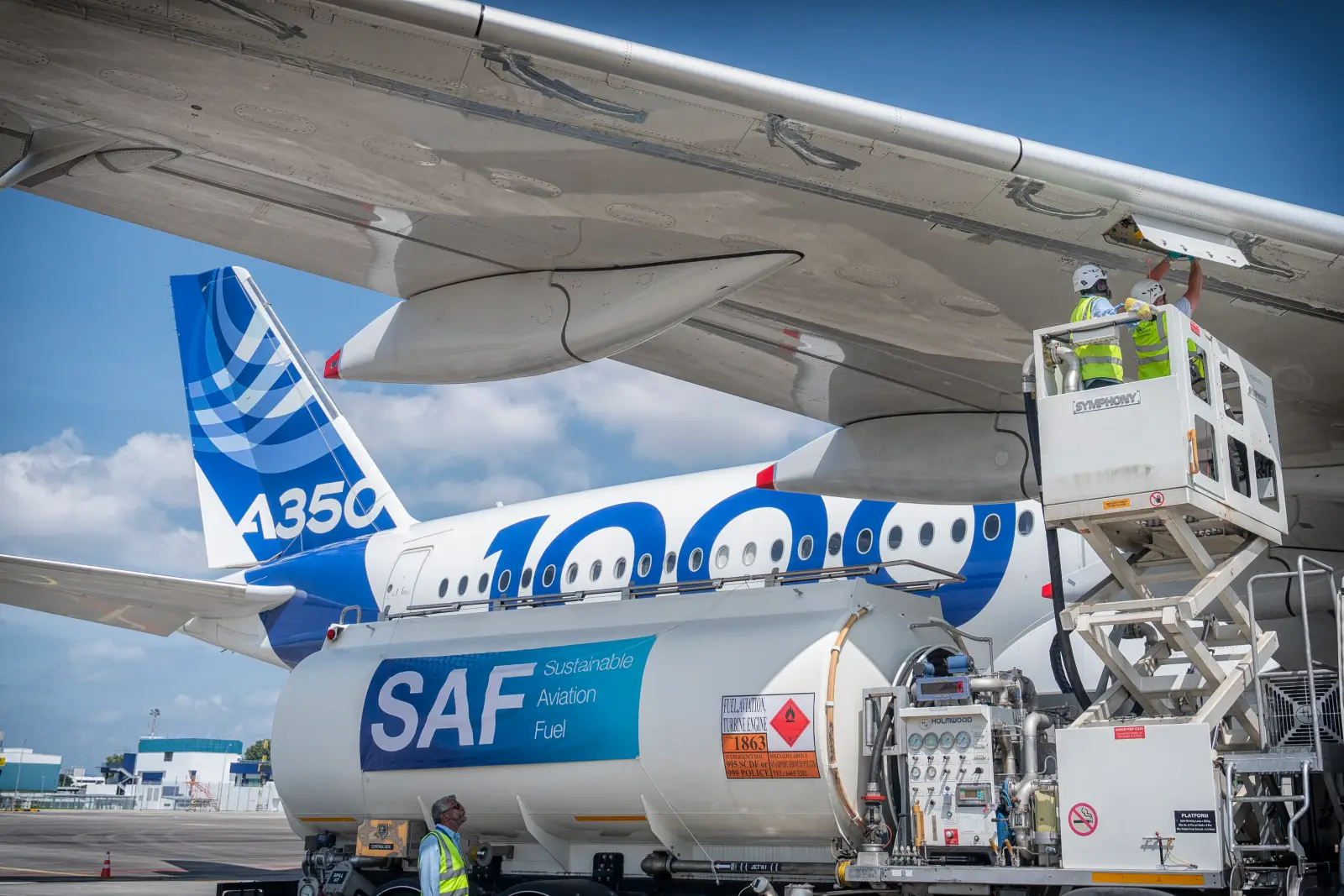
The incremental cost of airline purchases of Sustainable Aviation Fuel (SAF) is expected to reach $4.5 billion in 2026, with the expectation of 2.4 million tons of SAF being available (0.8% of total fuel consumption).
A weaker US dollar is expected to benefit non-USD-based airlines’ profitability and margins by reducing US dollar-denominated costs such as fuel, aircraft leases, and maintenance. IATA estimates that 55–60% of global airline costs are denominated in USD, compared to 50–55% on the revenue side. Based on this, a 1% weakening of the USD against global currencies may lift global airline profits by 1% and improve operating margins by around 0.05 ppt.
Regional Roundup
Asia Pacific
Passenger demand remains robust, with China and India leading regional expansion, driven by rising tourism activity and the growing middle classes. Easing visa requirements for Chinese group tours to South Korea and for visitors to China are expected to stimulate short-term inbound demand, particularly during peak holiday periods.
Overcapacity remains a challenge amid a slower recovery in international traffic putting pressure on yields. Deflationary pressures are also driving yields lower in China. Nevertheless, Asia Pacific remains the largest contributor to global traffic growth, with load factors projected to reach 84.4% in 2026, an all-time high for the region.
While Chinese exports to the US have declined, substitution effects have helped offset the impact of trade tensions, as Chinese goods have found alternative markets.
North America
North American profitability remains stable, but the region ceded its most profitable ranking to Europe in 2025.
The United States suffered stagnating overall growth and a domestic market contraction in the face of policy uncertainty around tariffs, tighter immigration enforcement dampening both inbound and domestic travel, and a lengthy government shutdown. Capacity constraints, pilot shortages, engine reliability issues, and rising labour costs continue to restrict expansion. Despite these hurdles, airlines managed to protect margins in 2025, supported by stable yields and lower fuel prices.
Performance, however, varies by business model. Low-cost carriers are under pressure, heavily exposed to the shrinking US domestic segment, growing passenger preferences for premium services, and facing the disadvantages of single-type fleets amid supply chain disruptions.
Looking ahead, 2026 is expected to see some easing of these challenges and the opportunity for a gradual increase in demand.
Europe
Europe is projected to deliver the strongest financial performance in absolute terms among all regions. European airlines show disciplined capacity management and strong load factors. Low-cost carriers are performing particularly well, expanding at double-digit rates and outperforming full-service carriers on net profit margin, fuelled by strong intra-European traffic and leisure market. Traffic growth is moderating as the market matures and amid tepid economic conditions in the Euro zone where GDP growth lags the global average.
On the cost side, the strength of the Euro has provided a partial offset to inflationary pressures, particularly in fuel and leasing expenses, helping carriers maintain margins despite volatility in input costs.
The regulatory cost burden is increasing with the ReFuelEU initiative requiring a 2% SAF blend at EU airports from 2025. This coincides with mounting operational headwinds: labour unrest, drone disruptions, and persistent air traffic control bottlenecks.
Middle East
The Middle East is the strongest region in terms of net profit margin and profit per passenger. This performance attests to the difference a positive regulatory operating environment can make, and to the region’s strategic position as a global connecting hub.
Passenger demand continues to be robust, driven by long-haul traffic and the expansion of hub carriers. Governments and airlines are doubling down on infrastructure investments to secure long-term growth. While geopolitical tensions remain a feature of the regional landscape, they are not expected to negatively impact growth, particularly as efforts to secure lasting peace continue.
Middle Eastern carriers are mitigating aircraft delivery delays through retrofit programs and fleet life extensions, though capacity growth will remain constrained in the near term.
Photo Credit: Vladislav Gajic / Shutterstock.com