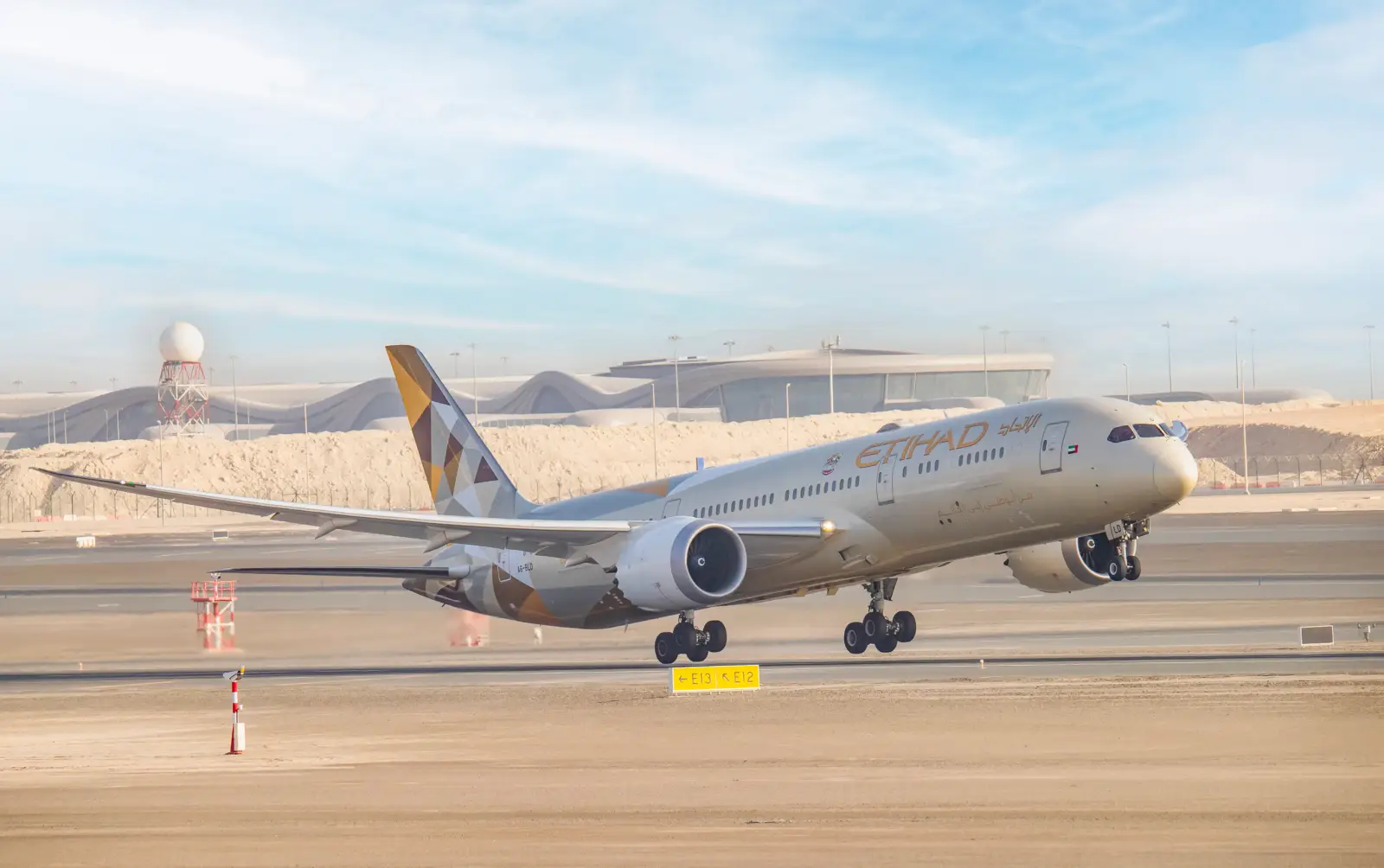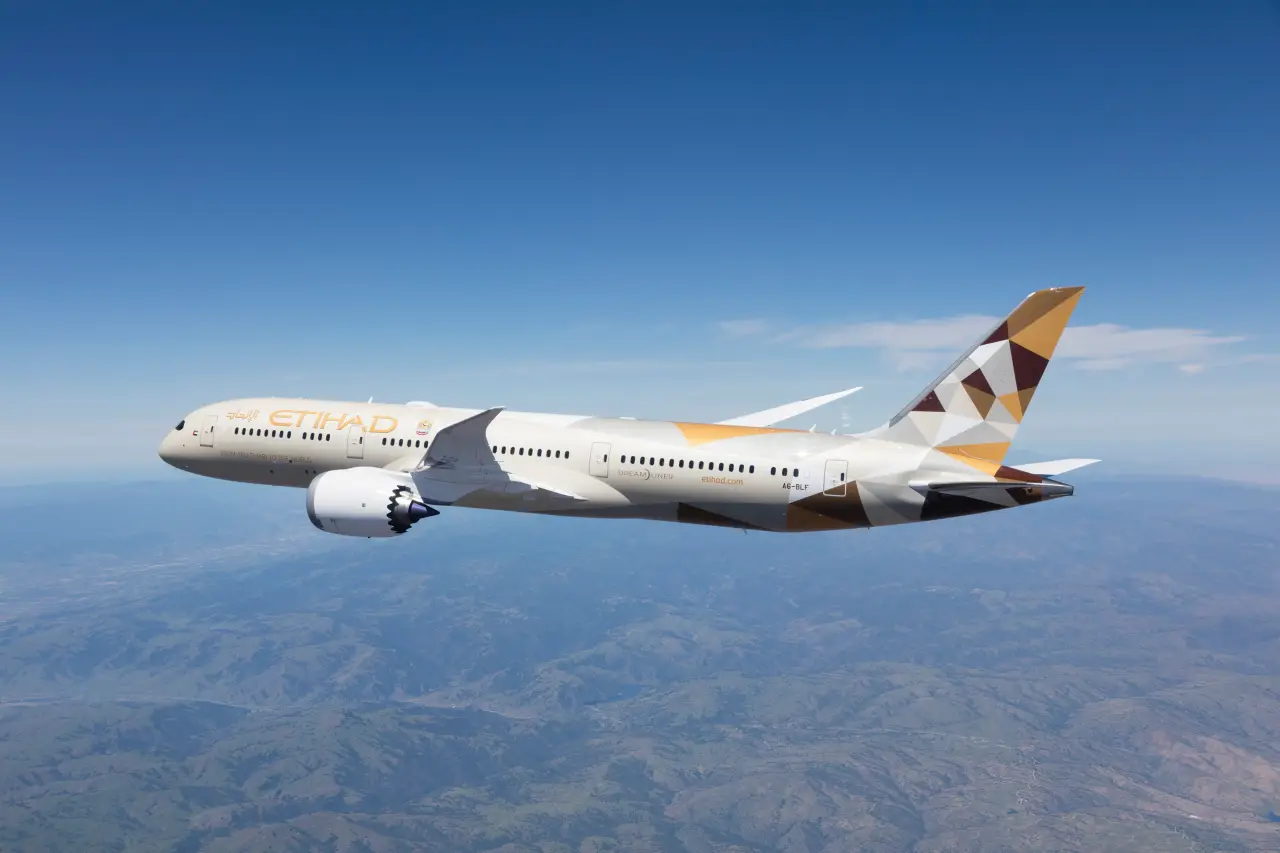
Etihad Airways is marking 20 years of nonstop flights between Abu Dhabi and Johannesburg this December, celebrating one of the airline’s longest-standing routes in Africa.
Since launching the service in 2005, the carrier has flown almost 2 million passengers between the UAE and South Africa, with more than 100,000 guests travelling the route in 2025 alone.
The milestone highlights Johannesburg’s role as a strategically important gateway in Etihad’s expanding African network, offering nonstop access to Abu Dhabi and onward connections across the Middle East, Europe, North America, the Indian Subcontinent and Asia Pacific via Zayed International Airport. The route also supports strong business, tourism and cultural links between the two countries, while benefitting from growing regional partnerships across Southern Africa.
Why the Johannesburg route matters for Etihad and travellers
For two decades, the Abu Dhabi–Johannesburg route has served as a bridge between southern Africa and Etihad’s global network. From Abu Dhabi, passengers can connect seamlessly to destinations including Jeddah, Istanbul, Mumbai, Bangkok, and Phuket, creating a long-haul corridor that supports leisure travel, business mobility, and family connections.
The airline says sustained demand underlines the route’s long-term value. Corporate travel has been particularly strong, with corporate revenue on the Johannesburg route increasing by more than 50 per cent year-on-year in 2025. Abu Dhabi’s growing profile as a global business hub has reinforced this trend and strengthened economic ties between the UAE and South Africa.
“Johannesburg has played an important role in our African network for two decades. The strong performance we continue to see both in passenger demand and corporate travel, highlights the long-term relationship between the UAE and South Africa, and the value Etihad brings in enabling trade and tourism. Africa remains a key pillar of our global strategy, and we are proud to continue supporting this dynamic market as part of our wider Journey 2030 ambitions,” said Javier Alija, Vice President Global Sales & Distribution at Etihad Airways.
Beyond passenger volumes, the route benefits from Etihad’s growing partnerships across Southern Africa, allowing travellers to access secondary destinations more easily. For international visitors heading into the region, Johannesburg often acts as the first point of entry before onward travel, while outbound South African passengers gain direct access to Etihad’s long-haul network without the need for intermediate stops.
The consistency of the service also carries weight in a market where long-haul connectivity can be vulnerable to economic cycles and airline capacity shifts. Maintaining a stable presence for 20 years signals confidence in long-term travel demand between the two regions and reflects the airline’s broader strategy of anchoring its network in resilient international markets.
Etihad’s expanding footprint across Africa
The Johannesburg anniversary arrives at a time when Africa is becoming an increasingly important growth engine for Etihad. The airline has expanded its footprint across the continent over the past year, launching new services to Tunis, Addis Ababa and Nairobi, while established routes such as Casablanca and Cairo continue to perform strongly.
These additions strengthen the airline’s connectivity map by linking African cities directly into Abu Dhabi’s hub, where travellers can access onward flights across multiple continents. For passengers, this translates into shorter travel times, simplified connections and broader choice when planning long-haul journeys.
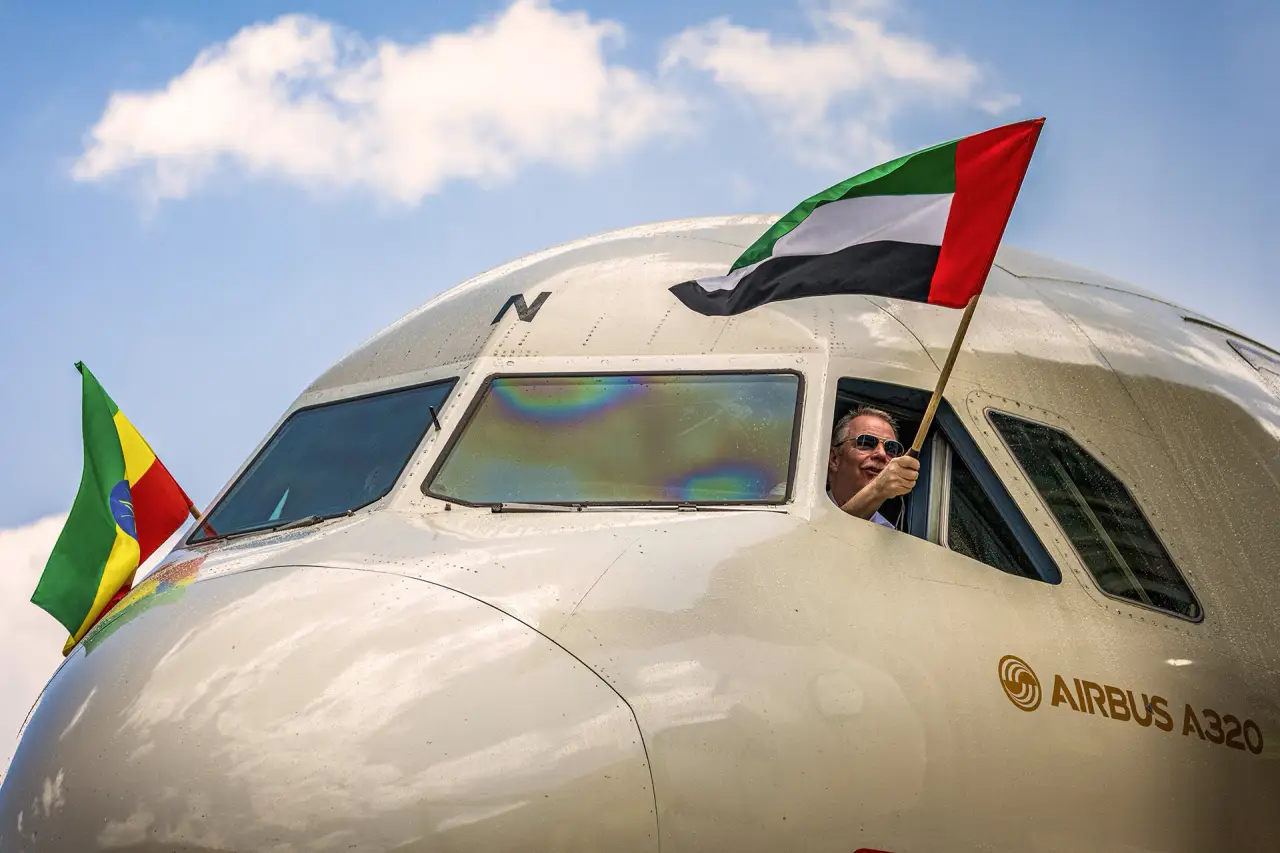
A strategic partnership with Ethiopian Airlines further extends Etihad’s reach beyond its own network, improving access to a wider range of destinations across Africa. The collaboration allows travellers to connect more efficiently within the continent, supporting both inbound tourism and outbound business travel.
Demographic growth, rising middle-class travel demand and deepening commercial ties between African economies and the Gulf have contributed to resilient passenger numbers across the region. Etihad sees this momentum as an opportunity to invest in additional services, partnerships and network expansion to meet future demand.
Johannesburg remains a central pillar of this strategy because of its role as a major financial, cultural and transport hub in southern Africa. Its position allows Etihad to serve not only point-to-point traffic between the UAE and South Africa but also transfer passengers connecting onward within the region.
For travellers, the anniversary underscores the maturity of the route and the reliability of long-established air links between the two cities. It also signals confidence that capacity and connectivity will continue to grow as Etihad develops its wider African network over the coming years.
As competition intensifies among global carriers for African market share, sustained investment in connectivity, partnerships and service consistency will shape how airlines capture long-term demand. Etihad’s 20-year milestone on the Abu Dhabi–Johannesburg route positions the airline as a committed player in that evolving landscape, with implications not only for passengers but also for trade, tourism and regional economic exchange.