A new study by transport and environment group T&E finds that avoiding aircraft contrails during night flights in autumn and winter could deliver aviation’s fastest climate gains.
The analysis shows that 25% of European aviation’s contrail-related global warming comes from night flights during these seasons, even though they account for just 10% of European air traffic.
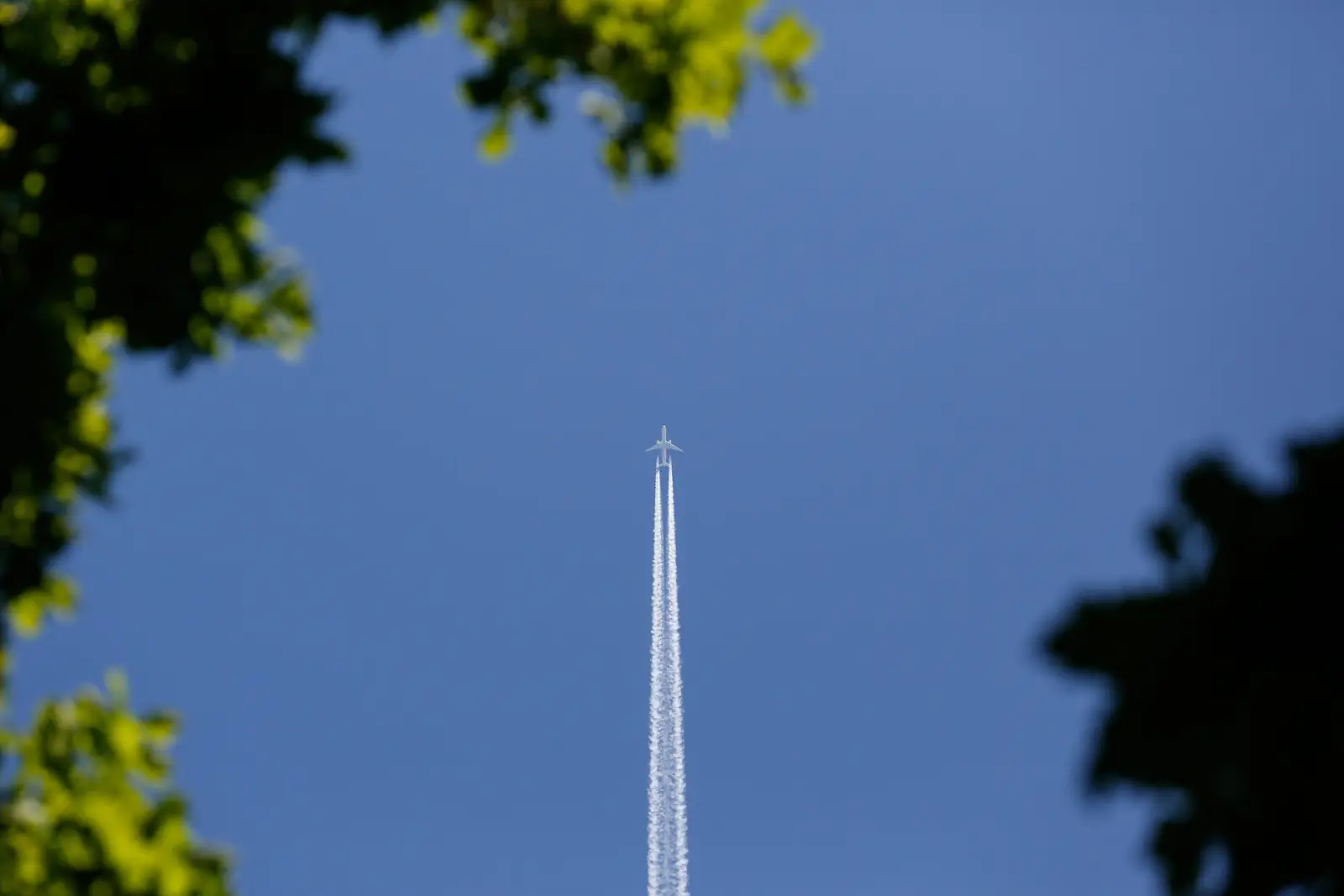
The findings highlight how targeted flight adjustments could significantly cut warming with minimal disruption. Contrails, the thin white lines left behind aircraft, trap heat in the atmosphere and contribute between 1% and 2% of global warming, a climate impact comparable to aviation’s carbon dioxide emissions.
Why contrails matter more than most travellers realise
Contrails form when aircraft pass through very cold, humid air at high altitude. Under the right conditions, they spread into thin cloud layers that act like an insulating blanket, preventing heat from escaping back into space. While the streaks may appear harmless from the ground, their cumulative effect on the climate is substantial.
T&E’s analysis shows how concentrated the problem has become. In 2019, 75% of European contrail warming occurred between January to March and October to December, with 40% taking place during late evenings and nights. Just 3% of flights generated 80% of contrail warming that year, revealing how a small number of aircraft movements can produce outsized environmental effects.
“Contrails are a very concentrated problem. Fortunately, there are straightforward and affordable opportunities to scale up contrail avoidance in Europe. The science and the solutions are clear: by adjusting the paths of just a handful of flights, Europe could prevent years of avoidable global warming,” said Alexander Kunkel, Senior Analyst at T&E.
Small changes in flight altitude, or slight rerouting around cold and humid air masses, can prevent persistent contrails from forming. Because these atmospheric conditions are predictable using weather forecasts, flight paths can be planned in advance, reducing pressure on air traffic controllers and maintaining safe operations.
Where the biggest climate gains could come from
The study identifies specific regions and flight types where contrail avoidance would be most effective. Airspace above the North Atlantic shows particularly high potential because it carries many long-haul flights with relatively low traffic density. Flights lasting more than five hours accounted for 40% of contrail warming in 2019, despite representing only 10% of European departures.
T&E recommends prioritising contrail avoidance when air traffic levels fall below 60% of their annual peak. The analysis suggests that this approach could have reduced around 70% of European contrail warming in 2019, largely by adjusting a limited number of flights during low-congestion periods.
Night operations during autumn and winter create especially favourable conditions for intervention. These flights make up only a fraction of total traffic but deliver a disproportionate share of warming. Because fewer aircraft are in the sky during these hours, rerouting can be implemented with minimal knock-on effects for schedules or congestion.
For travellers, the implications are largely invisible but potentially significant. Airlines could adopt smarter routing strategies that reduce climate impact without changing ticket prices, flight duration or onboard experience. The benefits would accumulate quietly over time, lowering the warming effect of aviation while maintaining connectivity across Europe.
“The time to shift into the next gear on contrail action is now. By boosting research, supporting large-scale trials, and designing a policy framework, Europe can pave the way for the deployment of contrail avoidance in the next five to ten years,” said Kunkel.
T&E is urging the European Union to integrate non-CO₂ effects such as contrails into air traffic management legislation, extend monitoring to extra-EEA flights, incentivise airlines and control centres that adopt contrail avoidance practices, and conduct large-scale airspace trials to refine operational models.
As climate pressure on aviation intensifies, the findings suggest that some of the fastest wins may come not from new aircraft or fuels, but from smarter use of the sky itself. For passengers watching the white trails stretch across the horizon, the future of lower-impact flying may already be written in the clouds. Read the full report.