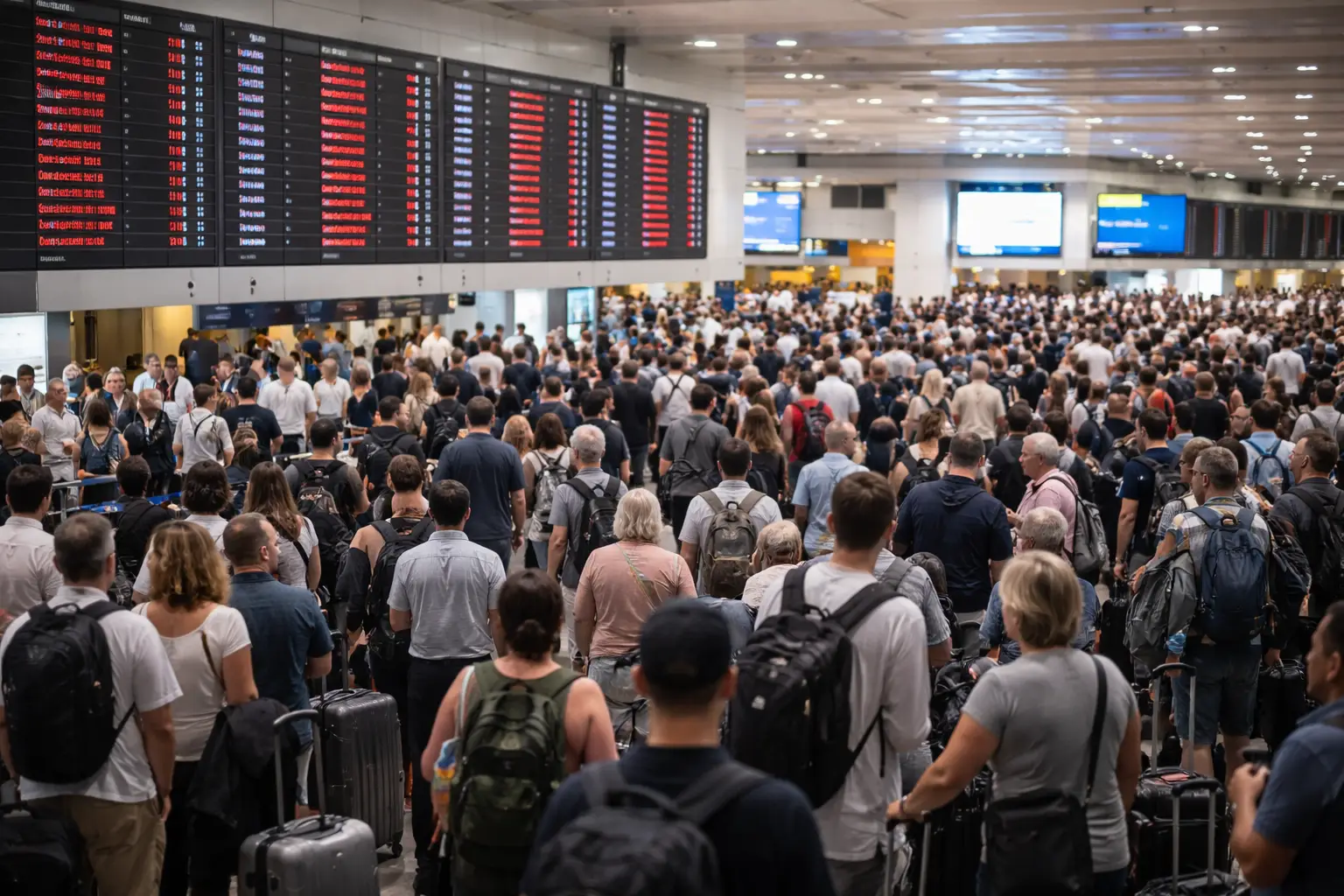
Thousands of travelers are stranded worldwide after large sections of Middle Eastern airspace closed following military strikes involving the United States, Israel and Iran, forcing airlines to cancel or reroute flights across major global corridors linking Europe, Asia and the Middle East.
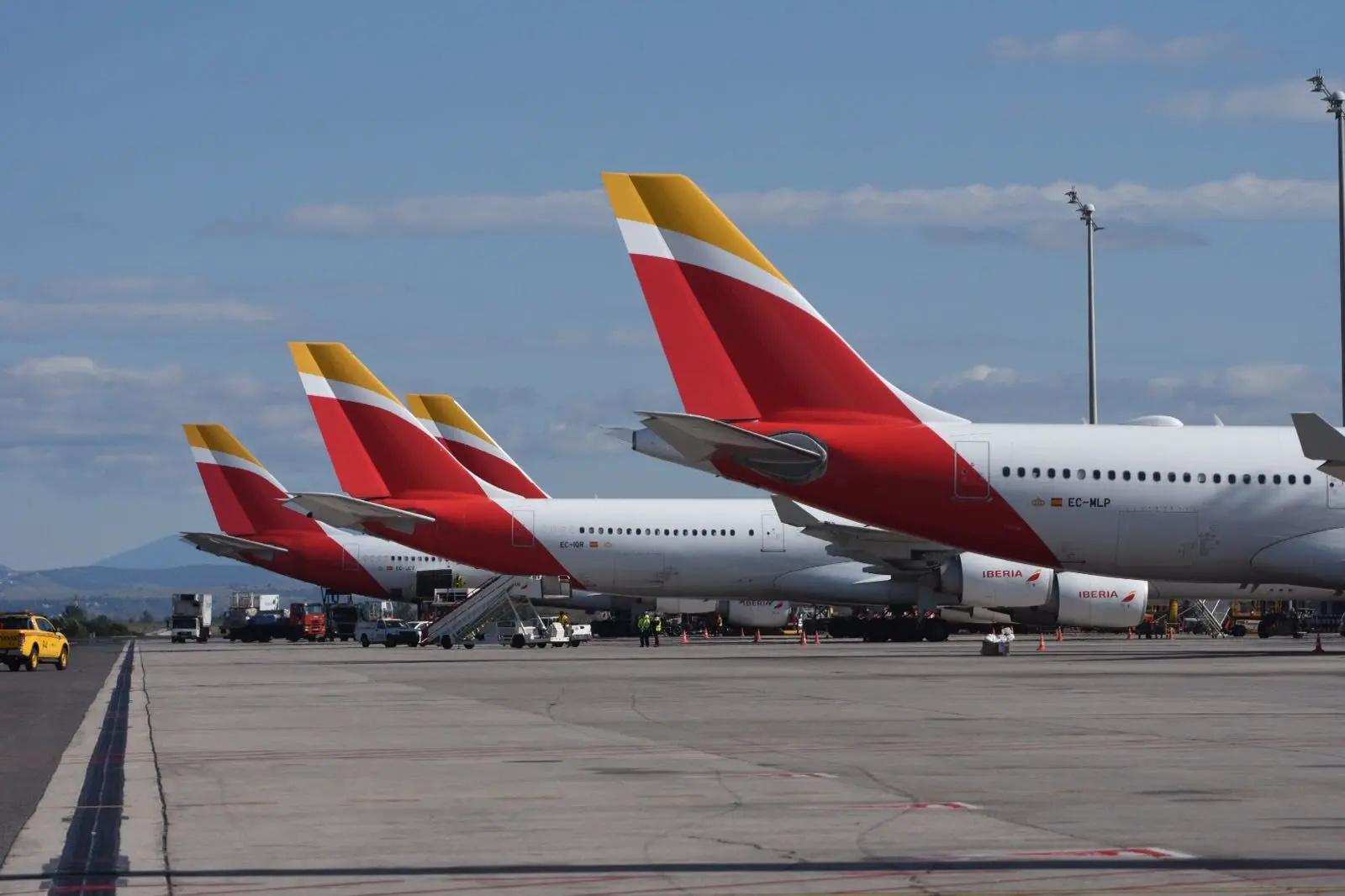
Airports across the region and international transit hubs reported widespread disruption as carriers suspended services and diverted long-haul aircraft to alternative routes.
The closures have affected hundreds of flights and left passengers unable to continue journeys through key aviation hubs including Dubai, Doha and Abu Dhabi. Airlines and airport authorities advised travelers to check flight status and expect further delays as carriers work to reposition aircraft and crews following the sudden shutdown of major air corridors.
Airspace shutdown disrupts major global flight routes
The disruption began after military escalation in the region prompted authorities to restrict or close significant portions of Middle Eastern airspace. The closures immediately affected long-haul routes connecting Europe with Asia, as well as flights linking the Middle East with Africa and the Americas.
Airlines began canceling services and diverting aircraft within hours of the airspace restrictions. Several long-haul flights already in the air were forced to turn back or land at alternative airports as carriers adjusted routes to avoid the affected airspace.
Flight tracking data indicated that more than 1,000 flights were canceled across the region in a single day. The sudden operational changes created ripple effects across global airline networks as aircraft and crew schedules were disrupted.
Major international carriers including Middle Eastern and European airlines adjusted flight paths to operate longer routes around restricted areas. These diversions increased flight times and placed additional pressure on airline operations and airport capacity.
Airports in Europe and Asia reported secondary disruptions as inbound aircraft arrived late or were unable to depart on schedule due to missing connecting aircraft or crew.
Passengers stranded across international transit hubs
Thousands of travelers remain stranded at airports and transit hubs as airlines attempt to restore schedules and arrange alternative routes. Passengers connecting through major aviation hubs in the Gulf region were among the most affected.
Travelers reported extended waiting times while airlines worked to rebook passengers on available flights. In some cases, airlines and local authorities arranged accommodation and assistance for travelers unable to continue their journeys.
The United Arab Emirates announced measures to assist stranded visitors, including support with accommodation and meals for travelers affected by cancellations. Authorities said the assistance aims to help passengers remain in the country until flights resume.
Governments in several countries also began coordinating support for citizens caught in the disruption, with embassies advising travelers to contact airlines and monitor official travel advisories.
The aviation disruption comes at a busy period for international travel and just days before the opening of the ITB Berlin tourism trade fair, one of the largest annual gatherings of the global travel industry.
Alain St.Ange cancels ITB Berlin 2026 participation
Former Seychelles tourism minister Alain St.Ange has canceled his planned participation at the ITB Berlin tourism trade fair due to ongoing military operations in Iran that are affecting international air travel.
St.Ange had been scheduled to attend meetings and industry events during the global tourism gathering in Berlin but said flight cancellations from the region made the trip impossible.
“This cancellation is entirely beyond my control as flights from the region has been cancelled, and I sincerely apologize for my absence,” said Alain St.Ange.
“I was very much looking forward to the many strategic meetings already programmed and for events I had been invited,” he added.
St.Ange said the latest Middle East crisis demonstrates the vulnerability of tourism and the importance of reliable air connectivity for the global travel industry.
He added that conflicts and geopolitical tensions continue to affect tourism flows and the broader economies of many countries across the international community.
Airlines continue to monitor the situation and adjust schedules as airspace restrictions evolve. Industry analysts said the scale of the disruption depends on how long the closures remain in place and whether additional regions impose further airspace controls.
Airports and airlines worldwide warned that delays and cancellations may continue as aircraft rotations and crew schedules recover from the sudden interruption to major international flight routes.