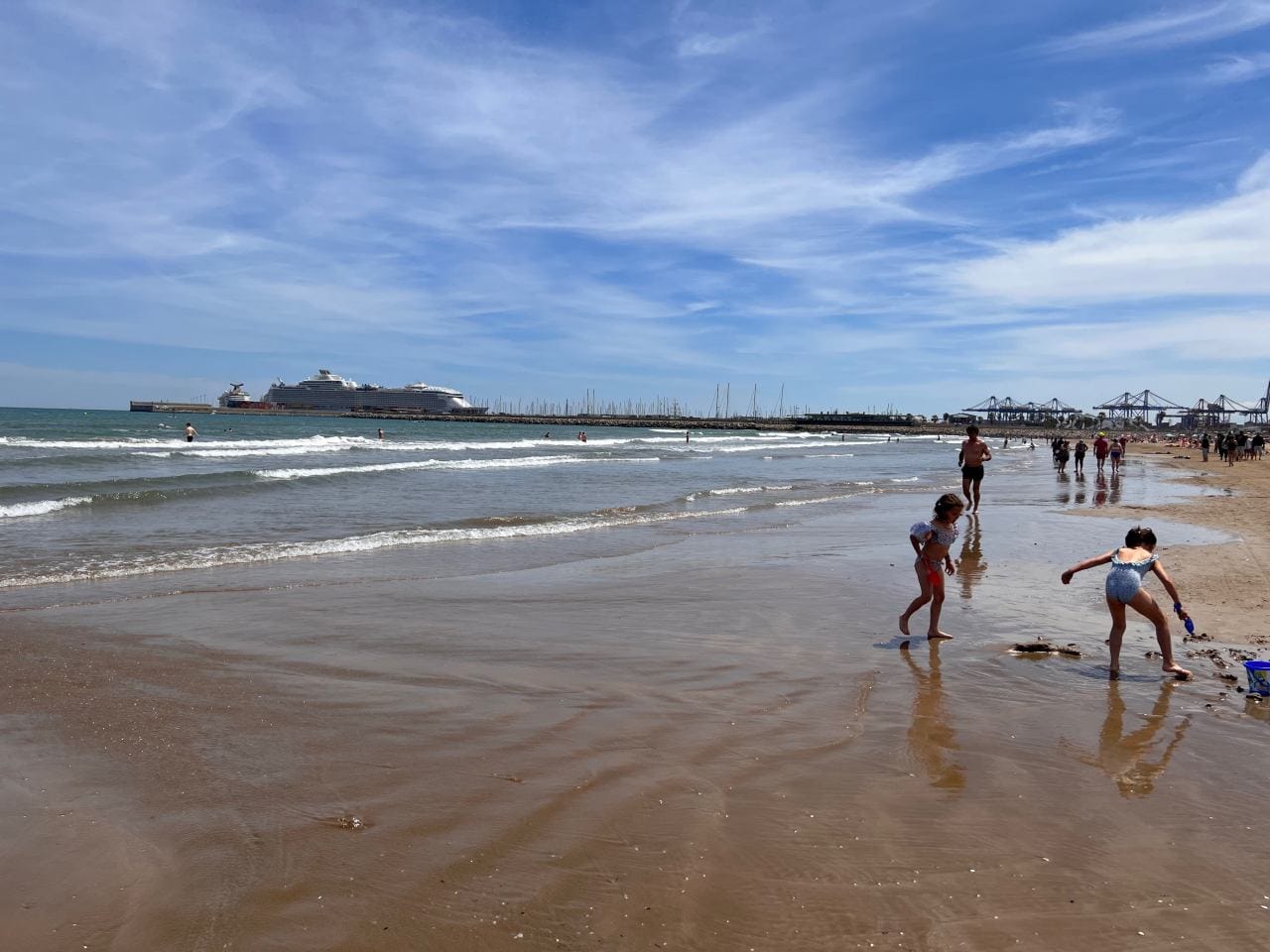
Valencia received a record 430,223 cruise passengers between January and July 2025, surpassing the 399,735 who arrived during the same period last year, according to data from Puertos del Estado.
The figures highlight a sharp rise in cruise tourism despite city authorities’ stated plans to regulate the sector and restrict mega-cruise ships starting in 2026.
The strongest growth occurred in June and July, when 208,289 passengers disembarked in the city. That represents a 21% increase compared to the 171,823 who arrived in the same two months of 2024. The increase also extended to ship calls, with 56 cruise vessels docking in Valencia during June and July, up from 44 in the same months last year.
Contradiction with city’s cruise policy
The rise in arrivals comes only two months after Valencia’s mayor, María José Catalá, reaffirmed her administration’s strategy to reduce cruise ship visits “in a progressive, reasoned, reasonable, and sensible manner.” Catalá emphasized in May that the objective was not to eliminate cruise passengers entirely but to regulate cruise tourism. She also announced plans to prohibit mega-cruise ships from docking in the port starting in 2026.
Despite these intentions, July saw several days when multiple ships docked simultaneously. On seven days that month, at least two vessels were in port at the same time, with three ships coinciding on July 7. This situation contrasts with Catalá’s stated goal of avoiding concurrent large cruise disembarkations.
Regional comparisons
While the increase in Valencia is notable, the port recorded the smallest year-on-year growth among Spain’s major cruise destinations. Valencia’s 7.6% rise in cruise passengers from January to July was below the growth rates registered elsewhere: 9.4% in the Balearic Islands, 12% in Barcelona, 23.8% in Las Palmas, and 33% in Tenerife.
Industry analysts note that cruise line itineraries are typically scheduled years in advance, making short-term adjustments difficult even when local authorities seek to impose restrictions. The strong summer traffic therefore reflects booking decisions taken well before the city council announced its regulatory goals in 2024.
Implications for Valencia’s tourism sector
The growth in cruise traffic underscores both the popularity of Valencia as a Mediterranean port of call and the challenges facing local policymakers as they seek to balance economic benefits with sustainability concerns. Cruise passengers contribute to hotel stays, restaurant revenue, and local tours, but authorities have raised concerns about overcrowding, environmental pressures, and the strain of simultaneous arrivals.
The port’s record numbers contrast with Catalá’s stated commitment to managing tourism flows more carefully. With new restrictions on mega-cruise ships planned for 2026, the coming year will be crucial in determining how Valencia reconciles its ambition to regulate cruise activity with the continued strong demand from international cruise operators and travelers.
For now, Valencia joins other leading Spanish ports in posting strong gains in cruise traffic during 2025, even as debates over the future of cruise tourism and its impact on cities continue across Europe.