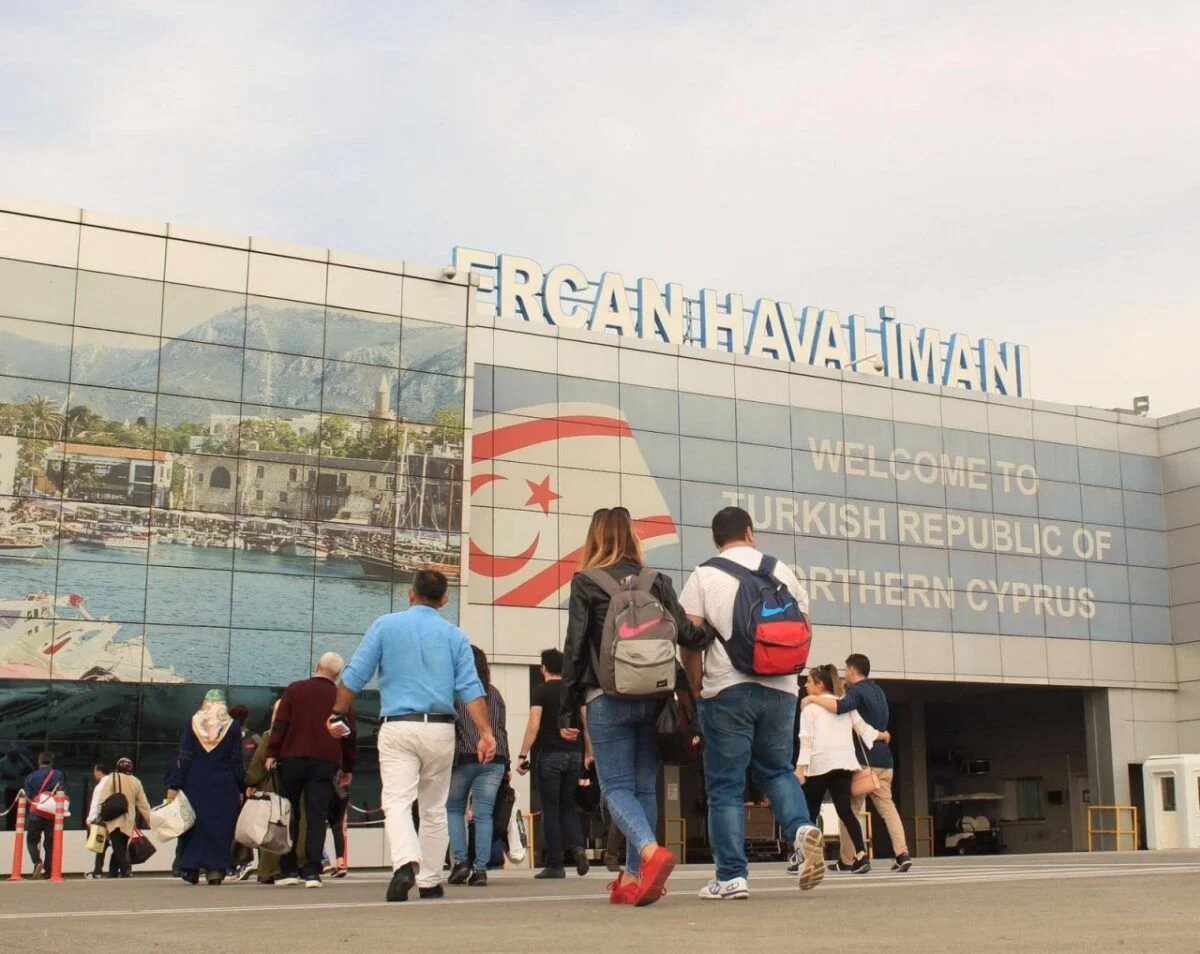
Kuzey Cyprus’s transport minister has said Ercan Airport could be added to Türkiye’s aviation list under a “B” code, a move he says could open the way for international flights and lower ticket prices. Erhan Arıklı said the plan would help the airport move beyond its current “black point” status, which means it is not listed among international airports.
Arıklı said the route to regular international service was being blocked not by politics, but by insurance and certification rules used by airlines and insurers. He said the authorities were working with Türkiye’s civil aviation directorate and other partners to fix technical shortcomings at the airport and prepare it for wider recognition.
He said the target was to complete the work in time for the 2027 tourism season, with March 2027 set as the goal. He also said the airport project was linked to broader transport reforms in the Turkish Republic of Northern Cyprus, where high car use, road congestion and expensive air fares remain major issues.
Arıklı told local media that Ercan was not being prevented from direct international flights because of an embargo, but because it is treated as a black point in aviation systems. He said airlines based in Europe would not insure flights to airports that are not recognised in the relevant codes, and that this created a practical barrier to service.
“If the insurance issue is solved, flights can operate comfortably,” he said. He added that the standards set by the International Civil Aviation Organization and the International Air Transport Association were technical, not political, and argued that they did not impose sanctions on the airport.
He said a solution could come if Türkiye’s Directorate General of Civil Aviation lists Ercan under a code such as “Antalya B” or “Cukurova B”, with the airport then operating under Türkiye’s responsibility. In that case, he said, insurers would be able to cover flights and airlines could start services more easily.
Arıklı said the model would not affect sovereignty and pointed to examples elsewhere, including Batumi and airports near the United States-Mexico border, where similar arrangements exist. He said the main issue was getting Ercan into compliance with internationally accepted standards.
Experts from Türkiye’s civil aviation authority had already inspected the airport and identified several shortcomings, he said. The terminal building, meteorology tower, fire vehicles and security gaps all needed work, while the old runway would be removed, resurfaced in concrete and extended, with the cost covered by the Northern Cyprus government.
He said a second runway would also be built, creating two runways in total and a separate area for general aviation and private flights. The Turkish State Airports Authority and the contractor would modernise parts of the site, he added.
Arıklı said officials from the Turkish presidency were helping to speed up the work, with briefings due for Vice President Cevdet Yılmaz on 10 July and for the president on 20 July. He said the runway was largely complete and work on the SMART terminal and the old runway had accelerated.
He also referred to past direct flights between Baku and Ercan in 2006, saying they had ended because the operation was not financially sustainable and the airlines involved could not meet insurance demands. He said the current proposal was designed to avoid those problems through formal recognition and technical compliance.
The minister linked the airport plan to wider transport policy, saying the government wants to improve public transport in order to make travel easier for residents and visitors. He said that if the scheme worked, annual fuel and vehicle imports could fall by about $300m to $350m, while tourism could spread beyond resort areas.
Arıklı said traffic accidents were rising as vehicle ownership increased, with around 2,000 to 2,500 new vehicles joining the roads each month and the registered fleet reaching about 450,000. He argued that simply widening roads would not solve congestion and that public transport offered a better answer.
He also said taxi fares were too high and that the transport changes would allow tourists to move around the country more easily. University students, he added, would also benefit from improved access and lower travel costs.
Air fares were another concern, according to the minister, who said Northern Cyprus lacked a national airline and could not control prices directly. He said ticket costs rose sharply on weekends and public holidays, and gave his own example of finding a fare from Ankara for 23,500 Turkish lira before buying a midnight flight for 13,500 Turkish lira.
He said those prices were hurting tourists, students and families of military personnel. The government was trying to reduce them, he added, but the absence of a national carrier made the market harder to manage.
The proposed airport changes come as Northern Cyprus looks for ways to improve connectivity, strengthen tourism and ease pressure on its roads. For Arıklı, Ercan’s future depends on technical upgrades, formal aviation recognition and an insurance solution that would allow airlines to operate with confidence.