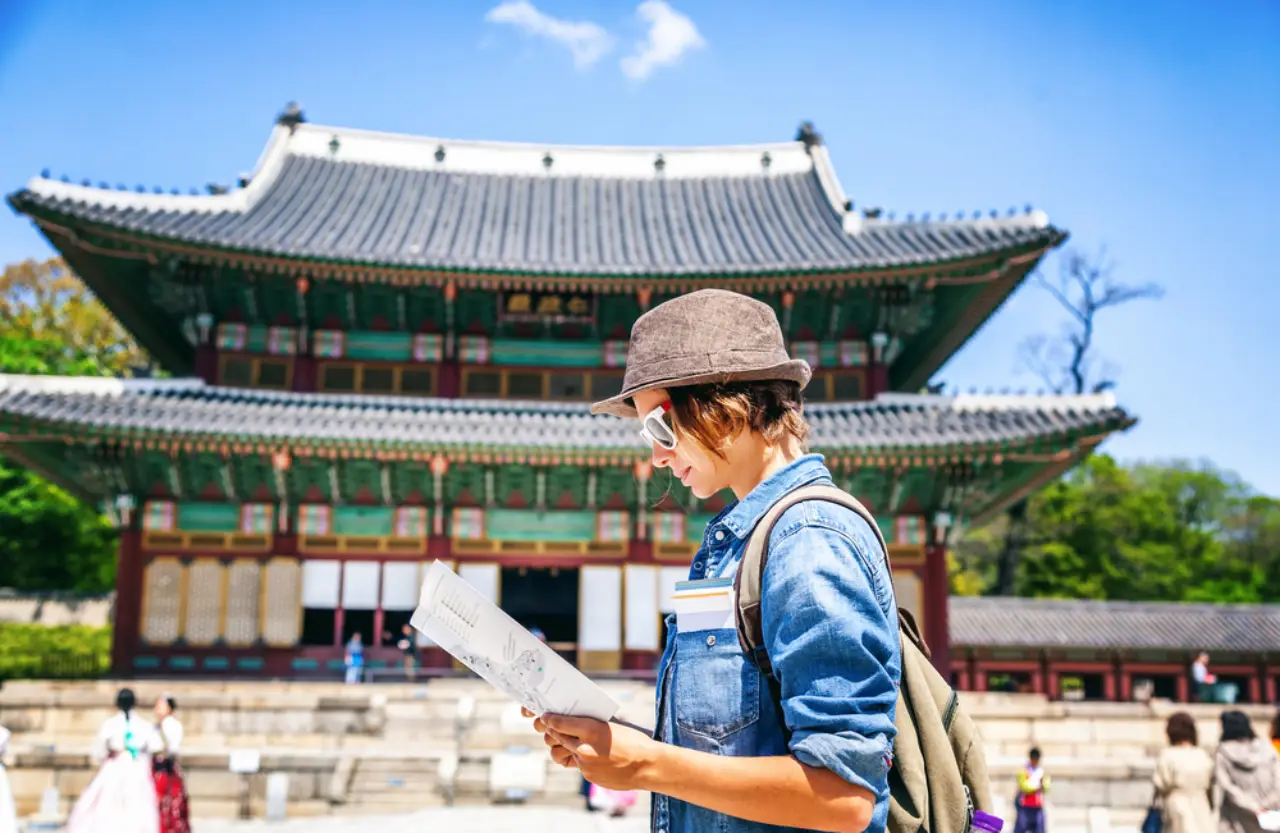
South Korea today launched the K-tourism innovation task force, a new public-private initiative aimed at revitalizing the nation’s tourism industry by leveraging global interest in Korean culture.
The group was inaugurated at the National Museum of Modern and Contemporary Art in Seoul, marking the first major tourism policy initiative under the Lee Jae Myung administration.
Chaired by Minister of Culture, Sports and Tourism Chae Hwi-young, the task force includes over 20 participants from government agencies, academia, and the private sector. It will meet bimonthly to coordinate policies, strengthen industry competitiveness, and focus on expanding inbound tourism, improving visitor infrastructure, revitalizing regional destinations, and enhancing overall industry strategy.
Coordinated National Effort to Transform Korean Tourism
The K-tourism task force brings together key institutions such as the Korea Tourism Organization, Korea Airports Corp., Korea Railroad Corp., and Korea Transport Institute. It also includes tourism professors, regional development specialists, cultural creators, travel writers, and international figures such as Italian-born TV personality Alberto Mondi to integrate diverse perspectives.
Minister Chae emphasized the need to capitalize on the global reach of Korean culture, stating, “Ten years ago, the number of inbound tourists coming to Korea was higher than that of Japan. But in recent years, Japan has overtaken us by double. Although K-culture is enjoying enormous global influence, we need to carefully examine what Japan has done well over the past decade.”
Addressing Regional Disparities and Infrastructure Gaps
At the event, experts presented key challenges facing Korea’s tourism sector, including an overconcentration of tourism in the Seoul metropolitan area and underdeveloped regional travel infrastructure.
Professor Choi Kyu-wan of Kyung Hee University noted the lack of domestic air connectivity as a critical issue, stating, “There is a severe imbalance caused by an excessive concentration of travel demand in the Seoul metropolitan area.”
He added that Japanese carriers operate flights to 30 different airports domestically, while in Korea, they land only at Incheon and Gimpo airports. The limited strategy for regional market expansion has contributed to a decline in demand outside Seoul.
Strategic Goals and Next Steps
The task force plans to implement regional consultations and policy experiments as part of a broader innovation roadmap. Through collaboration between public and private actors, it aims to build sustainable tourism models across the country and encourage longer visitor stays by diversifying travel experiences.
“Tourism is a core industry that can break through slow growth and counter regional decline,” said Chae. “With the K-tourism innovation task force, we will move beyond Seoul and ensure that communities across the country share in the benefits of a thriving tourism ecosystem.”
Photo Credit: Olezzo / Shutterstock.com