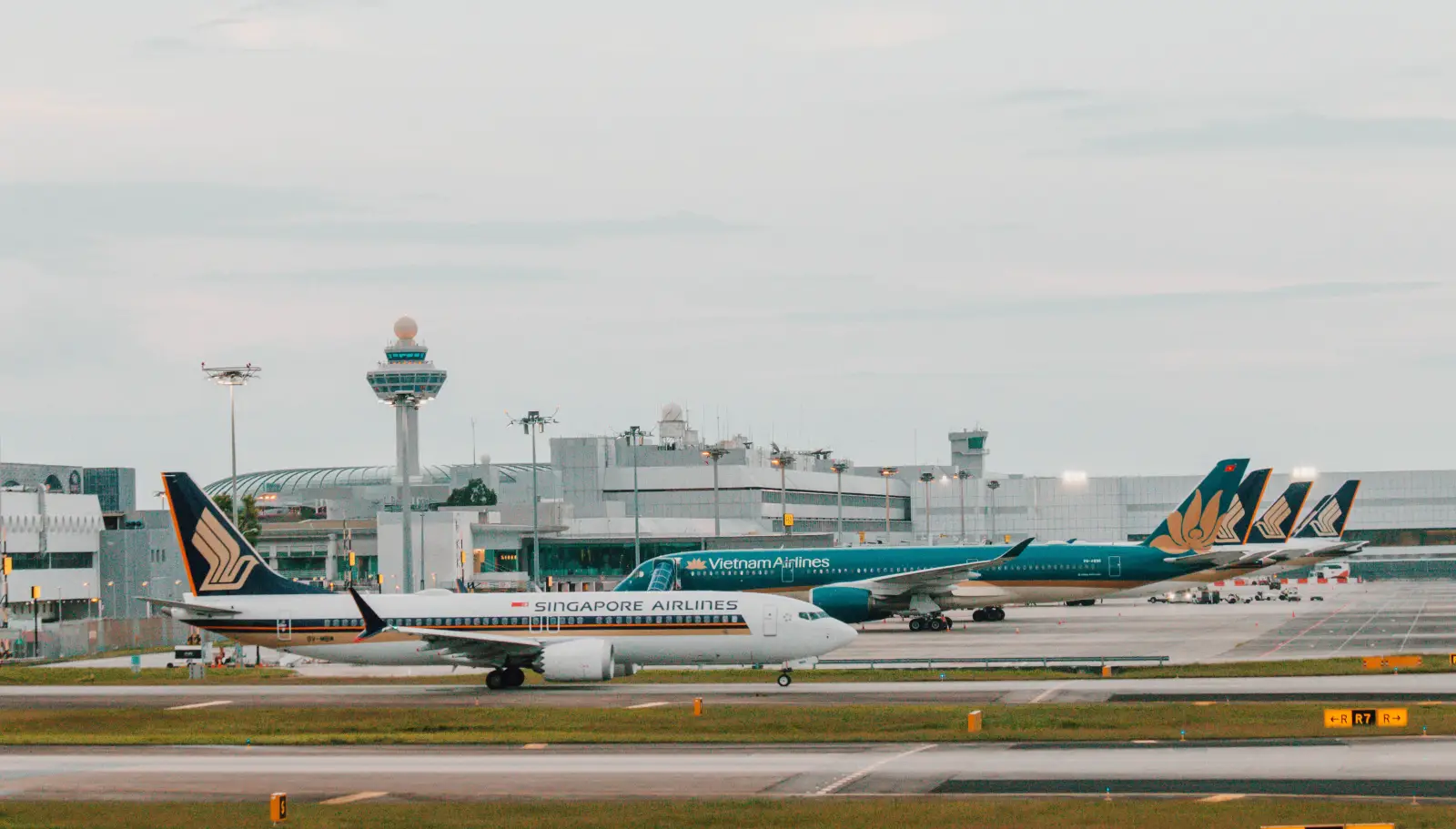
From 15 April, passengers departing Singapore will be limited to two power banks per person on board flights, as announced by the Civil Aviation Authority of Singapore (CAAS).
Those carrying more than two power banks will have to dispose of the excess devices before their flight. “Power banks must also not be charged on board the aircraft and passengers are advised not to use power banks to charge their devices during the flight,” said CAAS.
This move aligns with broader international standards from the International Civil Aviation Organization which limits to two devices per passenger. Passengers will be prohibited from recharging them during flights.
Importantly, crew will however be able to continue to carry and use these power banks in line with the operational requirements of the aircraft. The new specifications will address emerging risks and become effective on 27 March 2026.
“Lithium batteries in power banks can overheat or short-circuit, posing a fire and safety hazard on board flights,” said CAAS.
CAAS added that it is “working with airlines and other aviation stakeholders to implement the new requirements in a smooth and orderly manner”. It said that information on the new restrictions will be displayed at key touchpoints across the airport to remind passengers.
Other existing requirements will continue to apply, such as the prohibition of power banks in check-in baggage, capacity limits and the requirement for power banks to be individually protected to prevent short circuits.
Other airlines that have implemented the new regulations
The Lufthansa Group has limited passengers to carrying no more than 2 power banks since January this year.
Emirates restricted each customer to one power bank with a capacity of under 100 watt-hours as of October last year.
The Hong Kong Airport Authority has also announced that air travellers are now limited to bringing no more than two power banks on board flights. The devices must be carried in carry-on baggage only ad recharging power banks is also prohibited during flights.
Onboard power bank incidents on the rise
Onboard power bank incidents rose 42 per cent in 2025, according to Aviation Weekly.
The U.S. Federal Aviation Administration recorded 38 lithium battery incidents in June 2025, involving smoke, fire or extreme heat on passenger and cargo aircraft, and a record 89 incidents occurred in 2024.
In January 2025, an Air Busan Airbus A321 caught fire while preparing to take off at Gimhae Airport in South Korea. Investigators said the fire was caused by a power bank stored in the overhead locker.
A mid-air fire in the overhead compartments on a Hong Kong Airlines flight forced the plane into an emergency landing in China on 20 March last year. The jet took-off from Hangzhou, China, enroute to Hong Kong and had to divert to Fuzhou after a fire broke out in an overhead compartment.
A commercial passenger flight operated by Air China was safely diverted to Shanghai on 18 Oct last year, after a battery stowed in a passenger’s carry-on luggage caught fire. The incident carrier’s daily flight from the eastern Chinese city of Hangzhou to Incheon International occurred aboard the national Airport, near Seoul, South Korea.