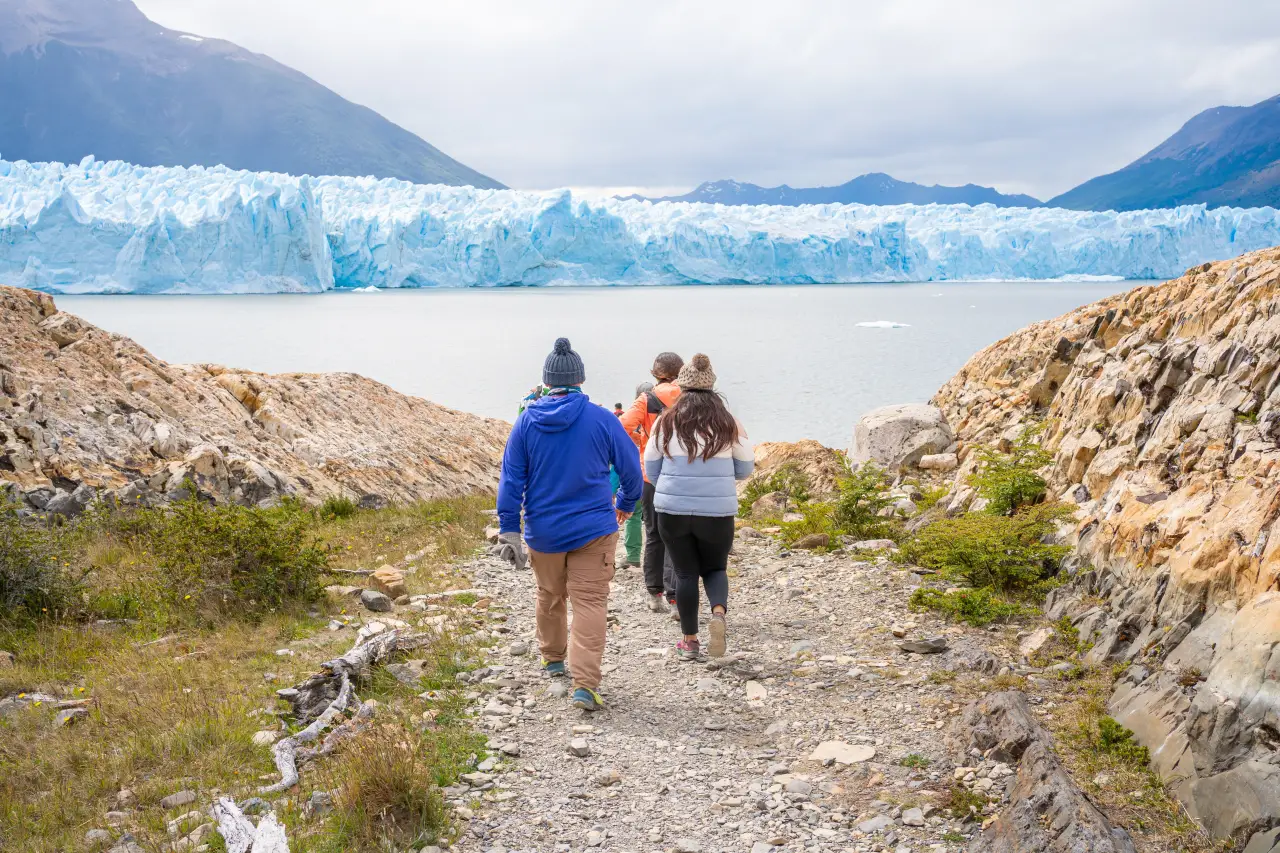
El Calafate, the small Argentine city that serves as the primary gateway to Los Glaciares National Park, continues to strengthen its position as one of South America’s leading nature tourism destinations.
With the Perito Moreno Glacier at its core, the destination has been diversifying its visitor experiences and improving infrastructure to capture growing international demand for adventure and nature-based travel.
The push comes as Argentina’s broader tourism strategy for 2026 emphasizes attracting higher-spending, long-haul travelers from Europe and North America — markets that have historically shown strong interest in Patagonia’s glacier and trekking offerings.
Multi-Tier Glacier Experiences Drive Visitor Spending
The Perito Moreno Glacier — a 250-square-kilometer ice formation within the UNESCO-designated Los Glaciares National Park — remains the destination’s primary draw. What has changed in recent years is the sophistication of the experience offering built around it.
Visitors can now choose from a range of glacier activities calibrated to different demographics and physical abilities. The standard walkway visit within the national park provides panoramic views of the glacier’s 5-kilometer-wide, 60-to-74-meter-high front wall and is suitable for all ages. For more active travelers, the Minitrekking excursion offers approximately 90 minutes of guided walking on the glacier with crampons, available to participants aged 10 to 65. The Big Ice expedition extends this to roughly three and a half hours of ice trekking, restricted to travelers aged 18 to 50.
This tiered approach has allowed tour operators in El Calafate to capture a broader visitor base while increasing per-visitor revenue. Operators typically bundle glacier activities with boat transfers, forest walks, equipment rental, and guide services, creating packaged experiences at multiple price points.
Destination Diversification Beyond the Glacier
While the Perito Moreno Glacier accounts for the majority of visitor traffic, El Calafate has been expanding its tourism portfolio to encourage longer stays and repeat visits. Full-day boat excursions to the Upsala and Spegazzini glaciers on Lake Argentino provide an alternative glacier experience, while the nearby village of El Chaltén — a two-and-a-half-hour drive north — has gained international recognition for its world-class trekking routes around Mount Fitz Roy and Cerro Torre.
Estancia tourism, offering horseback riding and traditional Patagonian gastronomy on working ranches, adds a cultural layer to the destination. The local culinary scene has also matured, with restaurants showcasing regional specialties including Patagonian lamb, wild game, and products made from the calafate berry, a native fruit after which the town is named.
Access and Infrastructure Developments
El Calafate International Airport, which receives direct flights from Buenos Aires, remains the critical access point for the region. Located at 50 degrees south latitude, the destination is remote by any standard, but air connectivity has improved steadily as airlines respond to rising demand.
The glacier itself sits approximately 80 kilometers from town via Ruta Provincial 11, a drive of roughly one hour and thirty minutes through the Patagonian steppe. Los Glaciares National Park, which covers 726,927 hectares and was designated a UNESCO World Heritage Site in 1981, continues to invest in visitor management systems to balance growing tourism volumes with conservation objectives.
Accommodation in El Calafate ranges from budget hostels to luxury lodges, though peak-season capacity remains a constraint. The high season runs from October through March, with the strongest demand concentrated in December through February when daylight hours are longest and temperatures are most favorable for outdoor activities.
Sustainability and Visitor Management
The Perito Moreno Glacier occupies a distinctive position among global glacier tourism destinations. Unlike the majority of the world’s glaciers, which are in accelerated retreat, the Perito Moreno is classified as being in a state of equilibrium — advancing and calving at roughly equal rates. This stability has allowed the destination to avoid the “last-chance tourism” narrative that accompanies many glacier destinations and instead market itself as an enduring natural attraction.
Park authorities have implemented timed entry systems, group size limits for ice trekking activities, and strict environmental protocols. The glacier forms part of the Southern Patagonian Ice Field, the third-largest continental ice mass on Earth after Antarctica and Greenland, making its conservation a matter of global scientific significance.
Outlook
As Argentina positions itself to recover international visitor numbers following a challenging 2025, El Calafate stands out as a destination with strong fundamentals: a world-class natural attraction, an increasingly diverse experience offering, and improving connectivity. For travelers planning Patagonia itineraries, agencies such as Calafate Tours provide centralized booking for the full spectrum of glacier excursions, multi-day packages, and regional experiences.
The broader trend favoring nature-based, experiential travel continues to work in El Calafate’s favor, positioning the destination for sustained growth as international travel to Argentina rebounds.
Photo Credit: Jose de Jesus Churion Del / Shutterstock.com