Ninh Binh province in Northern Vietnam, located about two hours by car from the capital city Hanoi, is known not only for its natural wonders but also for its cultural and spiritual landmarks such as the Bai Dinh Pagoda Complex. It covers an area of about 700 hectares, making it the largest Buddhist complex in Southeast Asia.
The complex features both an ancient pagoda built in the 12th century and a sprawling, modern complex that was constructed between 2003 and 2010. This complex, which holds many records, features many impressive structures including temples and statues, all set within a scenic and peaceful mountainside location.

With countless bodhi (sacred fig) trees spread across the complex, giving it a lush green and flourishing ambience, Bai Dinh holds the national record for the largest collection of such trees. This tree holds great significance in Buddhism as Buddha attained enlightenment whilst meditating under a bodhi tree.
The Arhat Corridor

The corridor of stone-carved Arhat (Buddhist saints) statues stretches nearly 3 km, making it the longest Arhat corridor in Asia. The corridor is lined with 500 monolithic Arhat statues, each ranging from 1.5 to 2m in height.

These statues are carved with intricate details, showcasing a variety of expressions and postures, reflecting the diverse personalities of these ancient wisdom keepers.
At the end of this corridor, you walk along a lovely lotus pond and climb up some steep steps before arriving at the Hall of the Goddess of Mercy.
The Hall of Goddess of Mercy

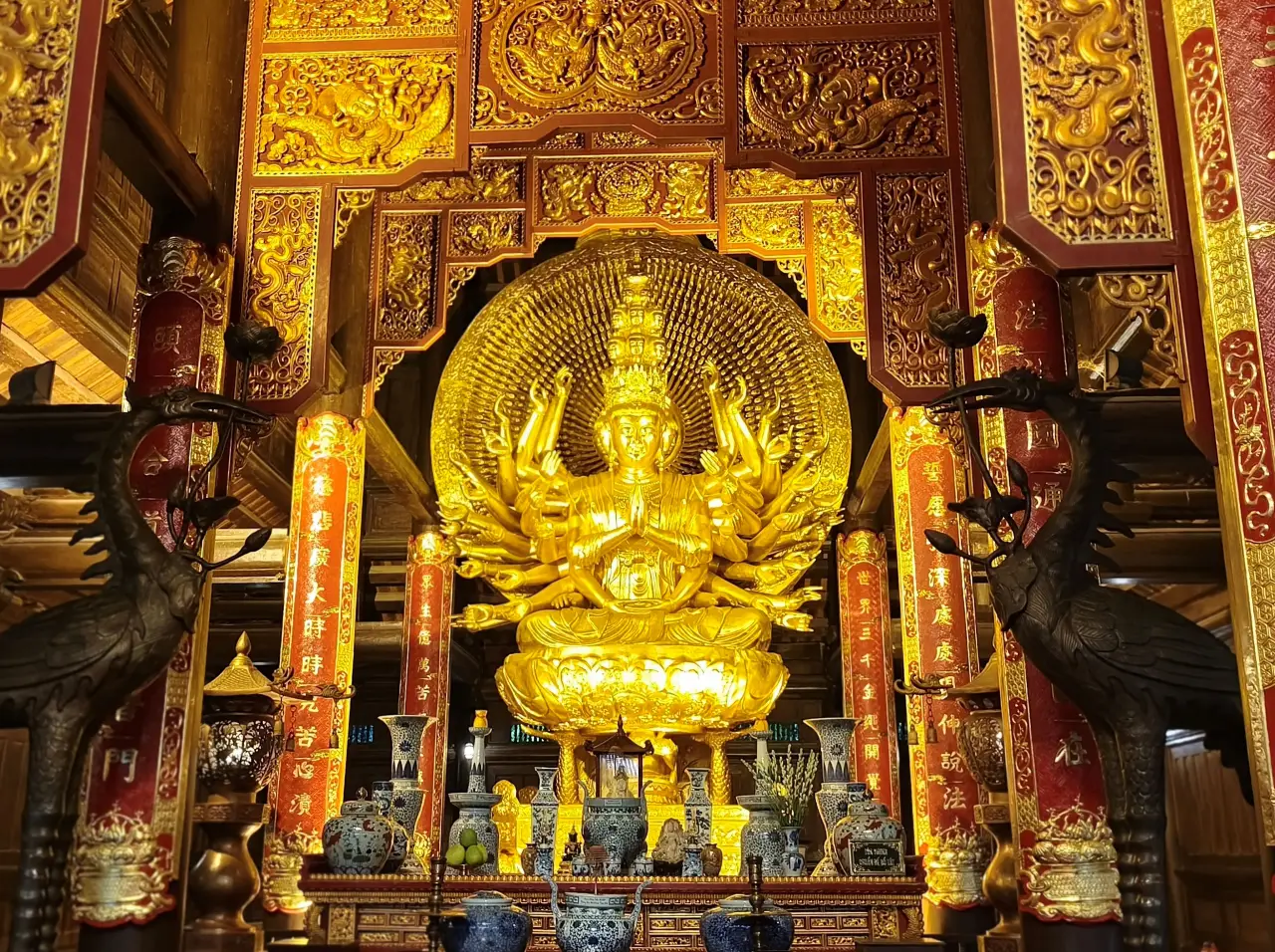
This grand hall is a serene and sacred space dedicated to Guan-Yin, the Buddhist goddess of mercy. The main statue, which is about 10m high and made of copper inlaid with gold, is the largest bronze statue of the goddess in Vietnam

The statue has five pairs of hands and three overlapping faces, which give it an otherworldly appearance and mystical aura. There are two other statues of the goddess in the hall, made from ancient trees, standing at 9m tall each and are placed by the sides of this main golden statue.
According to legend, the goddess was a royal princess who left a life of luxury to practise Buddhism, and she sacrificed both her hands and eyes to cure her father’s illness. Therefore, Buddha gave her a thousand eyes and a thousand hands so that she could understand the sufferings of other people a thousand times over and help those in need.
The Great Buddha Hall

Step into the magnificent Great Buddha Hall, where a colossal 100-ton bronze statue of Buddha stands at nearly 10m tall. It is the largest bronze statue of Buddha in Asia and is plated with gold. The hall’s intricate wood carvings, gold details, and serene atmosphere offer a deeply spiritual experience for visitors.

There are also statues of Buddha’s two disciples on either side of the main statue. They are made of bronze and inlaid with gold as well, about 7.2 m high each and weighing 30 tons.
Bell Tower


The bell tower is a towering structure that houses one of the largest bronze bells in Vietnam, which weighs 36 tons. This octagon-shaped, three-story tower is supported by a lotus-shaped wooden platform. Visitors can climb to the top of the 18m-high bell tower, where they can view the entire pagoda complex and the surrounding mountains.
Stupa

The stupa is an imposing, conical structure that serves as a visual focal point within the pagoda complex, as this 100m tall shrine can be seen from afar. It is also the tallest stupa in Asia, and holds Buddhist relics and sacred objects
It was raining heavily when I visited, and the stupa was closed to visitors, so I did not have a chance to ride the elevator to the top to view panoramic views of the complex, the surrounding mountains and lush landscapes. Physically fit visitors can also climb up the 13 storeys with over 70 steps to the top.
The ancient pagoda
The rainy weather did not permit me to visit several other attractions which were mostly outdoor. The original ancient pagoda, which is one thousand years old, is about 800 meters from the new complex and is nestled in small caves on the hillside. To reach it, you will walk up a path with over 300 stone steps.
The ancient moon-shaped Pearl Well also dates back over a thousand years. Pilgrims often come here to draw water and offer prayers, believing that doing so brings blessings and good fortune.
Handy tips
There is no entrance fee, but the complex is vast, so visitors are advised to pay a small fee to ride in electric buggies to get around the large grounds. There are no facilities that cater to disabled persons.
The walking distances between attractions can be quite far due to the immense grounds which are not easy to navigate on your own. I suggest you hire a guide or join a tour from Hanoi or locally. The guide should also be able to offer relevant information that would be useful to foreigners.
Visitors are not supposed to touch the arhat statues which will cause discolouration. Some of the statues were already starting to lose their colours due to people touching the knees or hands.
Visitors should dress modestly and maintain a respectful attitude. Avoid talking loudly as there may be people who are praying inside the temples.
I visited in August and that was the rainy season, so I brought along a small umbrella and a raincoat in addition to a hat. Do check the weather forecast before you visit.
Wear comfortable walking shoes and bring water to stay hydrated during your visit. There are no cafes or stores inside the grounds except for one well-equipped rest house.